Algeria
 Egypt
 Libya
 Morocco
 Sudan
 Tunisia
 Benin
 Burkina Faso
 Cabo Verde
 Côte d'Ivoire
 Ghana
 Guinea
 Guinea-Bissau
 Liberia
 Mali
 Mauritania
 Niger
 Nigeria
 Senegal
 Sierra Leone
 The Gambia
 Togo
 Cameroon
 Central African Republic
 Chad
 DR Congo
 Equatorial Guinea
 Gabon
 Republic of the Congo
 São Tomé and Príncipe
 Burundi
 Comoros
 Djibouti
 Eritrea
 Ethiopia
 Kenya
 Madagascar
 Malawi
 Mauritius
 Mozambique
 Rwanda
 Seychelles
 Somalia
 South Sudan
 Uganda
 Angola
 Botswana
 Eswatini
 Lesotho
 Namibia
 South Africa
 Zambia
 Zimbabwe
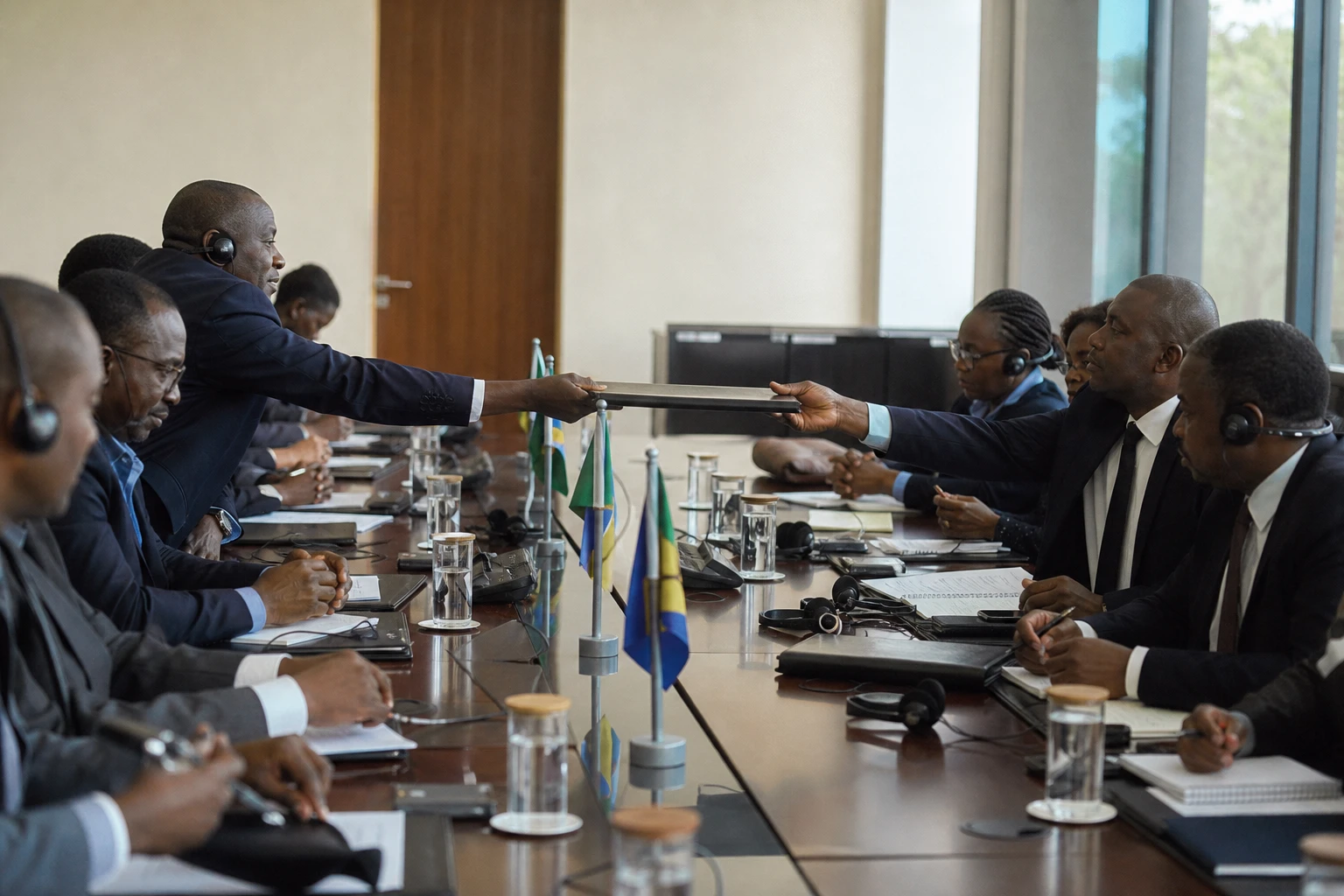
A small announcement, but a clear diplomatic signal
In Dodoma, Tanzania’s administrative capital, diplomatic gestures are never insignificant. At a time when embassies are still often based in Dar es Salaam out of habit or logistical caution, the announced arrival of a Serbian mission in Dodoma signals something broader: a desire to bring diplomacy closer to Tanzania’s political centre, as the country seeks to turn its foreign relations into tangible economic opportunities.
The issue also goes beyond protocol. Serbia and Tanzania have revived an old bond, rooted in their cooperation through the Non-Aligned Movement, established in 1961 for countries that refused automatic alignment with the Cold War blocs. Sixty-five years later, Belgrade is seeking to put that diplomatic legacy to work in more practical partnerships.
Dodoma, the EAC and non-alignment: useful context
Tanzania is a central player in East Africa. It is a member of the East African Community, or EAC, headquartered in Arusha, Tanzania, which has had eight partner states since Somalia joined in 2024. Within this regional framework, African capitals are increasingly seeking to link diplomacy to value chains, trade and business mobility.
Dodoma occupies a particular place in this trajectory. The gradual transfer of government functions to the inland capital is making the city an increasingly strategic political centre. Tanzanian authorities themselves describe Mtumba, Dodoma’s government district, as a hub expected to host more foreign missions as the public administration consolidates there.
For Serbia, the announced opening in Dodoma is part of a broader revival of interest in the African continent. Belgrade already has a diplomatic network in Africa, and its official services describe Tanzania as a partner with which it has maintained a longstanding bilateral relationship, established in 1961 and subsequently formalised through a trade and economic co-operation agreement signed in 1962.
What Belgrade and Dodoma have agreed
On 31 August 2026, Serbian Foreign Minister Marko Đurić met his Tanzanian counterpart, Mahmoud Thabit Kombo, in Belgrade, on the sidelines of a commemorative meeting marking the 65th anniversary of the first Non-Aligned Movement conference. The two officials confirmed the opening of a Serbian embassy in Tanzania and welcomed the decision as a step towards a broader partnership.
The same meeting also produced another familiar tool of economic diplomacy: a joint economic commission. The two countries intend to use it to boost trade, investment and sectoral co-operation. The sectors identified are specific: agriculture, agro-processing, tourism and education, with particular emphasis on economic ties.
Serbia’s diplomatic presence on the ground is not starting from scratch. In April 2026, Serbia’s newly appointed ambassador to Dodoma, Jovica Topalović, presented his credentials to Tanzanian President Samia Suluhu Hassan. This detail matters: it confirms that the diplomatic establishment is already under way, and is not merely a promise in a communiqué.
The figures, however, remain modest. Serbia’s Ministry of Foreign Affairs says trade between the two countries reached €7.5 million in 2025, including €6.4 million in Serbian exports and €1.1 million in imports from Tanzania. At this level, the relationship is real, but still limited.
Economic ties remain limited, but are now better structured
This is the crux of the matter. An embassy cannot, on its own, create trade flows. But it can reduce friction: fewer intermediaries, greater political visibility, and more meetings between public authorities, businesses and investors. That is precisely what both capitals are seeking. On the Tanzanian side, TanTrade, the public trade development agency, had already hosted the Serbian ambassador in early August to discuss industry, agriculture, processing and investment.
This sequence shows that Tanzania’s approach remains pragmatic. Dodoma wants to attract partners able to work in the country’s priority sectors: agriculture, mining, energy, infrastructure, transport, tourism, fisheries and the blue economy. In a country where the formalisation of the economy is advancing without eliminating the importance of informal trade, such partnerships matter most if they lead to skills transfers, logistical support and market opportunities for local producers.
Belgrade, for its part, presents itself as a possible gateway to the European market. This is a familiar promise of Serbian trade diplomacy, but it could prove useful if backed by practical tools: standards, logistics, certification and business contacts, rather than political symbolism alone. For Tanzanian companies, the main benefit would lie in access to a distribution network and technical partners, rather than in the size of the Serbian market itself.
The air co-operation discussed between Air Tanzania and Air Serbia points in the same direction. It suggests ambitions to improve connectivity, although operational details have yet to be specified. If it moves forward, this could facilitate business travel, diplomatic links and the presence of Tanzanian operators in other markets.
What this development says about Africa
Beyond the Tanzania-Serbia partnership, the episode illustrates a broader trend: several African states are seeking to diversify their partners without being confined by habits of alignment. Tanzania, a founding country of non-alignment in East Africa, remains faithful to this diplomatic tradition. Serbia, meanwhile, is seeking to revive its Third World legacy and restore its presence in African capitals.
The Belgrade meeting also carries political significance. It is a reminder that relations between Africa and Europe do not run solely through Brussels, Paris or Berlin. They can also be built through secondary capitals capable of offering modest but targeted instruments. For Tanzania, an active EAC member and a participant in the African Union through regional co-operation, the challenge will be to turn this opening into measurable benefits: investment, exports, training, business mobility and a more evenly distributed diplomatic presence between Dodoma and the rest of the continent.
What happens next will depend on implementation. The date the embassy officially opens, the first meeting of the joint economic commission and the conversion of announcements into contracts or projects will all need to be monitored. In a region where diplomatic announcements are plentiful, these are the steps that will show whether the Serbian-Tanzanian initiative is just another gesture or becomes a lasting working instrument.