Algeria
 Egypt
 Libya
 Morocco
 Sudan
 Tunisia
 Benin
 Burkina Faso
 Cabo Verde
 Côte d'Ivoire
 Ghana
 Guinea
 Guinea-Bissau
 Liberia
 Mali
 Mauritania
 Niger
 Nigeria
 Senegal
 Sierra Leone
 The Gambia
 Togo
 Central African Republic
 Chad
 DR Congo
 Equatorial Guinea
 Gabon
 Republic of the Congo
 São Tomé and Príncipe
 Burundi
 Comoros
 Djibouti
 Eritrea
 Ethiopia
 Kenya
 Madagascar
 Malawi
 Mauritius
 Mozambique
 Rwanda
 Seychelles
 Somalia
 South Sudan
 Tanzania
 Uganda
 Angola
 Botswana
 Eswatini
 Lesotho
 Namibia
 South Africa
 Zambia
 Zimbabwe
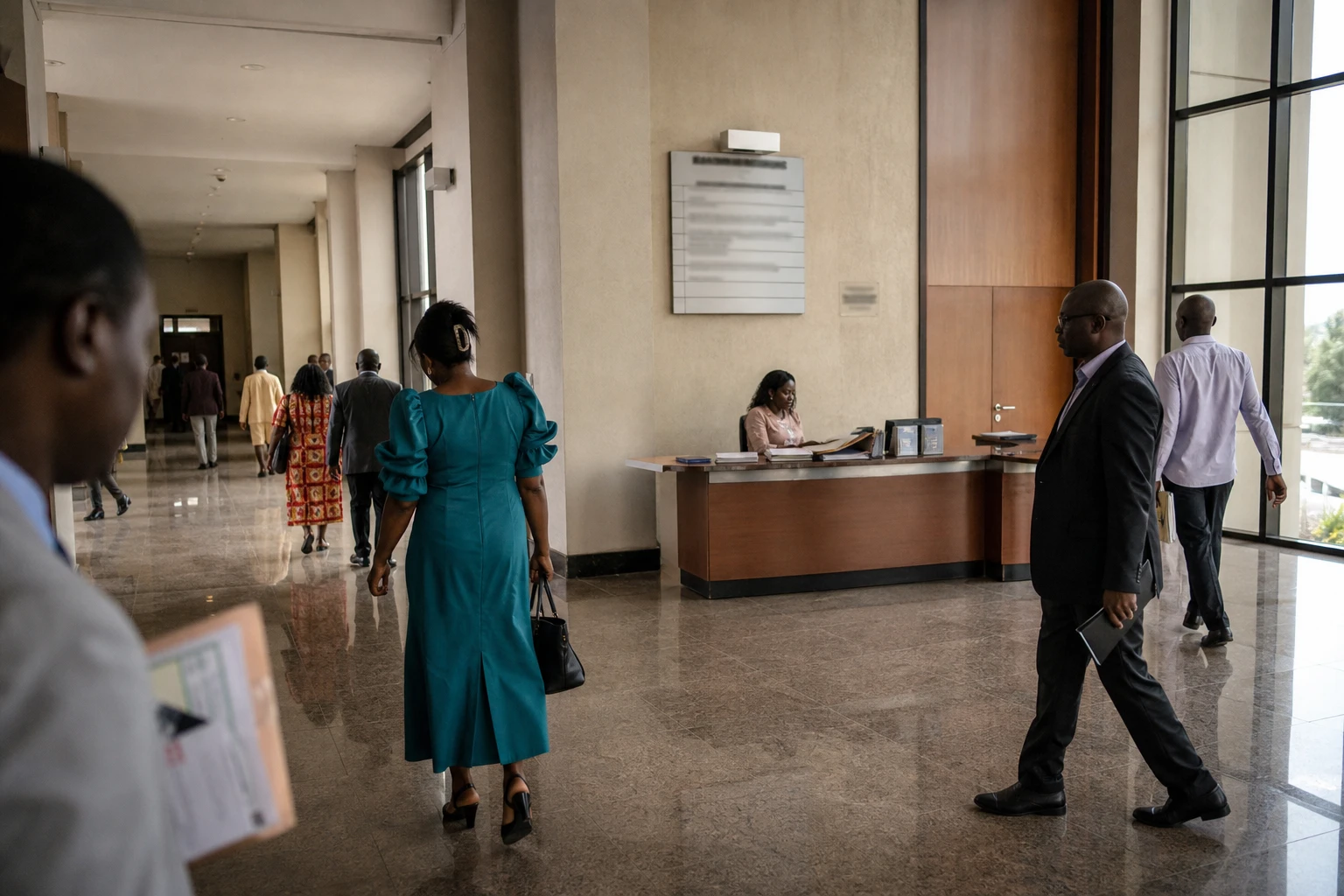
A migration issue that extends beyond Yaoundé
In Yaoundé, one question keeps coming up: what happens to a country when it is at once a place of refuge, a transit point and, now, a possible destination for people deported from the United States? In Cameroon, the issue touches on sovereignty, the protection of rights and the state’s actual capacity to oversee this kind of arrangement, at a time when migration is already a sensitive issue in Central Africa.
The debate has not emerged in a vacuum. Cameroon already hosts more than two million forcibly displaced people, according to UNHCR data, including refugees from the Central African Republic and Nigeria, among others. This reality places pressure on public services, local authorities and border areas, far more than on the diplomatic quarters of the capital.
What departures from the United States reveal
Since February 2026, international media and news agencies have reported that Washington transferred to Cameroon people who were not Cameroonian, as part of a scheme to deport people to third countries. The Associated Press and Reuters cited lawyers for the deportees and sources close to the matter, saying that a first group arrived in January, followed by another transfer in February. Those concerned came from Ghana, the Democratic Republic of the Congo, Morocco, Angola and Zimbabwe, among other countries.
The same sources say that at least some of these people had legal protections in the United States, making their return to their countries of origin legally sensitive. Reuters also reported that neither the State Department, the Cameroonian authorities nor the Department of Homeland Security immediately commented on the exact terms of any possible agreement. In short, the existence of a detailed public framework has not been established.
Cameroonian media have also covered the case, reporting on the reception of deported migrants and detention conditions at a state-owned site in Yaoundé. Such reports should be treated with caution on sensitive details, but they confirm that the issue has entered the Cameroonian public sphere.
The stakes for Cameroon and the region
Domestically, the case highlights a familiar but rarely acknowledged tension: a state can accept migration co-operation with a major power while leaving the safeguards afforded to transferred people unclear. In a country where refugees, internally displaced people and returns already weigh heavily, any new arrangement can blur the line between administrative management and the outsourcing of coercion.
The most sensitive issue concerns rights. In 2025, the African Commission on Human and Peoples’ Rights adopted a resolution warning that migration externalisation policies cannot shift or dilute African states’ obligations, including the principle of non-refoulement, the prohibition of collective expulsions and access to a fair individual procedure. This position gives the Cameroonian debate an African legal dimension, beyond exchanges between Washington and Yaoundé.
This continental perspective matters. Cameroon belongs to CEMAC, the Central African economic community, where regional mobility, security crises in the Lake Chad basin, and displacement linked to the Central African crisis and insecurity in the Anglophone regions already put pressure on public administrations. Adding deportees from other continents without clear transparency means placing further strain on a system already under pressure.
The other issue is political. When migration co-operation remains opaque, it breeds mistrust, including among partners that fund asylum and protection. The episode has even had consequences for journalists on the ground: Reuters reported that a journalist working for the Associated Press and other reporters were briefly detained in Yaoundé as they tried to interview people recently deported. This alone shows that the issue is no longer just a matter of diplomacy, but also of the public sphere and control of information.
What the case says about the balance of power between Africa and the United States
At the African level, the case is part of a broader trend: several countries on the continent have been named in migrant transfer agreements concluded with Washington, often under opaque conditions. The Associated Press recently noted that similar agreements existed or had been discussed with Rwanda, Ghana, South Sudan, Eswatini, Uganda, Sierra Leone, the Republic of the Congo and Cameroon. This is therefore not an isolated case, but a migration management approach that is spreading.
For ordinary Cameroonians, the impact is not abstract. It can be seen in competition for accommodation, healthcare, legal assistance and public attention. For the state, by contrast, there may be a diplomatic benefit: remaining a useful interlocutor in a strategic relationship with Washington. The balance between these two priorities is delicate. Without transparency, the supposed agreement becomes a source of suspicion rather than an instrument of co-operation.
The case should therefore be followed on two fronts. First, in Yaoundé, where any official clarification on the reception, length of stay and legal status of those concerned would change how the issue is viewed. Then in Addis Ababa, where the African Union and its human rights bodies are closely monitoring migration externalisation mechanisms. In the coming months, this will not just be a matter of deportation flights. It will also test administrative sovereignty, legal protection and African consistency in the face of a practice that now affects several states on the continent.