Algeria
 Egypt
 Libya
 Morocco
 Sudan
 Tunisia
 Benin
 Burkina Faso
 Cabo Verde
 Côte d'Ivoire
 Ghana
 Guinea
 Guinea-Bissau
 Liberia
 Mali
 Mauritania
 Niger
 Nigeria
 Senegal
 Sierra Leone
 The Gambia
 Togo
 Cameroon
 Central African Republic
 Chad
 DR Congo
 Equatorial Guinea
 Gabon
 Republic of the Congo
 São Tomé and Príncipe
 Burundi
 Comoros
 Djibouti
 Eritrea
 Ethiopia
 Kenya
 Madagascar
 Malawi
 Mauritius
 Mozambique
 Rwanda
 Seychelles
 Somalia
 South Sudan
 Tanzania
 Uganda
 Angola
 Botswana
 Eswatini
 Namibia
 South Africa
 Zambia
 Zimbabwe
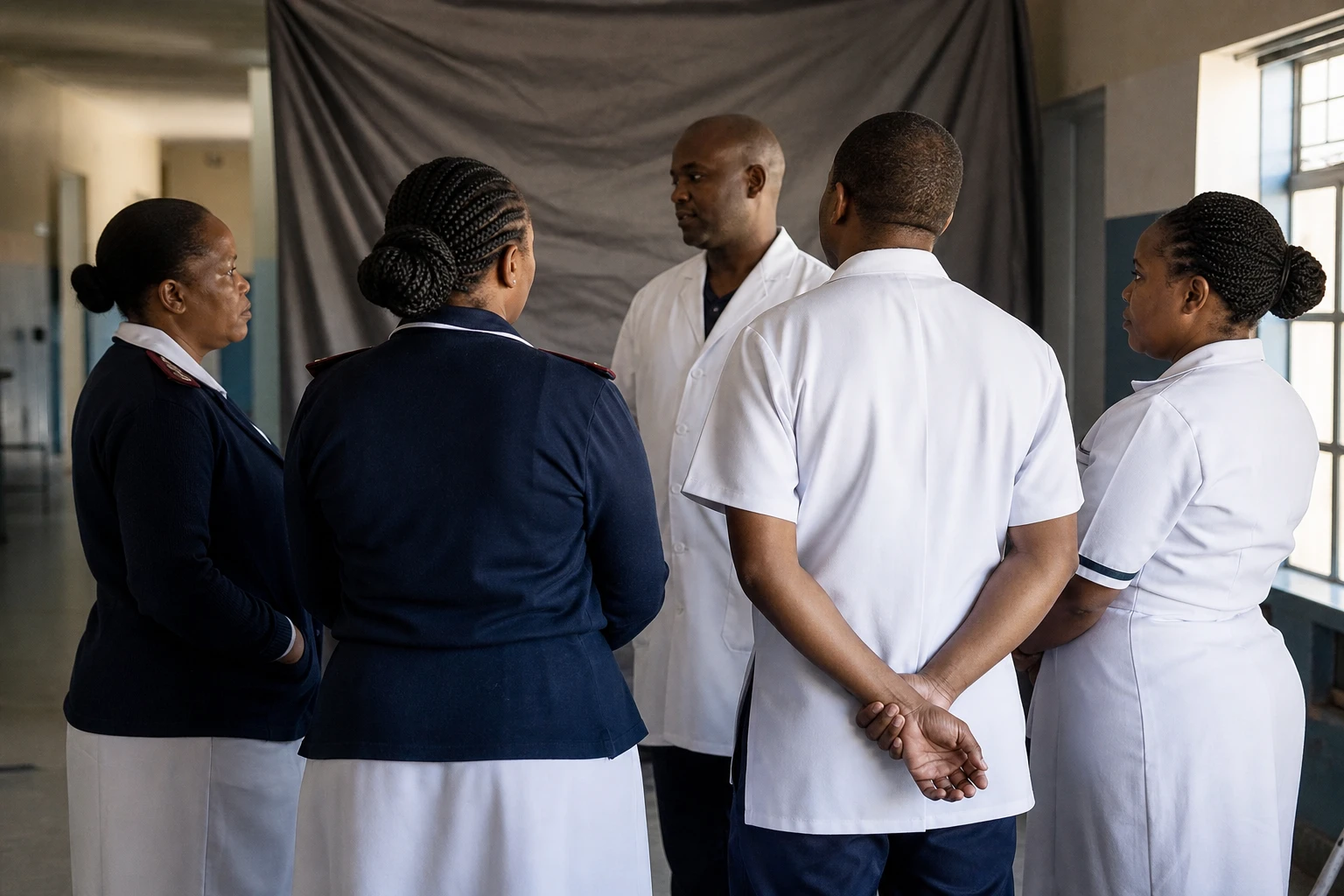
In Lesotho’s hills, care also depends on roads, resources and taboos
In Lesotho, pregnancy can still become a race against time. In this landlocked country in southern Africa, women often have to travel long distances to reach a health centre, sometimes along difficult tracks, before they can even think about giving birth.
The health challenge is reflected in the figures. The World Health Organization estimates that the maternal mortality ratio fell to 478 deaths per 100,000 live births in 2023, from 529 in 2020. The WHO also says the country remains among the most exposed in the Eastern and Southern Africa region. In this context, every trained professional counts, particularly in rural areas where staffing is scarce.
Lesotho belongs to SADC, the Southern African Development Community, which brings together 16 states and makes public health, co-operation and the population’s quality of life regional priorities. Maternal health is therefore not just a medical issue. It also concerns how services are organised, access to basic care and the presence of qualified staff in remote districts.
Men in delivery rooms: still a minority, but making a contribution
Against this backdrop, a small but visible group of men has chosen midwifery. In Mohale’s Hoek, one of them has spent two decades working with pregnant women, as part of a health system seeking to bring care closer to villages. The trend remains a minority one, but it is growing. The Associated Press reports that there are about 300 male midwives in the country, although the government does not publish a gender breakdown.
This development challenges a long-standing social convention: childbirth was seen as women’s domain, and a midwife as a figure necessarily associated with women. In Lesotho, that boundary is receding because health needs demand other priorities. When health posts are short of staff, the question is no longer who fits a stereotype, but who can provide antenatal care, monitor labour and refer a patient if complications arise.
The argument is not abstract. The WHO says the world still lacks maternal health workers, and notes that universal access to quality midwifery care could prevent a large proportion of maternal and newborn deaths. Globally, men account for less than 1% of all midwives, confirming how unusual the situation in Lesotho is.
What these careers mean for families, health centres and the state
In Lesotho, the issue goes beyond symbolism. The arrival of male midwives widens the recruitment pool in a country where teams remain stretched, particularly outside the capital, Maseru. It also helps ease some of the pressure on district clinics. Where journeys are long, roads cut across valleys and staffing is limited, the availability of personnel becomes a matter of survival.
For patients, the impact can be tangible. More qualified staff means more antenatal appointments, better detection of risks and fewer unassisted home births. UNICEF says that 92% of births in Lesotho are now attended by a skilled health professional, a significant advance for a country still facing high maternal mortality. It does not solve everything, but it reduces some of the danger.
The issue also says something about the social changes under way. Caring professions are still sometimes viewed through the prism of gender. Yet in a system where needs are immense, competence takes precedence over conformity with convention. In this respect, Lesotho’s experience illustrates a familiar tension in southern Africa: changing perceptions without undermining public acceptance of health services. Male health workers do not replace midwives; they complement a service already under pressure.
The state, meanwhile, gains another means of action. The Ministry of Health has made maternal and newborn health a priority, with support from the WHO and other partners. This support has already led to national guidelines on the surveillance of maternal and perinatal deaths. The challenge now is less about producing documents than keeping teams in health centres, making travel safer and ensuring continuity of services.
A local development with lessons for all of southern Africa
Lesotho’s experience resonates beyond its borders. Across southern Africa, health systems face the same equation: too few staff, long distances, uneven infrastructure and continued high demand for maternal care. Opening the profession further to men will not, by itself, solve the shortage, but it broadens the recruitment pool and shows that a social norm can change in the service of public health.
There is also a regional signal. SADC is pushing its members towards greater integration and social development. In this part of the continent, maternal health remains a highly sensitive indicator of territorial inequalities. When a small, mountainous country such as Lesotho manages to increase the presence of qualified professionals in its clinics, it offers a useful example to neighbours facing the same human-resource and access constraints.
The next question will not be whether men can be midwives. The answer has already been given on the ground. The real question is whether the country can turn these individual career paths into a lasting maternal health policy that endures and reaches the most isolated districts. That is where a real reduction in preventable deaths will be decided, far beyond the headlines.