Algeria
 Egypt
 Libya
 Morocco
 Sudan
 Tunisia
 Benin
 Burkina Faso
 Cabo Verde
 Côte d'Ivoire
 Ghana
 Guinea
 Guinea-Bissau
 Liberia
 Mali
 Mauritania
 Niger
 Senegal
 Sierra Leone
 The Gambia
 Togo
 Cameroon
 Central African Republic
 Chad
 DR Congo
 Equatorial Guinea
 Gabon
 Republic of the Congo
 São Tomé and Príncipe
 Burundi
 Comoros
 Djibouti
 Eritrea
 Ethiopia
 Kenya
 Madagascar
 Malawi
 Mauritius
 Mozambique
 Rwanda
 Seychelles
 Somalia
 South Sudan
 Tanzania
 Uganda
 Angola
 Botswana
 Eswatini
 Lesotho
 Namibia
 South Africa
 Zambia
 Zimbabwe
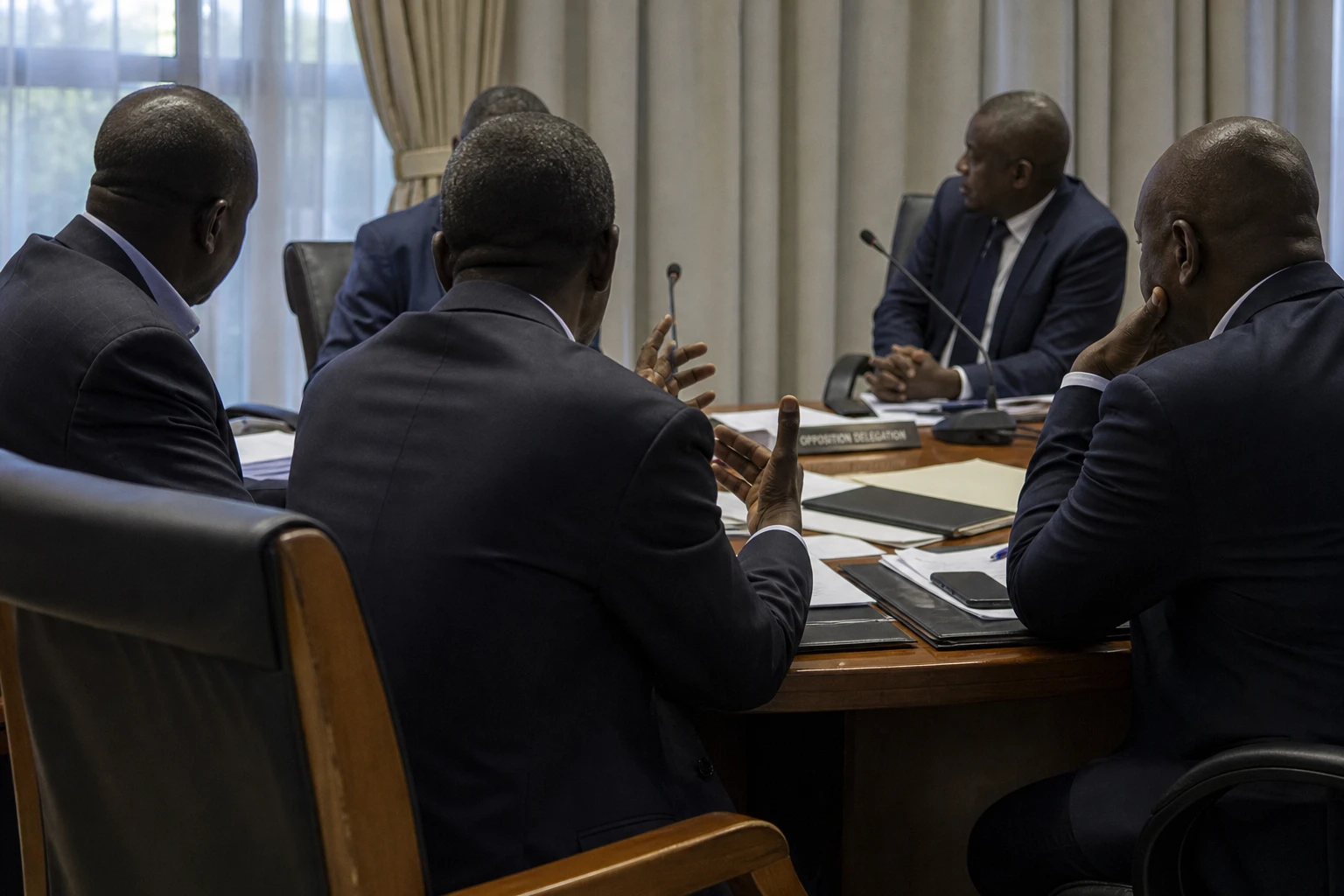
In Abuja, opposition tests its ability to speak with one voice
Less than two years before the next presidential election, the real question is no longer simply how to challenge the incumbent government. Above all, it is whether Bola Ahmed Tinubu’s opponents can turn their fragmentation into political strength. In Nigeria, a country where presidential elections are won as much through coalitions as at the ballot box, this question is already weighing on the 2027 campaign.
On Monday 31 August 2026, opposition leaders are meeting in Abuja, the federal capital, for a summit convened by the G-100, a group of political and civil society figures. The meeting was postponed once to allow for further consultations, a sign that negotiations are advancing, but slowly. The stated aim is no longer to immediately select a single candidate. It is now to build a minimum level of cooperation that can last until the 2027 presidential election.
A political landscape already shaped by the logic of blocs
The backdrop is a political system dominated by major party machines and highly personalised candidacies. In 2023, the Independent National Electoral Commission, INEC, officially declared Bola Ahmed Tinubu the winner with 8,794,726 votes. Atiku Abubakar came second with 6,984,520 votes, and Peter Obi third with 6,101,533 votes. These figures explain why the two men remain major rallying points for those seeking to build an alternative to the government.
The electoral process is already under way. INEC has confirmed that it published the timetable and notice for the 2027 general elections, and set the presidential election within this official timetable. On the ground, parties are therefore preparing well before the formal start of the final contest. This gives the Abuja summit particular significance: it is taking place at precisely the moment when alliances must stop being theoretical.
Several parties are expected around the table, including the ADC, NDC, PDP, PRP and SDP. The Labour Party, for its part, has chosen to stay out of the project, believing it has a strong enough structure to run its own campaign. This reservation says much about the current state of Nigeria’s political landscape: everyone wants influence, but few are willing to dissolve into a common framework.
What the G-100 is really seeking
The G-100, led by Salihu Lukman, a former senior figure in the ruling party, has changed its approach. Initially, some participants hoped to produce a single candidate as soon as talks began. That option now seems more distant. The group instead prefers to organise discussions around five thematic areas, with several weeks of work to bring positions closer on policy, strategy and the rules for cooperation.
This approach matters because a coalition is not simply a photo opportunity. It must answer three very practical questions: who speaks on whose behalf, on what policy basis, and with what campaign discipline? As long as these points remain unclear, a makeshift alliance can fall apart at the first disagreement. That is why several analyses published in recent weeks have pointed out that Nigeria’s opposition suffers less from a lack of popularity than from a deficit of political architecture.
The Abuja summit is also taking place against a backdrop of rising living costs, an issue that surveys and public debate have put centre stage for several months. Data from the National Bureau of Statistics show that inflation remains high, although its trajectory has shifted in recent readings. In this context, voters are comparing less by slogans than by candidates’ ability to offer a credible response on prices, income and everyday security.
Why this meeting matters beyond Nigeria
Nigeria is not an isolated case. Across West Africa, opposition forces seeking to defeat an entrenched government often face the same problem: bringing different constituencies together without losing their base or their credibility. In Nigeria, the challenge is greater still, because the country is the region’s largest economy and a central player in ECOWAS, the Economic Community of West African States. Political realignment in Abuja therefore always has regional repercussions.
What happens next will depend on whether the leaders present are willing to accept specific compromises. If the working groups deliver, the opposition can move towards a common platform ahead of the 2027 election. If egos take over again, each will leave with its own party machine, but without a unified momentum. In that case, the incumbent camp’s structural advantage would remain intact, backed by access to institutions, a nationwide organisation and an electoral machine already in motion.
At continental level, the message is clear: in a major African democracy, the challenge is not only to denounce those in power. An opposition must also show that it can organise, develop a shared language and persuade voters without fragmenting. This test, more than the Abuja meeting alone, will determine whether 2027 opens a new political chapter in Nigeria or extends the pattern of rival candidacies.