Algeria
 Egypt
 Libya
 Morocco
 Sudan
 Tunisia
 Benin
 Cabo Verde
 Côte d'Ivoire
 Ghana
 Guinea
 Guinea-Bissau
 Liberia
 Mali
 Mauritania
 Niger
 Nigeria
 Senegal
 Sierra Leone
 The Gambia
 Togo
 Cameroon
 Central African Republic
 Chad
 DR Congo
 Equatorial Guinea
 Gabon
 Republic of the Congo
 São Tomé and Príncipe
 Burundi
 Comoros
 Djibouti
 Eritrea
 Ethiopia
 Kenya
 Madagascar
 Malawi
 Mauritius
 Mozambique
 Rwanda
 Seychelles
 Somalia
 South Sudan
 Tanzania
 Uganda
 Angola
 Botswana
 Eswatini
 Lesotho
 Namibia
 South Africa
 Zambia
 Zimbabwe
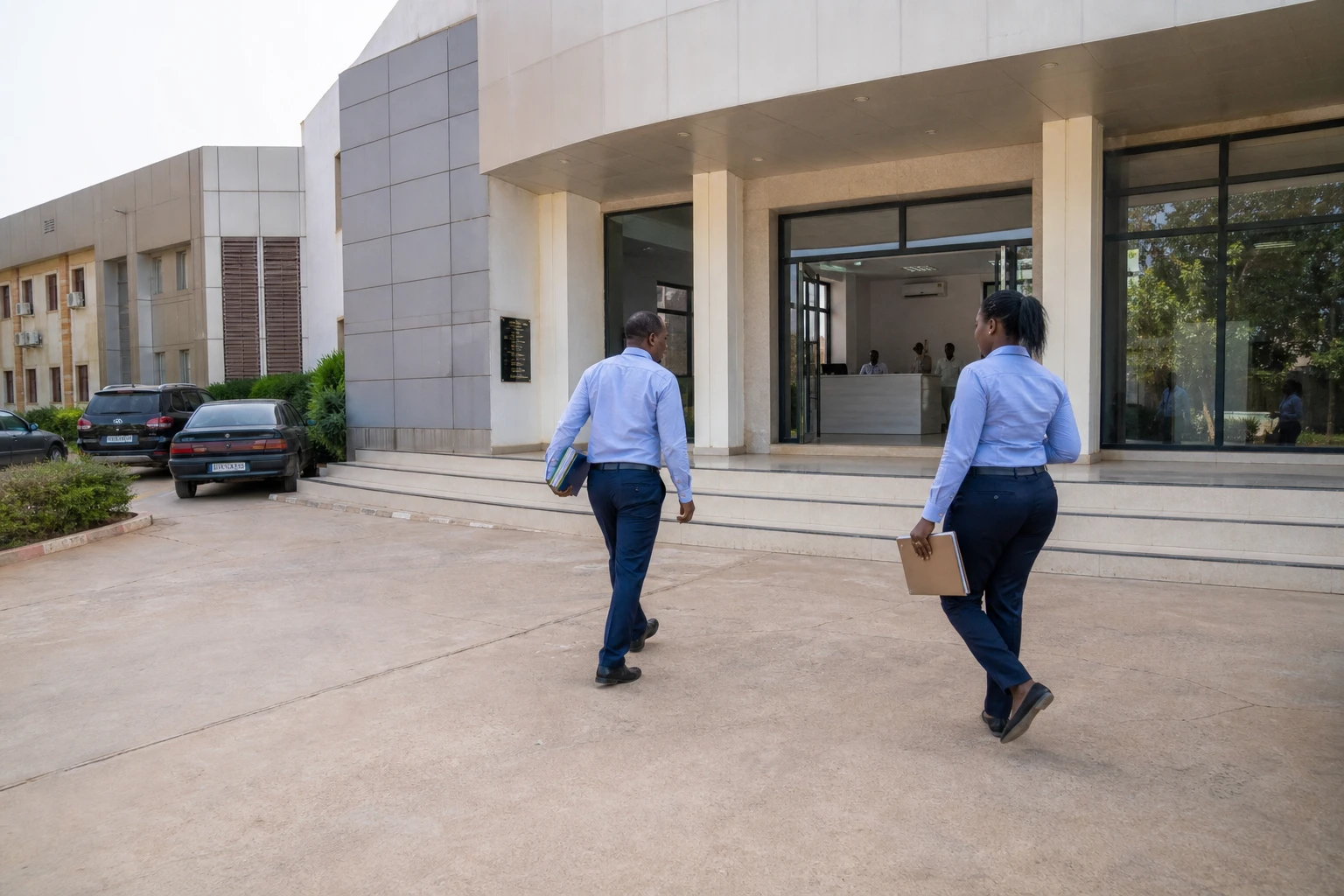
A visit that says much more than diplomacy
In Niamey, gestures matter as much as communiqués. When a European minister visits a Niger governed by a military transition and committed to the Alliance of Sahel States, every word about “respect” or “dialogue” becomes a political signal as well as a diplomatic message.
On Friday 28 August 2026, Belgium’s foreign minister, Maxime Prévot, was received in Niamey by Prime Minister Ali Mahaman Lamine Zeine. The visit was part of a Sahel tour that began in Burkina Faso, where Belgium’s top diplomat had already advocated cooperation based on respect for the choices of local authorities.
Niger, Belgium and a relationship that never entirely disappeared
Relations between Belgium and Niger are not starting from scratch. On the Belgian side, officials speak of active cooperation spanning more than 50 years. Belgium’s diplomatic representation in Niamey also notes that bilateral programmes for 2022-2026 cover three regions of Niger — Dosso, Tahoua and Tillabéri — as well as the central level in Niamey.
This cooperation remains strongly focused on health, education, agro-pastoralism, youth entrepreneurship and an approach described as “defence, development, diplomacy”. Belgium also says it supports non-governmental organisations in the country, showing that ties have not been severed despite political tensions between Niamey and several Western partners since the July 2023 coup.
The previous week, Niamey and Brussels had already put their relationship back on the agenda at a meeting of the joint consultation committee, chaired on the Nigerien side by the foreign ministry. On 10 August 2026, the two countries also signed a specific agreement to fund a capacity-building intervention, a sign that a technical channel remains open even as the political framework becomes strained.
What Belgium’s visit seeks to preserve
The purpose of the visit is clear: to maintain a useful European presence in an environment where the landscape has shifted. Brussels makes no secret of its differences with the transitional authorities in the Sahel, but Belgium insists that cooperation remains necessary, particularly on stability and security. This approach is part of a broader European Union practice: the bloc has already said it wants “frank, honest and structured” dialogue with Niger, based on mutual respect and shared interests.
According to Niger’s news agency, the Belgian minister also reiterated that Belgium wants to remain a reliable partner for the people of Niger. The message seeks a delicate balance: talking to the authorities in Niamey without appearing to endorse every regional break, while continuing to fund basic sectors without being sidelined by the Sahel’s realignment.
For Niger, the stakes are practical. In a country facing persistent needs in public health, education and local services, foreign cooperation remains a source of technical support, training and funding. For the authorities, retaining bilateral partners also helps show that the Sahel option does not rule out all engagement with Europe. For the population, the most immediate concerns are less ideological than practical: hospitals, schools, rural roads, support for young people and local resilience.
A Sahelian reading of the balance of power
The visit comes at a time when the Sahel’s diplomatic landscape has been reshaped. The Alliance of Sahel States, which brings together Burkina Faso, Mali and Niger, has been presented by the region’s authorities as a framework for sovereignty and closer coordination. The pan-African news agency APA has noted that the alliance, established in 2023 and then transformed into a confederation in 2024, is built around defence, diplomacy and economic and social development.
In this context, Belgian diplomacy is testing a more flexible approach than outright rupture. In Ouagadougou, Maxime Prévot was received on 26 and 27 August 2026 before continuing on to Niamey. The visit shows that an EU member state can seek to maintain a foothold in the region without relying solely on sanctions, demands or lectures on governance.
The signal to the European Union is significant. If technical channels remain open with Niger, Brussels retains a degree of influence in a region where Russia, Algeria and other neighbours are also shaping the balance. Conversely, if this outstretched hand produces no tangible results, Europe risks seeing its role shrink to statements of principle while Sahelian capitals consolidate their own regional frameworks.
What to watch after Niamey
The significance of this visit will not be measured by the number of soothing phrases, but by what follows on technical matters: project funding, the continuity of health programmes, decentralised cooperation and the role left to European partners in a Niger that is asserting greater sovereignty. Belgium, for its part, will need to show whether its promise of cooperation based on “respect” leads to visible and lasting action.
Beyond Niamey, this issue says something about Africa’s current moment: foreign relations are no longer shaped solely by blocs, but by partners’ ability to recognise new regional hierarchies, security constraints and locally defined development priorities. In Niger as in Burkina Faso, the test is the same: what kind of cooperation can still work when the balance of power has changed?