Algeria
 Egypt
 Libya
 Morocco
 Sudan
 Tunisia
 Benin
 Burkina Faso
 Cabo Verde
 Côte d'Ivoire
 Ghana
 Guinea
 Guinea-Bissau
 Liberia
 Mali
 Mauritania
 Niger
 Nigeria
 Senegal
 Sierra Leone
 The Gambia
 Togo
 Central African Republic
 Chad
 DR Congo
 Equatorial Guinea
 Gabon
 Republic of the Congo
 São Tomé and Príncipe
 Burundi
 Comoros
 Djibouti
 Eritrea
 Ethiopia
 Kenya
 Madagascar
 Malawi
 Mauritius
 Mozambique
 Rwanda
 Seychelles
 Somalia
 South Sudan
 Tanzania
 Uganda
 Angola
 Botswana
 Eswatini
 Lesotho
 Namibia
 South Africa
 Zambia
 Zimbabwe
An alarm that goes beyond a crime story
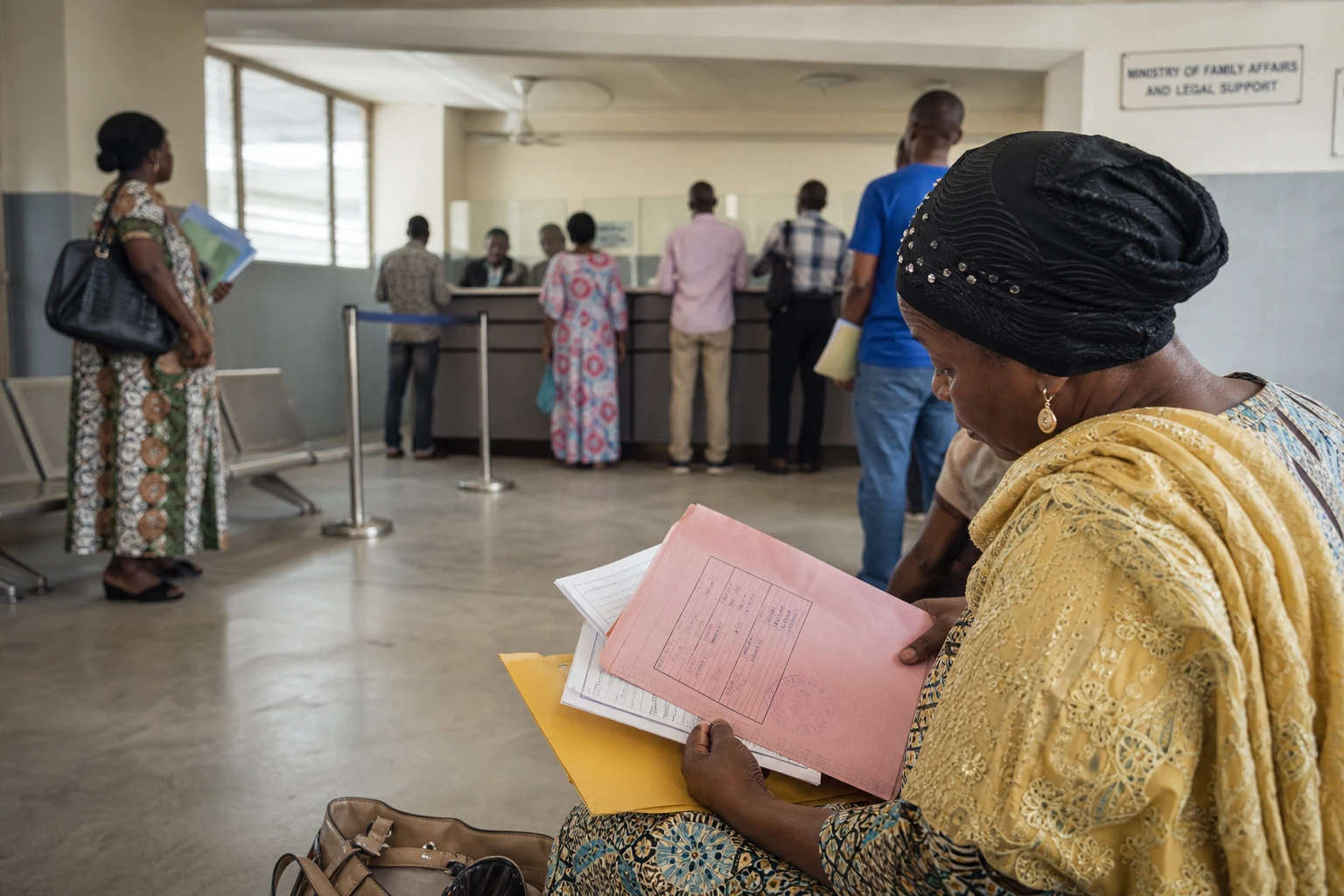
In Cameroon, the death of a woman in a hotel room in Yaoundé did not remain an isolated tragedy. It added to a series of acts of violence that raise questions about the real protection afforded to women, the judicial response and the place left for victims when the danger comes from within their intimate circle. In a country where warnings are mounting, each new name is a reminder that these are not just statistics, but lives cut short.
The issue has particular resonance in Yaoundé, the country’s political capital, where administrative decisions, court hearings and government announcements are concentrated. Cameroon is part of CEMAC, the Central African Economic and Monetary Community, and questions of gender-based violence there also intersect with broader African commitments, including the Convention on the Elimination of All Forms of Discrimination against Women and the Maputo Protocol.
Official figures point to a sharp increase
Cameroon’s Ministry of Women’s Empowerment and the Family reported 50 femicides between January and April 2026. Addressing MPs, Minister Marie-Thérèse Abena Ondoa also cited an increase over several years: 56 cases in 2023, 67 in 2024, and about 77 in 2025. These figures, reported by national institutions, describe an upward trend rather than a one-off incident.
The most recent spate has heightened public outrage. State media reported that several women had been killed in different cities across the country, including Douala and Yaoundé, in less than ten days. On 26 August 2026, 44-year-old Crescence Merline Beguel was found dead in a hotel in the capital after a knife attack. A 22-year-old suspect was arrested.
This recurrence lends particular weight to the word femicide. The term is not yet explicitly recognised in Cameroon’s criminal law, although associations and legal experts are calling for it to be. The issue is not merely symbolic. Naming the crime also makes it possible to document it more effectively, better classify the circumstances and prevent it from being subsumed under the sole categories of murder or domestic violence.
What institutional resistance reveals
There is a public response, but it remains incomplete. Since 2023, the government has been working on a specific bill on violence against women and girls. In June 2026, the minister said the text was still under review at the Prime Minister’s Office, with the hope that it would be presented to Parliament during its November session. At the same time, feminist organisations have denounced delays that leave victims to face emergencies alone.
Associations also point to very practical obstacles: few reception centres, difficulties accessing the helpline, the cost of medico-legal certificates and out-of-court settlements within families or communities, sometimes at the expense of prosecutions. Civil society is calling for more than verbal condemnations: rapid support, thorough investigations, better-trained courts and genuine emergency protection.
The Cameroon Bar Association has also raised the possibility of creating a special unit to support victims, while some campaigners are proposing a specialist court for domestic violence. Behind these demands lies a simple reality: when a woman reports a threat, the state must be able to act before it is carried out, not only afterwards.
An issue for Cameroon, but also for Africa
Cameroon is not an isolated case. The United Nations system in Cameroon has described this violence as a grave human rights violation and welcomed the government’s recognition of the seriousness of the situation. This view reflects a wider African concern: in several countries, femicides remain under-reported, poorly documented and often treated as private matters.
The situation in Cameroon also illustrates another phenomenon: when institutions are slow to act, public debate shifts to the media, civic groups and sometimes sporting or cultural figures. Forward Nchout Njoya Ajara’s statement gave a popular face to anger already present in society. This speaks volumes: in a crisis of protection, the demand for safety becomes a national issue, not just an activist cause.
The next steps will unfold on several fronts in Yaoundé: whether the bill is adopted, the strengthening of reporting mechanisms, access to medico-legal care, and the justice system’s ability to handle cases more quickly. Across Central Africa, the issue will also affect the credibility of commitments made to combat gender-based violence. The decisive question is no longer whether the problem is recognised. It is whether it can be brought down.