Algeria
 Egypt
 Libya
 Morocco
 Sudan
 Tunisia
 Benin
 Burkina Faso
 Cabo Verde
 Côte d'Ivoire
 Ghana
 Guinea
 Guinea-Bissau
 Liberia
 Mali
 Mauritania
 Niger
 Nigeria
 Senegal
 Sierra Leone
 The Gambia
 Togo
 Cameroon
 Central African Republic
 Chad
 DR Congo
 Equatorial Guinea
 Gabon
 São Tomé and Príncipe
 Burundi
 Comoros
 Djibouti
 Eritrea
 Ethiopia
 Kenya
 Madagascar
 Malawi
 Mauritius
 Mozambique
 Rwanda
 Seychelles
 Somalia
 South Sudan
 Tanzania
 Uganda
 Angola
 Botswana
 Eswatini
 Lesotho
 Namibia
 South Africa
 Zambia
 Zimbabwe
One river, two armies and a sensitive border
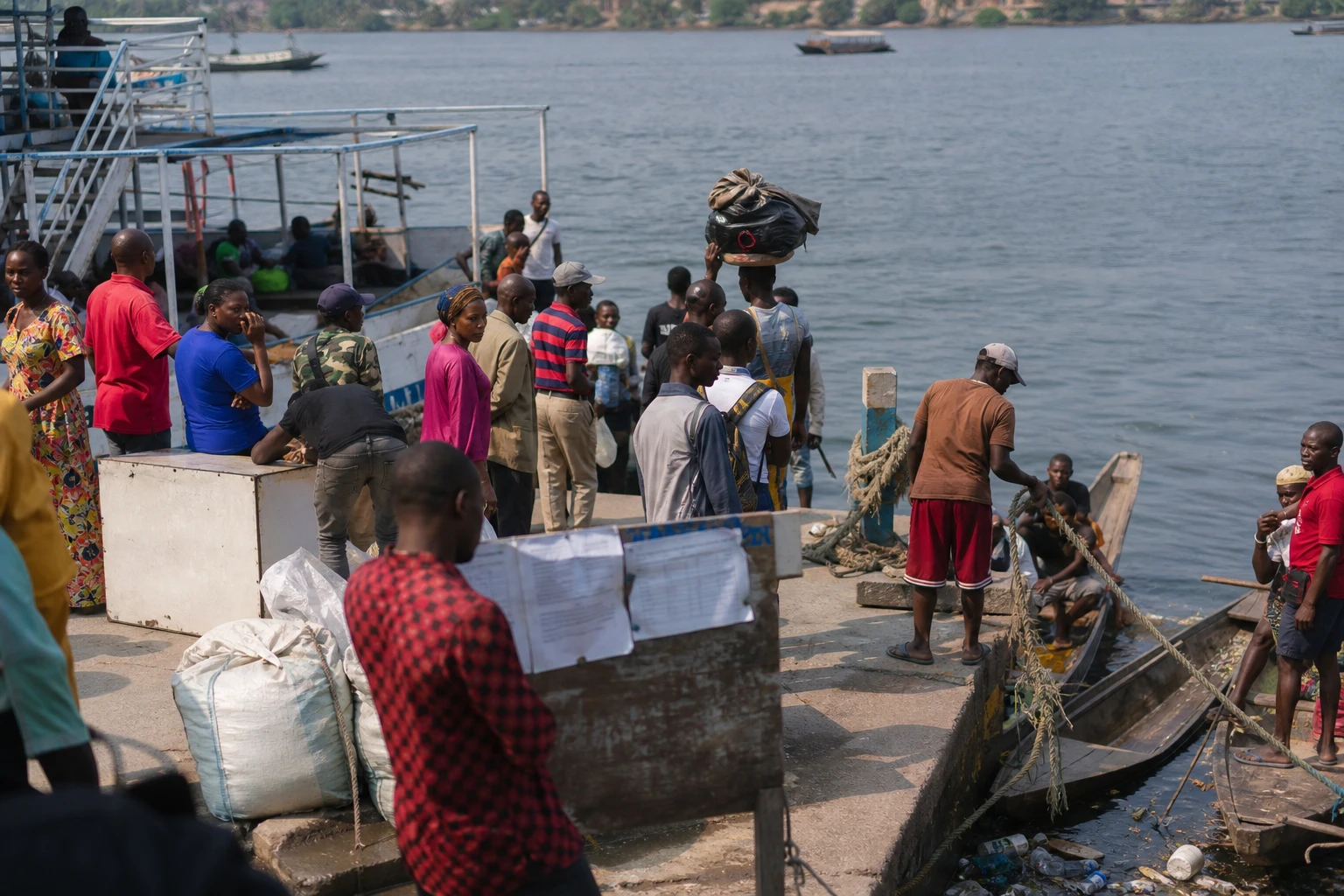
On the Congo River, the border is not an abstract line. It is a living zone, frequented by dugout canoes, patrols and residents travelling from one bank to the other to trade, fish or work. In this waterway, between Makotimpoko, on the Republic of the Congo side, and Yumbi, in the Democratic Republic of the Congo, even the slightest clash immediately takes on a political and security dimension. Recent events also serve as a reminder that the two capitals, Brazzaville and Kinshasa, are separated by only a few kilometres of water, even as both states make repeated announcements of cooperation on navigation, river surveillance and the planned road-and-rail bridge.
The incident reported on 26 August therefore took place in an area where geographical proximity obliges the two countries to manage security together, without respite. The river is at once a natural border, an economic route and a potential flashpoint. That is precisely what makes river patrols so sensitive, especially in a region where the movement of people and goods depends largely on local boats.
What happened between Makotimpoko and Yumbi
According to accounts corroborated by several local sources, members of the Congolese navy and gendarmerie were conducting a routine patrol on the right bank of the Congo River when soldiers from the Armed Forces of the Democratic Republic of the Congo intervened. The situation is said to have deteriorated into a firefight in the middle of the river, in the area between Makotimpoko and Yumbi. The exact causes of the exchange of fire had not been established when the first accounts emerged.
Authorities in both countries have described the episode as regrettable, but have not yet provided a consolidated and verified casualty toll. On the Congolese side, a local source reports that two officers were captured, a gendarme and a sailor, and that three people were missing, including two gendarmes and a sailor. On the DRC side, a 15-year-old child is said to have been killed during the exchange of fire, according to the same reports. These details are attributed to sources on the ground and should, however, be treated with caution until a joint official statement confirms the figures.
In Kinshasa, Foreign Minister Thérèse Kayikwamba described the incident as regrettable during a working visit to the Congo and referred to loss of life, without specifying a number. For now, both sides have mainly called for restraint and calm. This caution is no small matter: in an area where river command structures sometimes intersect with local security dynamics, even the slightest inaccuracy can fuel tensions for several days.
Why the episode matters beyond the alleged blunder
The central issue is not just the firefight. It is the fact that it has affected a border where both states officially want to strengthen cooperation. In May 2026, the Congolese presidency once again discussed with Kinshasa the Kinshasa-Brazzaville road-and-rail bridge project, presented as part of the African Union’s Corridor 13. A few days later, Brazzaville also reiterated its desire to consolidate relations between the two capitals. In other words, both banks say they want to bring their economies closer together, but they still have to secure every crossing on the water.
This contradiction is common in African border areas: integration advances faster on paper than on the ground. The Congo River carries trade, informal transport, checkpoints and questions of sovereignty. When a patrol boat spots a suspicious vessel, or a communications incident occurs between naval units, the risk is immediate. For riverside communities, the effects are tangible: slower crossings, fear of travelling, possible increases in transport costs and uncertainty for families who depend on local navigation for their livelihoods.
Yumbi adds a particular layer of significance. This territory in Mai-Ndombe has already experienced episodes of severe communal tension, requiring any new armed incident in the area to be viewed with great care. In this kind of context, the risk is not only military. It is also social, because rumours spread faster than statements, and residents interpret every movement by security forces as a warning sign.
The stakes for the DRC, the Congo and the Great Lakes region
For the Republic of the Congo, the challenge is to protect its sovereignty without turning a routine patrol into a diplomatic crisis. For the DRC, it is a matter of ensuring that a local incident is not seen as a failure of command at a time when the army is already engaged on several fronts in the east of the country. Both governments therefore have an interest in quickly opening a joint investigation, identifying the chain of decisions on the river and restoring a direct communications channel between border units.
The regional dimension is just as clear. In the Great Lakes, every cross-border armed incident highlights the fragility of areas where communities meet. ECCAS, the African Union and bilateral security mechanisms are regularly called upon to prevent escalation. Here, the priority is straightforward: to prevent the affair from being framed in national or nationalist terms, when the situation on the ground calls instead for a rapid, coordinated technical response. The two countries have already shown that they can cooperate when their common interests are clear, particularly on infrastructure, navigation and interconnection projects.
The decisive issue now is clarification. Without a consolidated toll, identification of the units involved and an explanation of what triggered the shooting, the incident will remain shrouded in uncertainty. On a border as busy as the Congo River, however, uncertainty is rarely neutral. It feeds mistrust. And mistrust between two capitals separated by a river but united by history can cost more than a simple exchange of fire.