Algeria
 Egypt
 Libya
 Morocco
 Sudan
 Tunisia
 Benin
 Burkina Faso
 Cabo Verde
 Côte d'Ivoire
 Ghana
 Guinea
 Guinea-Bissau
 Liberia
 Mali
 Mauritania
 Niger
 Senegal
 Sierra Leone
 The Gambia
 Togo
 Cameroon
 Central African Republic
 Chad
 DR Congo
 Equatorial Guinea
 Gabon
 Republic of the Congo
 São Tomé and Príncipe
 Burundi
 Comoros
 Djibouti
 Eritrea
 Ethiopia
 Kenya
 Madagascar
 Malawi
 Mauritius
 Mozambique
 Rwanda
 Seychelles
 Somalia
 South Sudan
 Tanzania
 Uganda
 Angola
 Botswana
 Eswatini
 Lesotho
 Namibia
 South Africa
 Zambia
 Zimbabwe
In Abuja, a resignation that goes beyond football
In Nigeria, football is about more than what happens on the pitch. It touches the country’s image, public money and trust in institutions. When the leadership of the Nigerian Football Federation falters, an entire chain is exposed, from players and supporters to sponsors and the federal government.
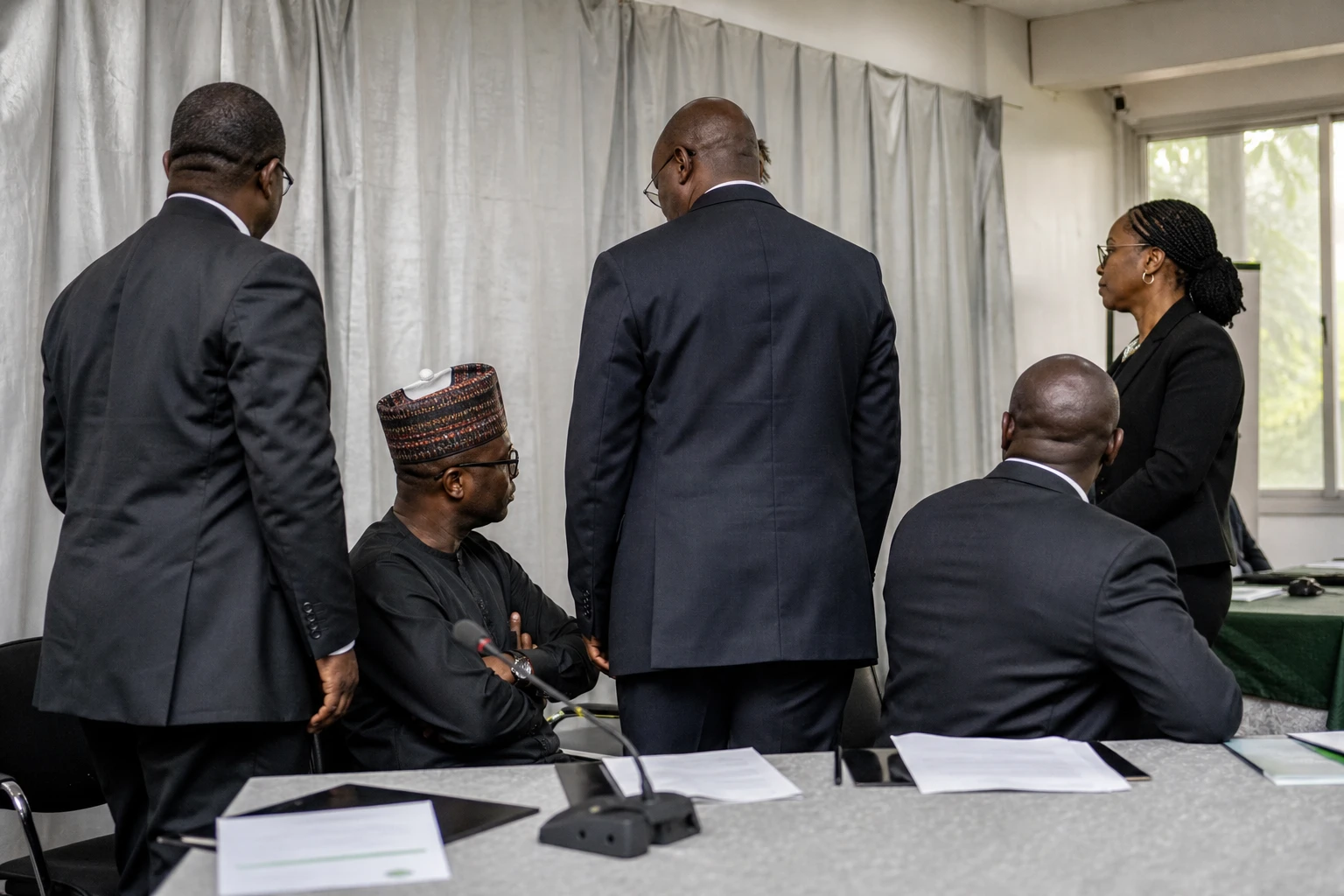
On Thursday 27 August 2026, Ibrahim Musa Gusau announced his resignation in Abuja, at the headquarters of the Nigerian Football Federation, the NFF. Nigerian media and AFP reported that he was stepping down about a month before the organisation’s next elections. According to several reports, other members of the executive committee are also leaving.
A federation under financial and sporting pressure
The NFF is based in Abuja, the federal capital. The backdrop is a difficult one. For several months, the governance of Nigerian football has drawn criticism. Local media have reported an investigation by the Department of State Services, the DSS, into the use of a 17 billion naira allocation released by the government in 2024 to settle arrears related to the national teams. This information has circulated in the Nigerian press, but it has not been publicly detailed by an official source accessible in the material reviewed.
The issue is sensitive because it concerns very tangible payments: salaries, bonuses, allowances and travel. Several players and staff members have previously complained of repeated delays. In a country hit by a weak naira and high inflation, the slightest suspicion of mismanagement immediately becomes political. Gusau defended his stewardship by citing the economic climate and the depreciation of the national currency.
Results accelerated the crisis
The crisis is not merely administrative. It is also sporting. In the women’s game, Nigeria lost 2-1 to South Africa in a crucial match on the qualifying path for the 2027 Women’s World Cup. The Confederation of African Football (CAF) confirmed this high-stakes contest between two continental heavyweights, South Africa and Nigeria, as part of the route to the 2027 World Cup in Brazil.
In the men’s game, the situation is also weighing on the overall mood. FIFA confirmed that Nigeria were among the teams eliminated from the path to the 2026 World Cup. For a country where football is a marker of collective prestige, this succession of setbacks has weakened the NFF leadership well beyond sporting circles.
At the same time, Gusau highlighted a new sponsorship deal with Adidas, presented as a contract that could generate $4.5 million a year. Here too, the stakes go beyond a kit supplier’s visibility. The question is whether commercial revenues will be enough to restore a federation facing scrutiny over its transparency and its ability to meet its commitments to the national teams.
What this departure says about Nigeria, and beyond
The NFF does not operate in a vacuum. It works in an environment where the federal government, private sponsors, the media and supporters scrutinise every decision. When performances decline and public money enters the debate, the question becomes one of accountability. The next board will therefore have to do more than manage matches. It will need to restore procedures, secure payments and calm a dressing room and a public weary of promises that go unfulfilled.
The issue also has regional significance. In West Africa, the Economic Community of West African States (ECOWAS) does not intervene in football management, but the sporting reputation of a giant such as Nigeria weighs on the regional ecosystem. The country remains a point of reference for academies, transfers, African competitions and television rights. When Abuja faces a sports governance crisis, perceptions of West African football as a whole are affected.
What happens next will depend on the NFF electoral timetable, the formation of an interim leadership and how the allegations of mismanagement are handled. In the short term, the next board will above all have to convince people of one simple point: Nigeria has no shortage of talent or passion for football, but it now needs an administration equal to its ambitions.