Algeria
 Egypt
 Libya
 Morocco
 Sudan
 Tunisia
 Benin
 Burkina Faso
 Cabo Verde
 Côte d'Ivoire
 Ghana
 Guinea
 Guinea-Bissau
 Liberia
 Mali
 Mauritania
 Niger
 Nigeria
 Senegal
 Sierra Leone
 The Gambia
 Togo
 Cameroon
 Central African Republic
 Chad
 DR Congo
 Equatorial Guinea
 Gabon
 Republic of the Congo
 São Tomé and Príncipe
 Burundi
 Comoros
 Djibouti
 Eritrea
 Ethiopia
 Madagascar
 Malawi
 Mauritius
 Mozambique
 Rwanda
 Seychelles
 Somalia
 South Sudan
 Tanzania
 Uganda
 Angola
 Botswana
 Eswatini
 Lesotho
 Namibia
 South Africa
 Zambia
 Zimbabwe
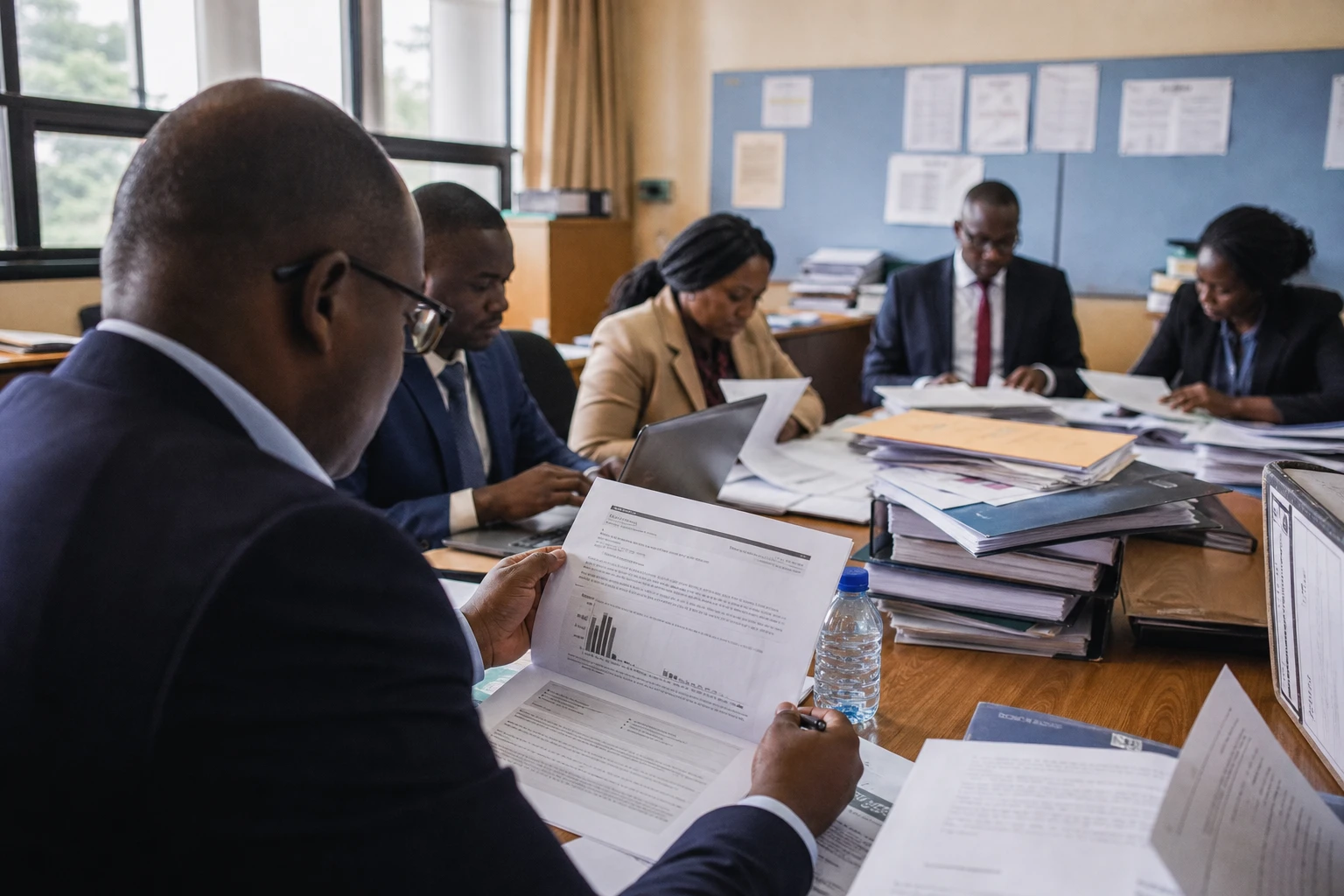
Election campaigns are prepared not only within political parties. They are also shaped by budgets.
In Kenya, the debate over public security is no longer confined to maintaining law and order. It now touches on how the state prepares for elections, allocates spending and assesses political risk. In Nairobi, this equation takes on particular significance as the country enters the run-up to the general election on 10 August 2027. The Independent Electoral and Boundaries Commission has already included that date in its operational planning.
Against this backdrop, Kenya’s parliament has approved a significant increase in funding for security agencies. The Ministry of Defence, the police and intelligence services are among the main beneficiaries of budget adjustments for the 2025-2026 financial year, in a country where the 2010 Constitution now requires elections to be held on a fixed date: the second Tuesday in August every five years.
Expanded security apparatus under democratic scrutiny
Figures published by parliament show a sharp increase in resources allocated to security. In the main budget document, the Ministry of Defence receives an additional KSh24.4bn, the National Intelligence Service KSh10bn, the national police KSh7.5bn and the Department of Internal Security KSh8.5bn. The parliamentary text that subsequently enacted the budget law, meanwhile, refers to an overall KSh60bn increase for the security sector, including KSh11.9bn allocated to internal security and the modernisation of police systems.
The government justifies the funding on the grounds of operational needs, infrastructure modernisation and election preparations. The Ministry of the Interior has defended the allocation, explaining that the increase addresses several institutional and operational priorities. Parliament has also linked the funding to preparations for the 2027 elections, the training of personnel and co-ordination on the ground.
This approach is rooted in Kenya’s constitutional framework. Since the 2010 reforms, general elections for the presidency, parliament, governors and local assemblies have been required to take place on the same day. The rule was designed to reduce uncertainty in the political calendar. It does not, however, prevent tensions over the security of campaigns and voting.
Ol Kalou precedent shows electoral violence is no theoretical risk
Civil society’s warnings have not come out of nowhere. In July 2026, during the campaign for the Ol Kalou by-election in the country’s central region, several human rights organisations reported intimidation, violence and restrictions on campaigning. Amnesty International Kenya called for the vote to be postponed if minimum conditions for credibility could not be guaranteed. The KNCHR, Kenya’s National Commission on Human Rights, also denounced the escalation of political violence and irregular electoral practices.
This precedent helps explain the caution of civic organisations. They fear that increased funding for the security sector, if not accompanied by clear safeguards, could encourage a defensive approach to election management. In Kenya, memories of disputed elections remain vivid, and the authorities know that any rise in tension can spread quickly, from urban centres to rural areas.
In recent warnings, the KNCHR has noted that political violence, police brutality and impunity undermine trust in institutions. This is crucial. A larger security budget can improve equipment, logistics and intelligence. But it can also fuel mistrust if citizens see it as preparation for coercion rather than protection.
What this means for Nairobi, the counties and the region
For the central government, the aim is clear: to demonstrate capacity ahead of 2027. For the police, military and intelligence services, the funding could mean more equipment, logistical support and digital upgrades. For voters, however, the question is different: how can the state’s increased presence in public spaces protect the vote without restricting the freedoms of assembly, campaigning and protest?
The debate also extends beyond the national arena. Kenya plays a pivotal role in East Africa, particularly within the East African Community, where the movement of people, goods and ideas goes hand in hand with strong political links. Parliament has also called for increased resources for the Department of East African Community Affairs, noting the persistent obstacles to cross-border trade. In a region facing security and electoral tensions, Nairobi is watching developments along its borders, and its neighbours are watching Nairobi.
The continental significance is therefore clear. At a time when several African countries are preparing for or going through sensitive electoral periods, Kenya is a test case. Can a country with well-established electoral institutions strengthen security without normalising exceptional measures? Can it modernise its forces without hardening relations between the state and citizens? The answer will matter well beyond Nairobi, because it will say much about how an African democracy manages the approach of a national election amid social tension and civic vigilance.