
 Algeria
 Egypt
 Libya
 Morocco
 Sudan
 Tunisia
 Benin
 Burkina Faso
 Cabo Verde
 Côte d'Ivoire
 Ghana
 Guinea
 Guinea-Bissau
 Liberia
 Mali
 Mauritania
 Niger
 Nigeria
 Senegal
 Sierra Leone
 The Gambia
 Togo
 Cameroon
 Central African Republic
 Chad
 DR Congo
 Equatorial Guinea
 Gabon
 Republic of the Congo
 São Tomé and Príncipe
 Burundi
 Comoros
 Djibouti
 Eritrea
 Kenya
 Madagascar
 Malawi
 Mauritius
 Mozambique
 Rwanda
 Seychelles
 Somalia
 South Sudan
 Tanzania
 Uganda
 Angola
 Botswana
 Eswatini
 Lesotho
 Namibia
 South Africa
 Zambia
 Zimbabwe
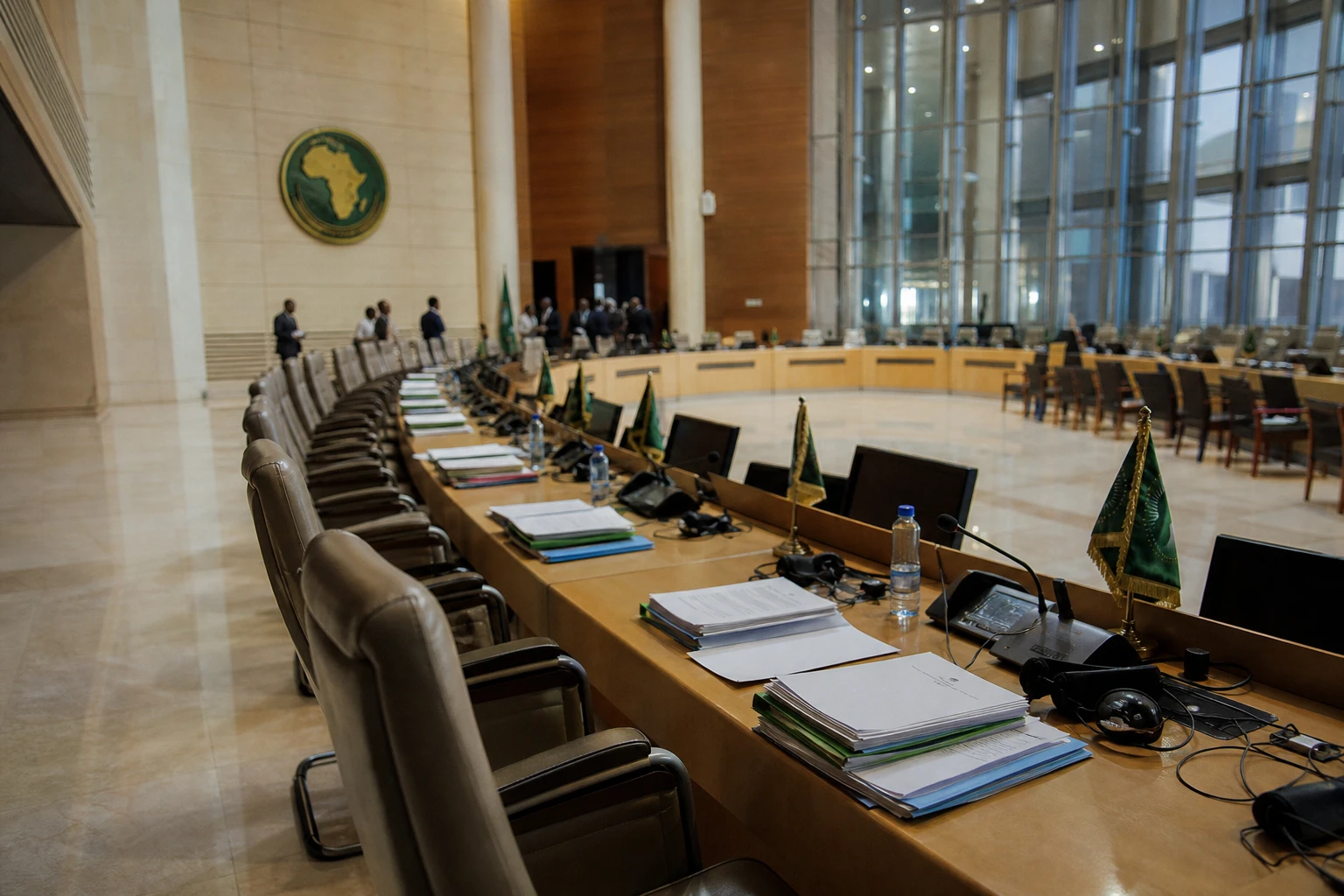
A diplomatic meeting behind closed doors in a tense region
In Mekelle, the capital of Tigray, a discreet visit can carry more weight than a lengthy public speech. When military lines draw close again and political channels freeze, every visit by a mediator becomes a test of credibility. Such is the case with former Nigerian president Olusegun Obasanjo, now the African Union’s High Representative for the Horn of Africa, who returned to northern Ethiopia on 24 August in an attempt to revive stalled dialogue.
The regional context remains fragile. The Intergovernmental Authority on Development, East Africa’s IGAD, is closely monitoring a region where security crises can quickly spill across borders. The African Union, headquartered in Addis Ababa, has led mediation efforts on the Ethiopian issue since 2022. And since the ceasefire was signed in Pretoria on 2 November 2022, the conflict’s aftermath has continued to fuel mistrust between the federal government and the Tigrayan authorities.
In Mekelle, the AU envoy found a deadlocked issue
According to the Tigrayan authorities, Olusegun Obasanjo’s visit did not shift the position with Addis Ababa. On 25 August, they said the visit had produced “no new point of proposal” and no concrete progress towards dialogue with the Ethiopian federal government. They also expressed regret that there had been no follow-up to talks begun in June with the African envoy.
TPLF vice-president Amanuel Assefa described the visit as unannounced. At the same time, at the time of the reports consulted, the federal government had neither confirmed a meeting with the AU envoy nor publicly commented on the visit. This official silence contrasts with the diplomatic activity surrounding the issue. European Union representatives and several embassies in Addis Ababa said on 26 August that they were following the situation with “great concern” and urged implementation of the cessation of hostilities agreement.
Obasanjo was no stranger to the issue. He had already played a central role in the negotiations that led to the Pretoria Agreement, presented as the political framework for ending the 2020–2022 fighting. African mediation was then based on a simple idea: to hold together the ceasefire, disarmament, the gradual restoration of federal authority and the reopening of political space. Two years later, these pillars remain contested, interpreted differently by the two sides and, above all, only partially implemented on the ground.
Why Tigray remains a major flashpoint for Ethiopia
Tigray still bears the scars of the 2020–2022 war. The sources consulted recall that it caused hundreds of thousands of deaths, mass displacement and lasting damage to the regional economy. In the Tigrayan authorities’ account, the heart of the problem lies in the incomplete implementation of commitments made after Pretoria: the safe return of displaced people, the lifting of military restrictions, clarification of the TPLF’s political and legal status, and the resumption of structured dialogue.
What is at stake, then, is not merely a meeting between a mediator and a political movement. It is also the relationship between centre and periphery in an Ethiopian federal state beset by several areas of tension. For Addis Ababa, making concessions to Tigray that are too visible may be seen as a domestic political cost. For Tigrayan officials, agreeing to talks without concrete guarantees amounts to endorsing an incomplete normalisation, while the region continues to face security and economic pressures. Recent allegations of drone strikes in August, confirmed by ACLED according to the articles consulted, have further hardened the climate.
The population is bearing the heaviest burden. Displaced residents remain dependent on a return that hinges on security, roads, public services and the movement of goods. In towns, commercial activity recovers more quickly when routes are open. In rural areas, insecurity, crop losses and disruption to services take a greater toll. This difference between urban centres and the countryside also explains why even a minor resurgence of tension has an immediate effect on prices, movement and informal incomes.
African mediation under pressure, beyond Ethiopia alone
The Mekelle episode goes beyond the face-off between the Ethiopian government and the TPLF. It tests the African Union’s ability to maintain mediation led from Addis Ababa, on an African issue, with African solutions, in an environment where external partners observe, support or express concern, but do not take the lead. In January 2026, the AU Commission chairperson had already called for maximum restraint in Tigray and stressed the importance of preserving the gains of the Pretoria ceasefire.
The key now is to move from intentions to mechanisms. Without a timetable, shared monitoring and minimum political guarantees, mediation is exhausted. This is precisely what Tigrayan officials are denouncing when they speak of a lack of follow-up. It also explains the eagerness of several diplomatic actors to support Obasanjo’s efforts, even though no breakthrough was announced after his departure from Mekelle.
For East Africa, the stakes go beyond a border region. An unstable Tigray weakens the entire north of Ethiopia, weighs on trade, fuels the movement of weapons and complicates regional cooperation. For the African Union, this is also a test of method: to show that continental mediation can still deliver continuity, follow-up and trust in a conflict where signs of renewed hostilities return all too quickly. What happens next will depend on the parties’ ability to turn this visit into a negotiating process rather than just another diplomatic episode.



