
 Algeria
 Egypt
 Libya
 Morocco
 Sudan
 Tunisia
 Benin
 Burkina Faso
 Cabo Verde
 Côte d'Ivoire
 Ghana
 Guinea
 Guinea-Bissau
 Liberia
 Mali
 Mauritania
 Niger
 Nigeria
 Senegal
 Sierra Leone
 The Gambia
 Togo
 Central African Republic
 Chad
 DR Congo
 Equatorial Guinea
 Gabon
 Republic of the Congo
 São Tomé and Príncipe
 Burundi
 Comoros
 Djibouti
 Eritrea
 Ethiopia
 Kenya
 Madagascar
 Malawi
 Mauritius
 Mozambique
 Rwanda
 Seychelles
 Somalia
 South Sudan
 Tanzania
 Uganda
 Angola
 Botswana
 Eswatini
 Lesotho
 Namibia
 South Africa
 Zambia
 Zimbabwe
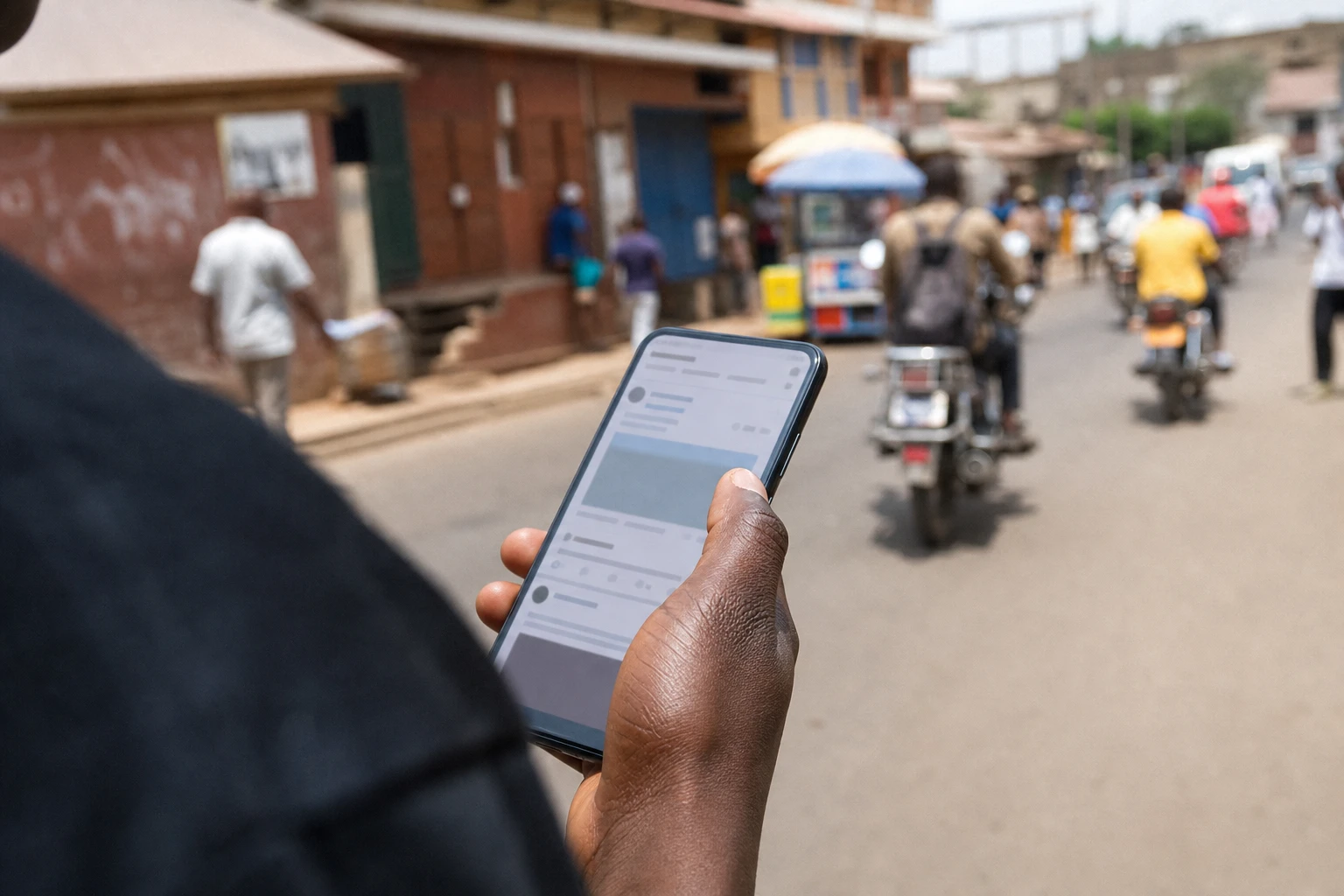
In Yaoundé, waiting for change has become a political test
In the Cameroonian capital, radio news time remains an appointment followed with particular attention. Not just for appointments. But because, in a country where the executive still holds most of the decision-making power, every expected decree says something about the state of power, its balances and its timelines.
This anticipation is fuelled by a very particular institutional context. Prime Minister Joseph Dion Ngute still heads the government team appointed on 4 January 2019, while in recent months the presidency has continued to sign targeted measures in specific sectors, without reshaping the entire team. The contrast reinforces the impression of stop-start movement rather than a genuine political relaunch.
At the same time, the institutional framework has shifted. In April 2026, Cameroon’s Parliament adopted a constitutional revision reintroducing the post of Vice-President of the Republic, a new development presented as an answer to the question of continuity of the state. The government later took care to stress that any official appointment follows a strict publication process, after a fake decree circulated in June.
A long-awaited reshuffle that also reveals the balance of power
The basic fact is simple: no overall reshuffle has yet settled the question many Cameroonians have been asking for months. The current team remains in place as speculation continues. The presidency, meanwhile, continues to make sector-specific appointments, particularly in defence and the state apparatus, showing that the institutional machine is working, but without a clear signal of an overall reshuffle.
Politically, this slowness is about more than style. It also reflects the difficulty of arbitrating between several centres of influence at a time when political succession remains central to calculations. Debates over the post of Vice-President reinforce this reading. For some, the reform should safeguard the state. For others, it adds another tier to an already tightly controlled system.
In Yaoundé, this situation is reflected in everyday conversations, but also in very tangible behaviour. Small radios are selling better because many people want to make sure they do not miss any announcement. This market detail says a lot: in Cameroon, political news continues to circulate as an event in itself, rather than as a mere administrative routine.
Joseph Dion Ngute’s long tenure as prime minister is no trivial matter. It reflects considerable stability on the surface, but also the strong personalisation of power. The head of government has held his post since the decree of 4 January 2019, anchoring the current debate in the long term rather than in mere corridor rumour.
In business circles, among civil servants and in the capital’s commercial districts, anticipation of a new government is bound up with expectations of a change in approach. Criticism focuses on administrative delays, public service management, youth employment and the cost of living. The debate is therefore not just institutional. It concerns how the state responds, or fails to respond, to the most visible demands of the urban population.
What this episode says about Cameroon, and beyond
Cameroon is a member of CEMAC, the Economic and Monetary Community of Central Africa. In this region, institutional stability matters greatly because it affects investor confidence, public debt, and monetary and budgetary coordination. BEAC’s economic updates regularly highlight inflationary pressures across the zone and the vulnerabilities of several member economies. Cameroon, the sub-region’s largest economy, cannot afford prolonged political uncertainty without regional consequences.
But the other side of the picture must also be considered. The state continues to act in several sectors. Measures signed by the presidency show that public decision-making is not at a standstill. Structural reforms are under way, particularly in energy, public administration and the defence forces. The problem, then, is not a total absence of action. It is rather the coexistence of technical action and prolonged political anticipation, without a clear explanation, in a country where signals from the top carry particular weight.
This episode also has continental significance. In Central Africa, many executives remain heavily presidentialised. Cabinet reshuffles are often seen as moments when internal balances are clarified, rather than as mere administrative adjustments. In Cameroon, the stakes are heightened by President Paul Biya’s age, recurring questions about continuity of the state and the constitutional reform that reintroduced the post of Vice-President. Together, these developments point to a period of institutional transition with no clear timetable.
For the population, the question remains very concrete. A reshuffle can change faces, but cannot by itself address deep-rooted delays. In Cameroon, however, the choice of people at the top also serves as a political signal. It indicates who is rising, who is falling, and what direction the government wants to project. That is why the wait continues to hold Yaoundé’s attention. Not out of a taste for suspense, but because it concentrates, in itself, part of the national debate on governance, succession and the state’s ability to reinvent itself without becoming destabilised.



