Algeria
 Egypt
 Libya
 Morocco
 Sudan
 Tunisia
 Benin
 Burkina Faso
 Cabo Verde
 Côte d'Ivoire
 Ghana
 Guinea
 Guinea-Bissau
 Liberia
 Mali
 Mauritania
 Niger
 Nigeria
 Senegal
 Sierra Leone
 The Gambia
 Cameroon
 Central African Republic
 Chad
 DR Congo
 Equatorial Guinea
 Gabon
 Republic of the Congo
 São Tomé and Príncipe
 Burundi
 Comoros
 Djibouti
 Eritrea
 Ethiopia
 Kenya
 Madagascar
 Malawi
 Mauritius
 Mozambique
 Rwanda
 Seychelles
 Somalia
 South Sudan
 Tanzania
 Uganda
 Angola
 Botswana
 Eswatini
 Lesotho
 Namibia
 South Africa
 Zambia
 Zimbabwe
A dispute that goes beyond legal debate
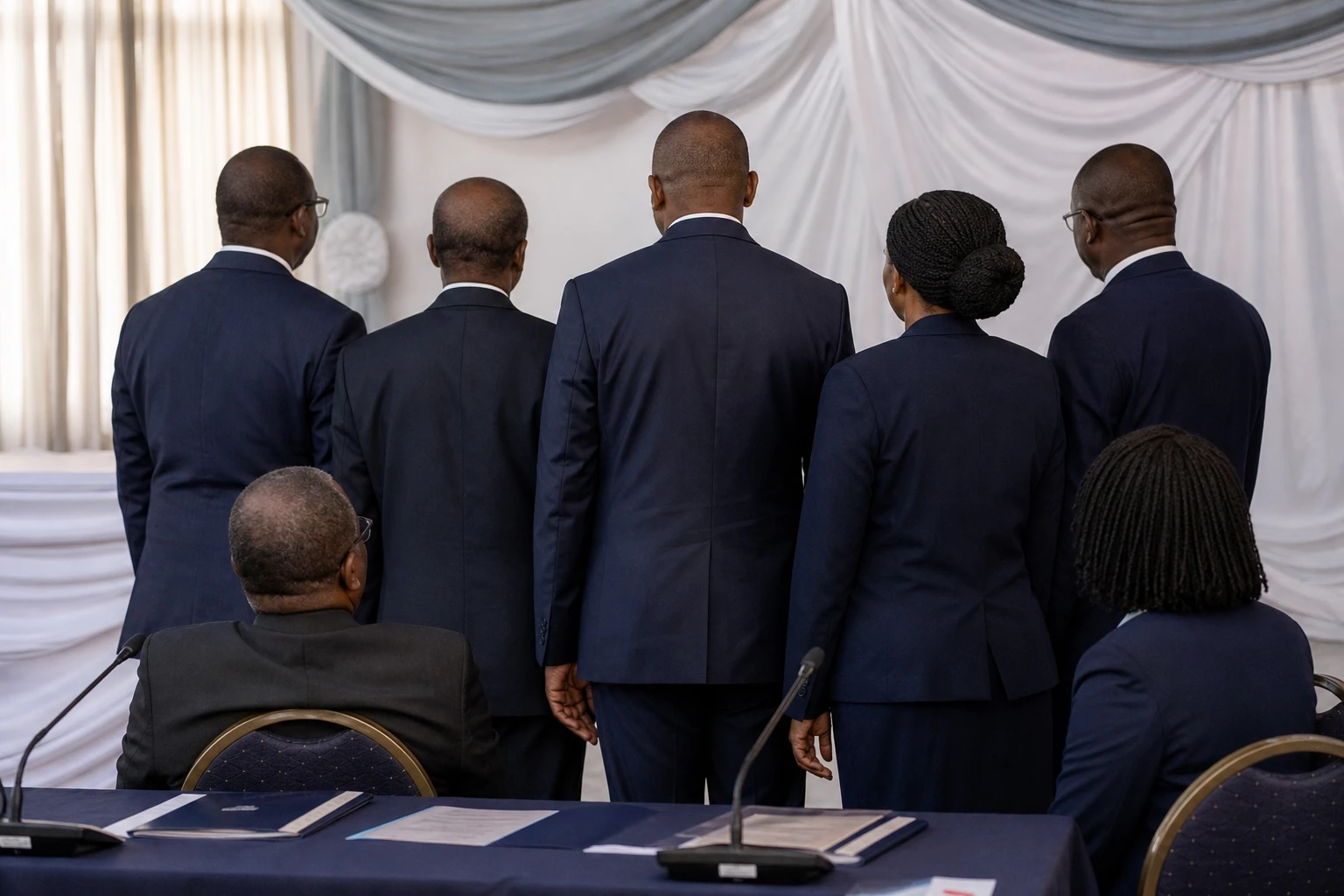
In Lomé, the dispute triggered by the constitutional reform is no longer confined to a lawyers’ quarrel. It has become a battle over the legitimacy of power, the role of direct elections and how Togo wants to organise its next institutional phase. In a country where political balances remain heavily concentrated around the executive, the opposition is now seeking to turn its constitutional argument into a clear political demand: a transition.
The issue also has regional significance. In West Africa, ECOWAS reaffirmed in December 2025 its zero-tolerance policy towards unconstitutional changes of government. The Togolese case therefore comes at a time when regional democratic standards are being tested again, beyond national borders.
What the texts say, and what the opposition says
On 25 August 2026, several Togolese parties and organisations presented a joint memorandum in Lomé calling for a way out of the crisis and an inclusive political transition. The initiative brings together opposition groups and civil society representatives who say they no longer recognise the constitutional reform adopted in spring 2024 as an acceptable framework for government. They see it as a major break with the spirit of the previous fundamental text and are calling for a return to consensual foundations.
Their central argument is based on the ruling delivered on 29 January 2026 by the ECOWAS Court of Justice. The regional court found that the constitutional revision adopted in March 2024 amounted to an unconstitutional change of government under African democratic standards. This legal interpretation now informs the opposition’s political position: if the system’s foundations are contested, they say, the institutional architecture created by the reform must be replaced by a period of transition.
The 2024 reform moved Togo towards a parliamentary system under its Fifth Republic, with a president of the Council at the centre of the executive. The Togolese authorities, for their part, argue that the change resulted from a regular revision of the Constitution promulgated on 6 May 2024. On 3 May 2025, Faure Essozimna Gnassingbé was sworn in as president of the Council, a role created under the new institutional framework.
Why the dispute is so sensitive in Togo
In Togo, the controversy is not just about constitutional technique. It touches on how power is transferred, how long one camp can maintain its grip on the state apparatus and the role citizens play in political decision-making. By replacing direct universal suffrage in presidential elections with a parliamentary system, the reform shifted the system’s centre of gravity. Its supporters say it modernises the institutions. Its opponents say it circumvents the spirit of political alternation.
This disagreement is not abstract. Opposition circles see the reform as another lock on a political life already marked by strong continuity in power. The fact that the National Assembly was sent back for a second reading in April 2024, after first adopting the reform, remains at the heart of the criticism, as opponents argue that the text was passed by a chamber whose mandate had already expired. This argument has been taken up by several political and civil society coalitions, which see it as a lasting source of fragility for the legitimacy of the institutions.
The social impact is just as significant. A transition, as demanded by the opposition, would open a period of negotiations on the institutional timetable, electoral safeguards, the role of civil society and the place of the diaspora. By contrast, maintaining the current course would consolidate the institutional order sought by the authorities, while leaving the challenge from part of the political landscape unresolved. For urban populations, particularly in Lomé, the debate is seen through the cost of living, arrests of opposition figures, space for mobilisation and confidence in voting. In rural areas, it is more often expressed as an expectation of stability, access to services and a predictable state.
A West African signal to watch closely
The Togolese case goes beyond the country because it touches on a question that has become central in West Africa: how to prevent constitutional reform from being used to neutralise political alternation without triggering an outright rupture. In recent years, ECOWAS has had to contend with coups, military transitions and tensions over respect for democratic rules. Togo’s case adds a more subdued form of institutional crisis, but one that is just as sensitive for regional balances.
The response of African institutions also bears watching. The ECOWAS Court of Justice has set a legal precedent, but its impact now depends on the political will of member states and the weight the African Union chooses to give it. The Togolese opposition is counting on this interplay between domestic legal action, regional pressure and continental backing. The authorities, meanwhile, are relying on the gradual consolidation of the new parliamentary system and the normalisation of institutional discourse.
For now, the real test will be political. The ability of the different camps to maintain or broaden dialogue will show whether the crisis can remain confined to words and procedures or become more deeply entrenched. In Lomé, as across the subregion, the question is no longer simply who governs. It is also on what basis those in power claim to govern.