
 Algeria
 Egypt
 Libya
 Morocco
 Sudan
 Tunisia
 Benin
 Burkina Faso
 Cabo Verde
 Côte d'Ivoire
 Ghana
 Guinea
 Guinea-Bissau
 Liberia
 Mali
 Mauritania
 Niger
 Senegal
 Sierra Leone
 The Gambia
 Togo
 Cameroon
 Central African Republic
 Chad
 DR Congo
 Equatorial Guinea
 Gabon
 Republic of the Congo
 São Tomé and Príncipe
 Burundi
 Comoros
 Djibouti
 Eritrea
 Ethiopia
 Kenya
 Madagascar
 Malawi
 Mauritius
 Mozambique
 Rwanda
 Seychelles
 Somalia
 South Sudan
 Tanzania
 Uganda
 Angola
 Botswana
 Eswatini
 Lesotho
 Namibia
 South Africa
 Zambia
 Zimbabwe
Major offshore projects return to Abuja’s agenda
For two years, Nigeria has been trying to turn a promise into concrete action: putting major offshore oilfields back at the centre of investment. The shift matters beyond the companies alone. It affects public revenue, foreign exchange, skilled jobs and Abuja’s ability to remain competitive in the Gulf of Guinea.
The move is part of a broader national trajectory. The federal government is seeking to stabilise a sector long held back by contract renegotiations, disputes and administrative delays. Meanwhile, the Economic Community of West African States, of which Nigeria is the largest economy, views every revival in Nigerian production as a signal for regional energy, shipping and oil services markets.
Agreements signed to revive Bonga Southwest/Aparo
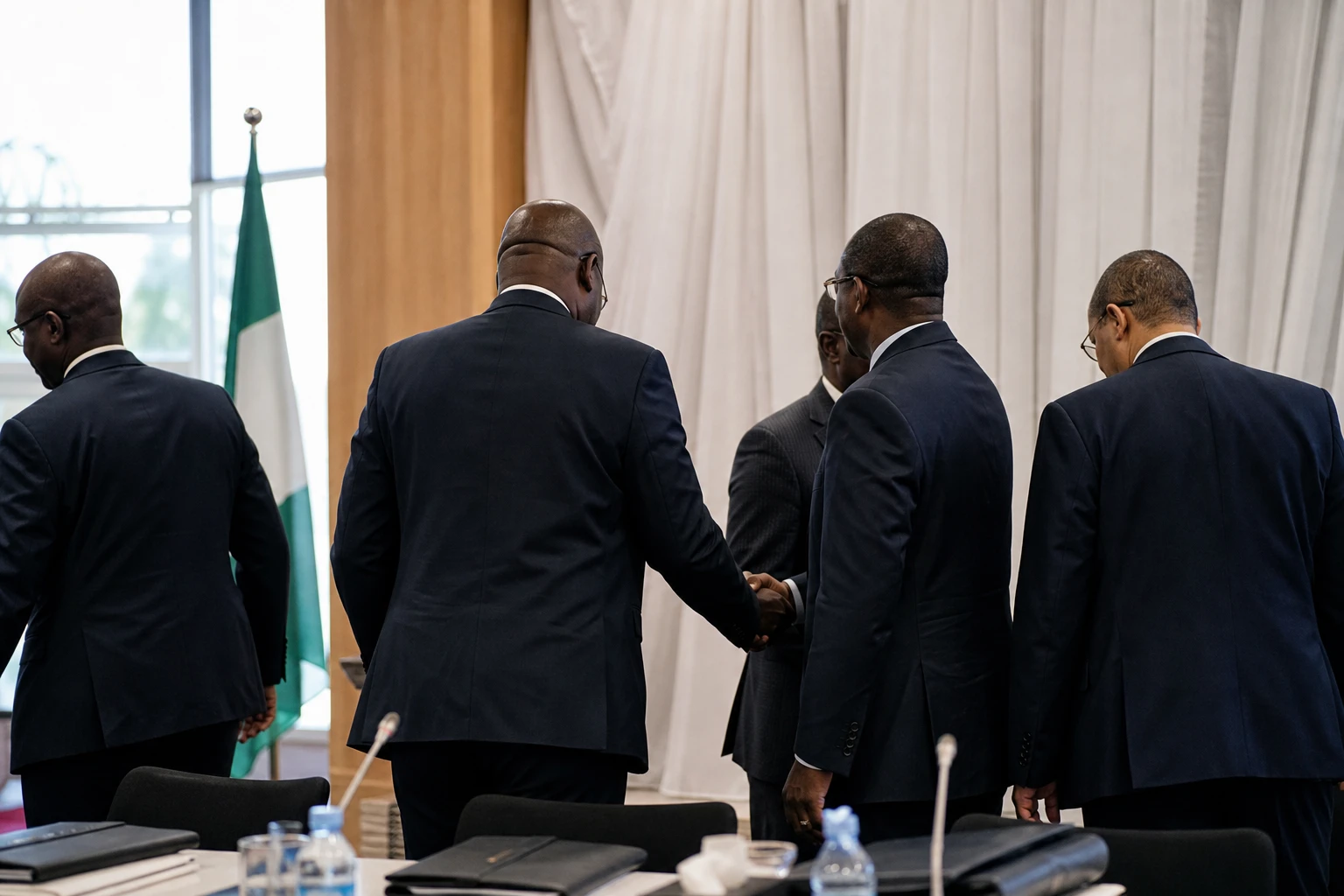
On Monday 24 August 2026 in Abuja, NNPC Ltd and the partners in OML 118 signed two amendments that move the Bonga Southwest/Aparo project closer to a final investment decision. The parties involved are Shell Nigeria Exploration and Production Company Limited, ExxonMobil subsidiary Esso Exploration and Production Nigeria (Deepwater) Limited, and Eni subsidiary Nigerian Agip Exploration Limited. The first document concerns the production-sharing contract for OML 118. The second settles a commercial dispute that has been open since 2021.
The development comes a few days after a new tax framework for ultra-deepwater projects was introduced. On 11 August 2026, Nigeria’s presidency announced a scheme that could unlock up to $50 billion in investment and covers Bonga South West, among other projects. The measure, brought into effect by the Deep Offshore Oil and Gas Projects Incentives (Tax Remission) Order, 2026, replaces project-by-project negotiations with clearer eligibility criteria.
For the presidency, the reform is intended to address a problem investors know well: uncertainty. For the Nigerian state, the stakes are broader. It aims to attract new capital without weakening the Federation’s share of the value generated. The authorities present this as a balance between competitiveness and the national interest.
An established field, but a crucial one for future production
Bonga Southwest/Aparo is no small undertaking. NNPC estimates total investment over the project’s lifetime at between $15 billion and $21 billion. Expected peak production is 175,000 barrels a day, alongside 140 million standard cubic feet of gas a day. The site lies about 120 kilometres off the Nigerian coast, in waters around 1,000 metres deep.
The project’s history also gives it weight. According to NNPC, if it does reach a final investment decision, it will become the first major Nigerian offshore oil project to do so in 18 years. That gap says much about the difficulty of reviving upstream oil in a country with a long offshore track record. It also shows that geological potential is not enough without a stable contractual framework.
The signal matters to foreign groups operating in Nigeria. Shell, ExxonMobil and Eni see an opportunity to secure major, capital-intensive assets under more predictable rules. For the federal government, the challenge is to turn tax announcements into real projects, and then into barrels produced. The distinction is crucial: the agreements signed in Abuja do not yet produce oil, but they reduce the risk that was holding back investment.
Production, the budget and energy sovereignty: what the state stands to gain
The revival comes as Nigerian production is rising. The Nigerian Upstream Petroleum Regulatory Commission says the country produced 1.67 million barrels a day in July 2026, including 1.505 million barrels of crude and 0.17 million barrels of condensates. The regulator also says Nigeria met its OPEC quota for the third consecutive month.
That level remains fragile, however. The country is still seeking to stabilise supply, which is regularly disrupted by theft, production shutdowns, high costs and contractual disputes. In this context, the return of major offshore projects could support exports, boost public revenue and increase gas supplies for industry. But it will not, on its own, address the weaknesses of local refining or the continued reliance on imports of petroleum products.
The project also has a social dimension. The authorities point to direct and indirect jobs, as well as greater use of local skills in engineering, marine logistics and technical services. This is a key issue for Nigeria, where debates over local content have become central since the Petroleum Industry Act came into force and more recent implementation reforms. If the subcontracting chain remains dominated by foreign players, the country will capture only a limited share of the value created.
A Nigerian project, but a barometer for the whole region
The significance of the project extends beyond Nigeria. In the Gulf of Guinea, where several states are seeking to defend declining or unstable oil revenues, every offshore revival is a test of regulatory credibility. For ECOWAS, the revival also matters to regional supply chains, ports, banking services and engineering contracts. Nigeria remains an economic and energy powerhouse in West Africa.
The next steps will depend on moving from the signed amendments to a final investment decision, and then on the industrial timetable. The authorities have already linked this process to other deepwater projects, some of which have long been awaiting tax or commercial settlements. If Bonga Southwest/Aparo makes real progress, Abuja will be able to present it as proof that targeted tax reform can unlock billions of dollars without relinquishing public control over oil revenues.



