Algeria
 Egypt
 Libya
 Morocco
 Sudan
 Tunisia
 Benin
 Burkina Faso
 Cabo Verde
 Côte d'Ivoire
 Ghana
 Guinea
 Guinea-Bissau
 Liberia
 Mali
 Mauritania
 Niger
 Nigeria
 Senegal
 Sierra Leone
 The Gambia
 Togo
 Cameroon
 Central African Republic
 Chad
 DR Congo
 Equatorial Guinea
 Gabon
 Republic of the Congo
 São Tomé and Príncipe
 Burundi
 Comoros
 Djibouti
 Eritrea
 Ethiopia
 Kenya
 Madagascar
 Malawi
 Mauritius
 Mozambique
 Seychelles
 Somalia
 South Sudan
 Tanzania
 Uganda
 Angola
 Botswana
 Eswatini
 Lesotho
 Namibia
 South Africa
 Zambia
 Zimbabwe
A continent reshaping the peloton
For a long time, international cycling told almost the same geographical story. The major races, teams and narratives all started in Europe. Yet that map has expanded. Today, African riders win stages of the Tour de France, major Women’s WorldTour races are won by African athletes, and Kigali has taken its place at the heart of the global calendar. This shift is more than symbolic. It says something deeper: Africa is no longer just a talent pool in the making; it is also becoming a place for organising, hosting and competing.
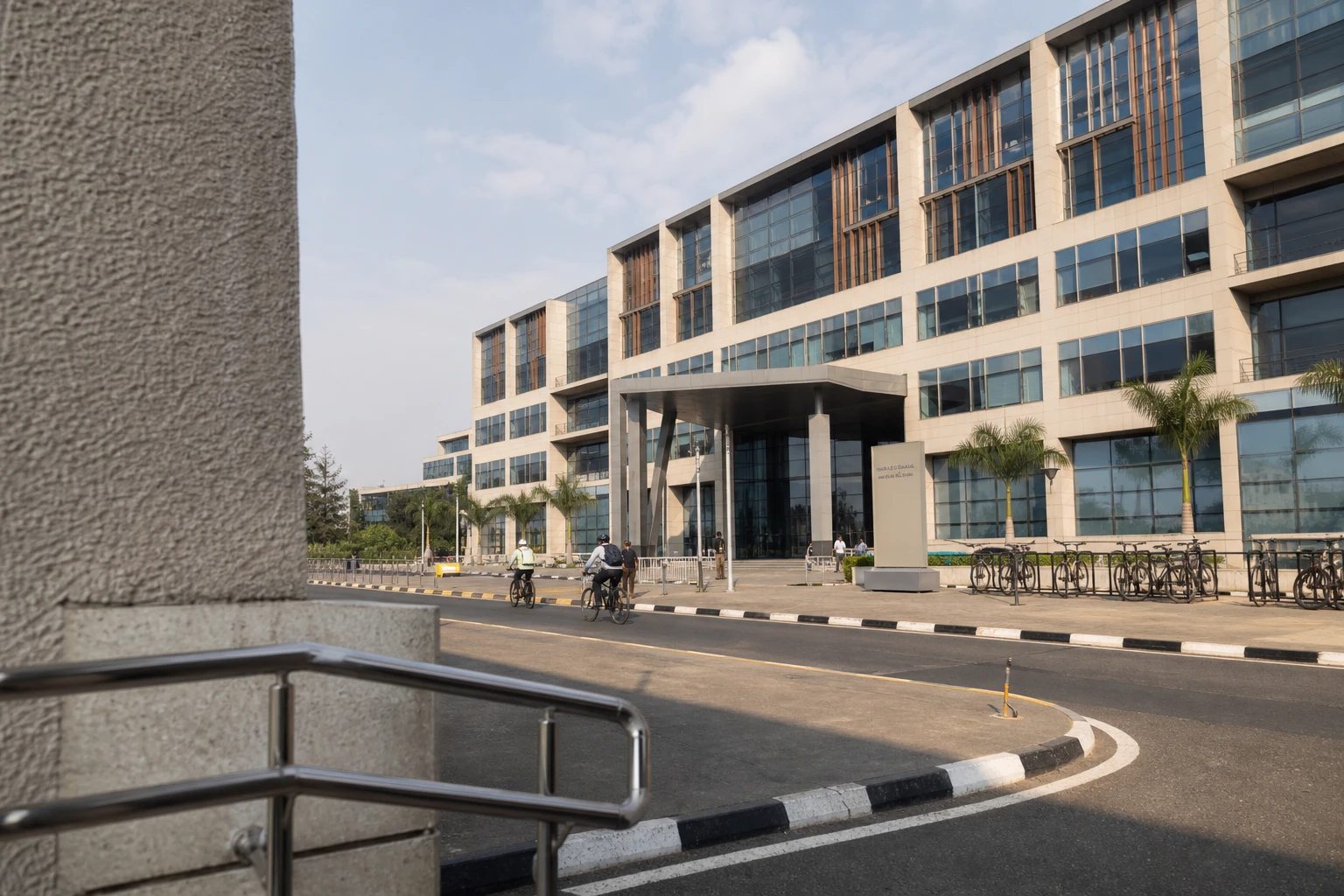
For Rwanda, the stakes go beyond sport. Kigali, the Rwandan capital, hosted the first UCI Road World Championships ever held on the African continent in September 2025, with 108 nations entered at the time of registration and 36 African countries represented. The Rwandan government and the UCI presented the event as a historic milestone, not just another competition. In East Africa, within the East African Community, the message is clear: sports infrastructure, logistical organisation and international profile can also come from Africa.
Cycling moves from the margins to the centre
This shift is built on a long history. North African pioneers paved the way as early as the beginning of the 20th century, long before African cycling was seen as a coherent whole. The UCI and the Tour de France now recall that Biniam Girmay made his mark on the sport’s history in 2024, with three stage wins and the green jersey in Nice. He became the first Black African rider to win a Tour de France stage. This performance is no minor footnote. It puts Eritrea, and Africa more broadly, in a different category of sporting visibility.
The momentum extends beyond men’s racing. In April 2025, Mauritian Kim Le Court won Liège-Bastogne-Liège Femmes. The UCI noted that she had become the first African woman to win a Women’s WorldTour classic. A few months later, she wore the yellow jersey at the Tour de France Femmes and also raised her arms in victory in Guéret. Here again, the significance goes beyond Mauritius alone. It shows that an African rider can win at the highest level in races that had until then shaped an almost exclusively European narrative.
Kigali, a sporting showcase and political lever
In this context, Kigali was more than a backdrop. The Rwandan capital hosted an event designed to demonstrate the country’s capacity to stage a major global gathering. The UCI called it a historic edition, the first road world championships it had organised in Africa. The competition schedule also highlighted Kigali’s terrain, with races designed around the hills of Kimihurura and Kigali Golf. Rwanda also prepared the event as a national and continental image-building project, emphasising its potential to boost local sport.
This international exposure matters. For the Rwandan government, it serves a dual purpose: enhancing the country’s appeal and strengthening its reputation as a host, in a region where competition among capitals to attract events, investment and tourists is real. For Rwandan riders, it also offers a more tangible prospect. The UCI described Kigali as a catalyst for a long-term development strategy, with training and coaching initiatives intended for the region as a whole. In a sport where disparities in resources remain considerable, access to competition, equipment and talent-identification programmes remains decisive.
Performance, local economies and the movement of talent
African cycling also depends on less visible but essential exchanges. Continental teams, regional races and training programmes form an ecosystem. The UCI says that 36 African federations took part in Kigali in 2025, compared with 15 the previous year in Zurich. This is not just a statistical increase. It points to a broader presence, beginning to take shape around continental events and specific sporting goals. In East Africa, this rise is aligned with initiatives in several countries to professionalise development pathways, from junior level to the top ranks.
The economic dimension matters too. Major races bring together accommodation, transport, security, catering, media and local labour. In Kigali, as in the Caribbean islands, cycling is not just about the elite. It supports local economies and fosters a popular cycling culture. That is precisely what makes the sport relevant to the continent: it combines spectacle, mobility, urban cycling and image-building. In a city such as Kigali, where urban planning, hills and traffic give bicycles a visible place, this dimension speaks to residents as much as to sponsors.
What the continent should watch now
The events of 2025 have set a new benchmark. The question is no longer whether Africa can host the highest level of global competition. Kigali has answered that. The challenge is how to turn this breakthrough into lasting results: more African riders in WorldTour teams, more established races on the continent, better-funded federations, and clearer pathways between elite sport and mass participation. Rwanda, which has made Kigali a sporting showcase, will be judged on its ability to extend the impact of the World Championships beyond the week of competition.
Across Africa, the significance is clear. Cycling is now joining the list of disciplines in which the continent wants not merely to take part, but to make its weight felt. Rwanda’s example could matter for East Africa, for the countries of the East African Community, and more broadly for federations seeking credible development models. The next test will not be just a medal or a stage win. It will be the continent’s ability to establish, over the long term, a form of cycling that reflects its own character: more present, better organised and more visible.