Algeria
 Egypt
 Libya
 Morocco
 Sudan
 Tunisia
 Benin
 Burkina Faso
 Cabo Verde
 Côte d'Ivoire
 Ghana
 Guinea
 Guinea-Bissau
 Liberia
 Mali
 Mauritania
 Niger
 Nigeria
 Senegal
 Sierra Leone
 The Gambia
 Togo
 Cameroon
 Central African Republic
 Chad
 DR Congo
 Equatorial Guinea
 Gabon
 Republic of the Congo
 São Tomé and Príncipe
 Burundi
 Comoros
 Djibouti
 Eritrea
 Kenya
 Madagascar
 Malawi
 Mauritius
 Mozambique
 Rwanda
 Seychelles
 Somalia
 South Sudan
 Tanzania
 Uganda
 Angola
 Botswana
 Eswatini
 Lesotho
 Namibia
 South Africa
 Zambia
 Zimbabwe
A long-awaited return, but in a country under strain
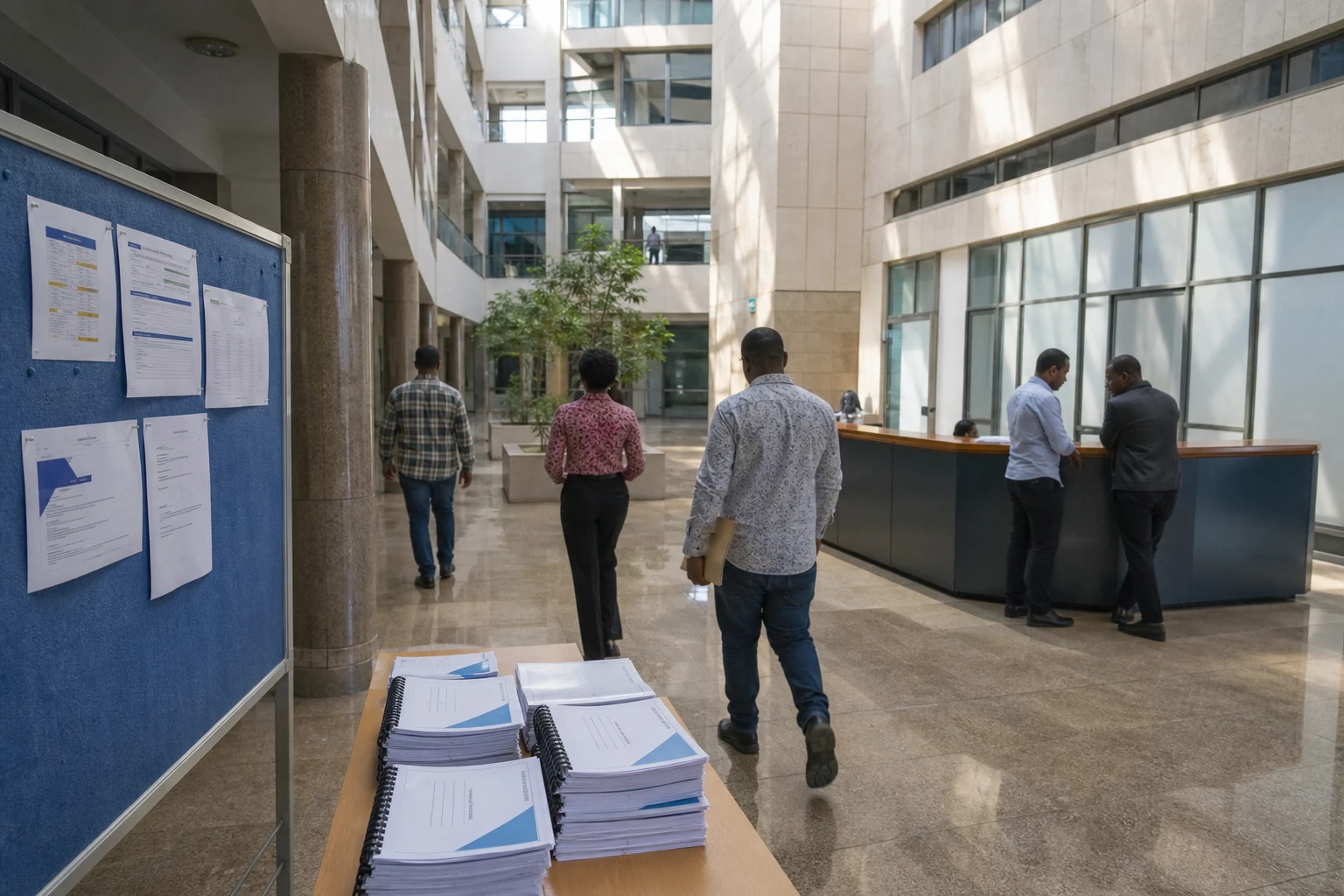
In Addis Ababa, Ethiopia’s bid to host the 2028 Africa Cup of Nations represents more than sporting ambition. It also reflects a country’s desire to reclaim its place at a major continental event, even as its domestic stability remains fragile. Football can serve as a showcase. It can also become a test of organisational capacity, security and national unity.
Ethiopia has not hosted AFCON since 1976. The next edition, in 2027, is already set to return to East Africa, with Kenya, Uganda and Tanzania as co-hosts. In this context, an Ethiopian bid for 2028 forms part of a regional period in which East Africa is seeking to consolidate its standing in continental football.
What CAF says, and what Addis Ababa wants
The Confederation of African Football has opened the bidding process for the 2028, 2032 and 2036 editions, under a framework described as transparent and in line with best practice. CAF has also confirmed that AFCON 2027 will be held in Kenya, Tanzania and Uganda from 19 June to 17 July 2027. From 2028, the competition is to return to a four-year cycle, aligning it with the calendars of major international competitions.
Against this backdrop, the Ethiopian Football Federation has formalised its bid. Ethiopian public broadcaster EBC reported that the federation had submitted its application to CAF, noting that Ethiopia had previously hosted AFCON in 1962, 1968 and 1976. The country therefore wants to reconnect with a long history of African football at a time when Addis Ababa is also seeking to project an image of stability and logistical capacity.
Real strengths, but major obstacles
On the sporting front, the challenge remains significant. FIFA’s website currently ranks Ethiopia’s men’s team 143rd out of 211, with the latest official update dated 20 July 2026. The national side has not progressed beyond the group stage of AFCON since its appearance in 2022. The bid is therefore not just about the country’s potential as a host, but also about a broader sporting rebuild.
The obstacles are primarily political and security-related. In 2026, several international and African sources described a domestic situation marked by persistent violence in Amhara and Oromia, as well as unresolved tensions around Tigray. In February 2026, the UN said renewed tensions and reported clashes in Tigray had contributed to a deterioration in the security environment. UNICEF, for its part, reported in 2026 that insecurity had increased humanitarian needs in several regions, including Amhara, Oromia and Tigray.
The African Union’s election observation mission added another relevant factor. During Ethiopia’s parliamentary elections on 1 June 2026, the AU noted that voting had not taken place in Tigray and in some areas of Amhara and Oromia because of security and operational challenges. This reality is directly relevant to an AFCON bid, because a continental tournament requires stadiums, roads and hotels, and, above all, safe travel for teams, referees and supporters.
An issue of image, the economy and governance
For the federal government, hosting AFCON would be a prestigious undertaking. It would also be an economic opportunity. A tournament of this scale brings investment in transport, hospitality, telecommunications and security. It can boost the formal economy in host cities while also generating benefits for the informal sector, from street vendors to mobility services. In a country where Addis Ababa already concentrates a large share of the infrastructure, the challenge would be to distribute the benefits more evenly between the capital and the regions.
The bid also has domestic political significance. It allows the government to present another face of Ethiopia: that of a state which invests, plans and aspires to host the continent. But such a promise requires concrete guarantees. CAF has already made clear in other cases that it can rule out a country if its infrastructure or security falls short. That precedent matters, because Ethiopia knows that a major tournament is not won in the stands alone, but also through administrative and logistical preparation.
What the bid says about East Africa
AFCON’s return to East Africa in 2027, followed by the contest to host the 2028 edition, shows one simple thing: the region is regaining a role in major decisions about African football. Ethiopia, one of the historic members of the continental football community, wants to be part of that movement. But it must make its case at a time when the continent is paying ever closer attention to the quality of stadiums, roads, finances and security arrangements.
The next steps will play out on several fronts. CAF still has to assess the bids and compare candidates’ technical, financial and security capabilities. Addis Ababa, for its part, will have to show that the memory of 1976 can become a credible project for 2028. The stakes go beyond football: the continental challenge is to show that a country marked by internal tensions can still build a strong sporting bid, provided it turns its announcement into infrastructure, security and visible good governance.