
 Algeria
 Egypt
 Libya
 Morocco
 Sudan
 Tunisia
 Benin
 Burkina Faso
 Cabo Verde
 Côte d'Ivoire
 Ghana
 Guinea
 Guinea-Bissau
 Liberia
 Mali
 Mauritania
 Niger
 Nigeria
 Senegal
 Sierra Leone
 The Gambia
 Togo
 Central African Republic
 Chad
 DR Congo
 Equatorial Guinea
 Gabon
 Republic of the Congo
 São Tomé and Príncipe
 Burundi
 Comoros
 Djibouti
 Eritrea
 Ethiopia
 Kenya
 Madagascar
 Malawi
 Mauritius
 Mozambique
 Rwanda
 Seychelles
 Somalia
 South Sudan
 Tanzania
 Uganda
 Angola
 Botswana
 Eswatini
 Lesotho
 Namibia
 South Africa
 Zambia
 Zimbabwe
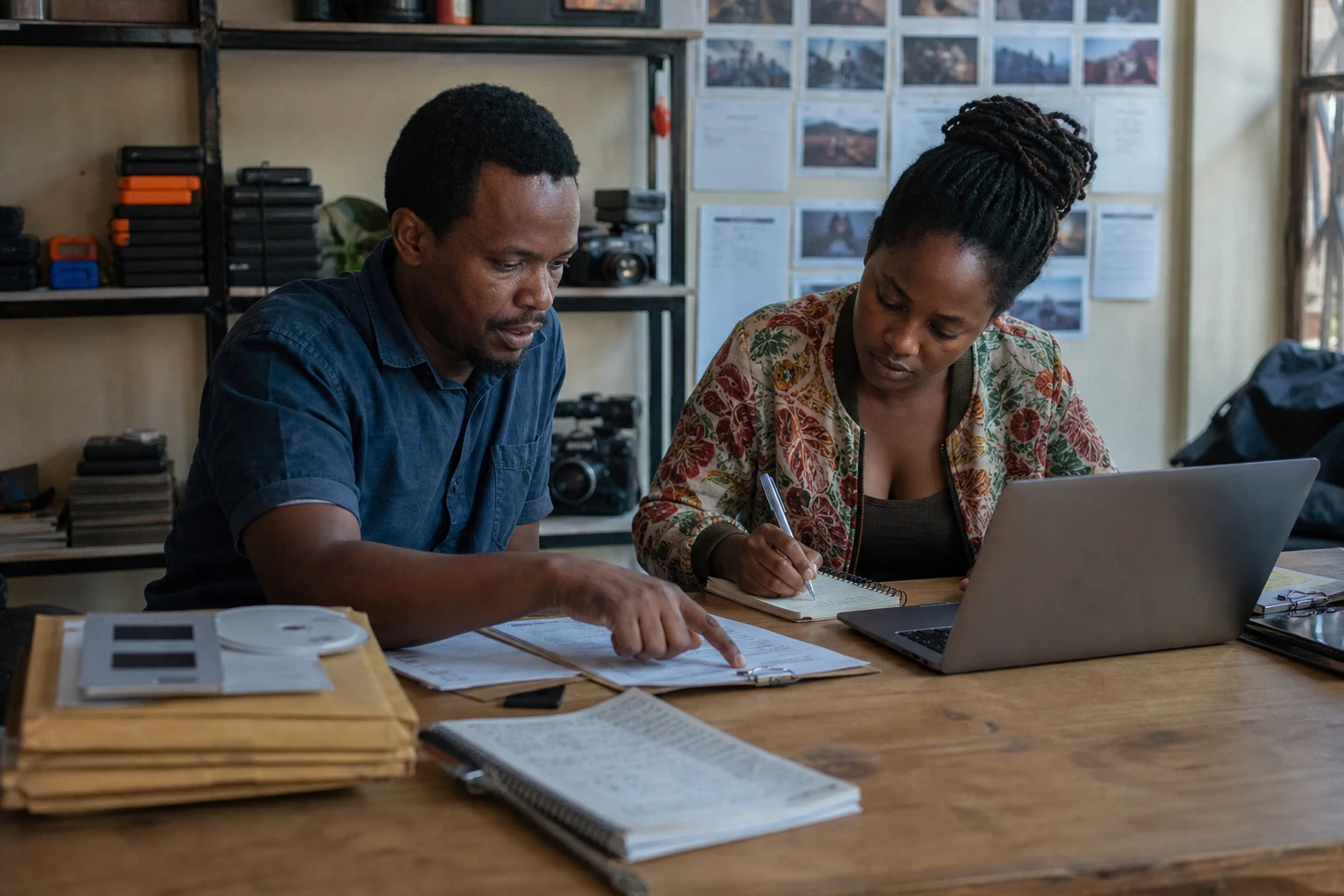
At Lussas, African films find their place in a market that remains too closed
In documentary filmmaking, much is often decided before a film reaches the screen. It must be written, shot and edited, then, above all, find programmers, screening venues and audiences. That is where a film’s place in the cultural debate is decided in very concrete terms. In Lussas, Ardèche, the 38th edition of the États généraux du film documentaire runs from 16 to 22 August 2026, with 130 films on the programme and a special section devoted to young creation from sub-Saharan Africa.
The choice is significant. Since 1989, this French event has sought to provide a space for the circulation of non-fiction cinema, with no competition or awards. This year, it is also opening a window onto a continent whose documentaries are being made, renewed and exported, but still face barriers to distribution beyond their usual networks. The festival has also announced a journey through Tunisian documentary film, with 13 films, as part of the 2026 Mediterranean Season.
A selection linking Dakar, Kisangani, Khartoum and southern Tunisia
Lussas’s African programme does not reduce the continent to a single mood or genre. It brings together stories rooted in specific places. The festival website says the selection “marks a return” and embraces an inward-looking perspective on reality, attentive to its fault lines, gestures and ways of inhabiting the world. The screenings are hosted by Madeline Robert, with Cyrielle Raingou, Nelson Makengo and David Bingong expected to attend.
Among the films featured, Liti Liti by Mamadou Khouma Gueye follows his mother in Guinaw Rail, a suburb of Dakar, as the regional express train and major urban development projects reshape the neighbourhood. The film has screened at several international festivals and, according to distribution information published by its partners, runs for 76 minutes and is a co-production between Senegal, Belgium and France.
With Catcher, Derhwa Kasunzu takes a different approach, exploring sporting memory in Kisangani, in the Democratic Republic of the Congo. The FESPACO profile describes the filmmaker as based in the city and notes that the film is set there. The documentary has circulated at African festivals and belongs to a generation filming its own places from within, without exoticising them or exaggerating the distance.
The same approach runs through Damned Tomatoes by Marwa Tiba. The film-documentaire.fr listing says it is Tunisian, was made in 2025, and follows producers in the south of the country grappling with climatic and agricultural constraints. The film was selected for Lussas’s “Route du Doc: Tunisia” programme.
This geographical diversity matters. It avoids turning sub-Saharan Africa into a homogeneous bloc. Senegal does not tell the story of the DRC, the DRC does not speak for Cameroon, and Tunisia opens up another subject: agricultural change and the pressure of climate change on the south. That is precisely what documentary cinema makes possible. It connects realities without conflating them.
What the programme says about African cities and the circulation of films
The political heart of this selection may lie here: in cities in motion. Dakar is expanding, fragmenting and modernising through major construction projects. Kisangani continues to write its own urban history through local figures. In filmed accounts, Khartoum remains a place where the city and daily life bear the marks of a historic turning point. Even when a film is intimate, it ends up saying something collective: the home, the neighbourhood, work, roads, water, the train.
The Senegalese case is particularly telling. The Dakar-Diamniadio regional express train, now a symbol of urban modernisation, has also transformed popular neighbourhoods and the ways people use them. This is the kind of tension that the documentaries selected at Lussas bring to the surface: on one side, state-led narratives of development; on the other, the displacement, loss of bearings and neighbourhood memories that accompany these projects. The film then becomes a tool of social archiving, not merely an aesthetic object.
The Tunisian programme, too, has something important to say. Since 2011, a generation of filmmakers has emerged in the country, documenting social, political and environmental change. Lussas has selected 13 films for its “Route du Doc”, a sign that Tunisian documentary cinema is no longer simply a subject of study but a living, established body of work, already legible beyond national borders.
The question of circulation remains. A festival such as Lussas can serve as a bridge, but it cannot replace African cinemas, regional platforms, public television networks or film education programmes. The real challenge for the continent’s filmmakers is to create more points of entry. A documentary does not benefit only from being selected. It benefits from being seen in Dakar, Kinshasa, Douala, Tunis, Abidjan or Khartoum, by audiences who recognise the places, practices and tensions it portrays. That is where its lasting impact is built.
A continental reach that extends far beyond a French festival
On a pan-African level, this edition of Lussas confirms a clear shift: African documentaries are no longer simply asking to be “discovered”. They are seeking the visibility their artistic maturity deserves. The Ardèche festival, which has for years championed the transmission of cinema, offers an important platform. But the centre of gravity remains on the continent, where funding, criticism, programming and the memory of images are shaped.
This selection should also be read as a signal to African cultural institutions. When works from Senegal, the DRC, Cameroon, Sudan and Tunisia circulate together, they map shared concerns: rapid urbanisation, the relationship between memory and displacement, agriculture under climate pressure, family ties, and a generation of young people filming their own times rather than commenting on them from a distance. These are contemporary issues, not peripheral curiosities.
What happens next will unfold after the festival. Selection announcements, online re-screenings and invitations to other Mediterranean or African events will matter as much as the screenings in Lussas. For the selected films, the real test will be whether they can reach beyond professional circles and enter schools, film clubs, cultural television channels and platforms capable of reaching dispersed African audiences. It is at this scale that documentary can become a common language across the continent without losing its local accents.



