Algeria
 Egypt
 Libya
 Morocco
 Sudan
 Tunisia
 Benin
 Burkina Faso
 Cabo Verde
 Ghana
 Guinea
 Guinea-Bissau
 Liberia
 Mali
 Mauritania
 Niger
 Nigeria
 Senegal
 Sierra Leone
 The Gambia
 Togo
 Cameroon
 Central African Republic
 Chad
 DR Congo
 Equatorial Guinea
 Gabon
 Republic of the Congo
 São Tomé and Príncipe
 Burundi
 Comoros
 Djibouti
 Eritrea
 Ethiopia
 Kenya
 Madagascar
 Malawi
 Mauritius
 Mozambique
 Rwanda
 Seychelles
 Somalia
 South Sudan
 Tanzania
 Uganda
 Angola
 Botswana
 Eswatini
 Lesotho
 Namibia
 South Africa
 Zambia
 Zimbabwe
In Yamoussoukro, a stone monument that defies the heat
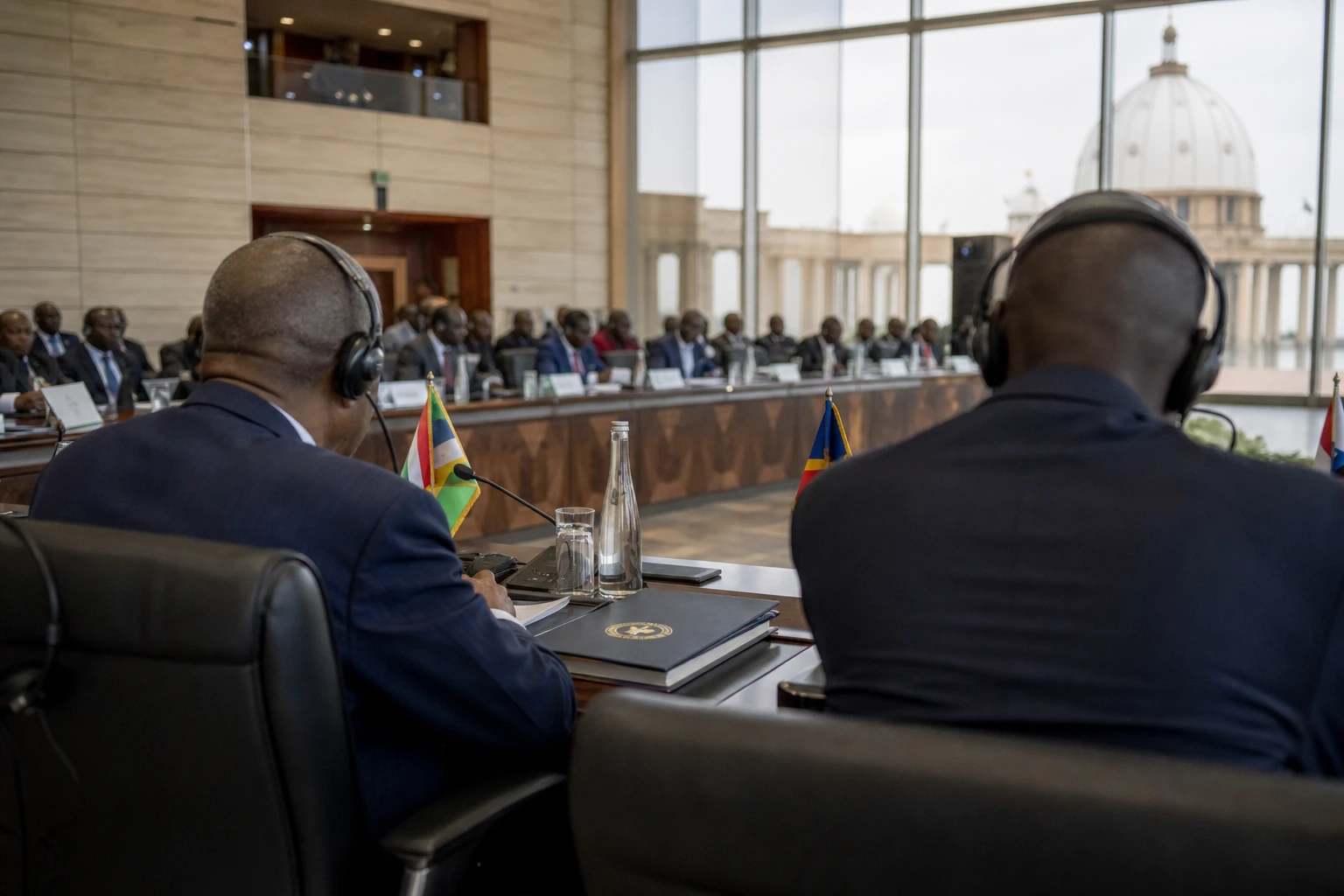
In Yamoussoukro, the political and administrative capital of Côte d’Ivoire, the Basilica of Our Lady of Peace first impresses with its size. But visitors are soon struck by something else: the coolness inside, even as the heat bears down outdoors. In this city with a humid tropical climate, the building’s comfort is no accident. It combines monumental architecture, airflow designed from the outset and air conditioning integrated into the seating. The result reflects both a technical feat and a determination to make the site a lasting symbol.
The subject goes beyond mere tourist curiosity. In Yamoussoukro, the basilica covers 130 hectares and forms part of an urban complex conceived as a national showcase. Félix Houphouët-Boigny made Yamoussoukro the capital in 1983, and the city was then conceived as a political, administrative and prestigious centre. In this geography of power, the basilica is one of the major landmarks, alongside public institutions, main roads and ceremonial spaces. It has also become a marker of the city’s identity, far beyond Catholic worship alone.
A building designed to maintain thermal comfort
The secret of this coolness lies in several technical choices. Specialist sources say the seats distribute air conditioning, divided into zones so that it is activated only in occupied areas. The basilica also uses floor grilles and an airflow arrangement that create a barrier between the hot outdoors and the more temperate interior. In other words, the building is not merely large; it is designed as a controlled volume in which ventilation and air conditioning work together. This combination reduces the feeling of stuffiness, even when the doors open and the flow of worshippers increases.
Yamoussoukro’s climate makes this system useful. The autonomous district describes a dry season between November and March, with an average temperature of around 25.8°C, while other institutional and scientific sources place the city in an equatorial or transitional humid tropical environment. In this context, maintaining a stable indoor temperature is a practical concern, not a minor comfort. It matters for worshippers, but also for visitors, ceremonies and the upkeep of a monument that welcomes large numbers of people throughout the year.
The basilica itself was built between 1986 and 1989, then consecrated in 1990 during Pope John Paul II’s visit. The district’s official website and Guinness World Records describe it as the world’s largest church by area, a record often cited when the building is discussed. Its dimensions are considerable: a central nave dominated by a dome 90 metres in diameter, 380 colonnades, nearly 8,000 m² of stained glass, seating for 18,000 inside and a forecourt designed to accommodate many more. In a city where architecture also serves as a national narrative, these figures are not decorative; they explain the choice of a robust thermal system.
Technology, but also symbolism
The basilica’s coolness says something important: the monument was not designed as a mere copy of St Peter’s in Rome, but as a local adaptation on a very large scale. Its European inspiration is evident, yet the building responds to specific Ivorian constraints, including heat, light and the management of vast flows of people. This approach to transformation is interesting from an African perspective. It shows that a major heritage project in Africa can incorporate contemporary technical solutions without relinquishing its spiritual function or urban presence.
The building also plays a real economic role. Places of worship on this scale support the work of guides, transport operators, small businesses and accommodation providers. In Yamoussoukro, a capital often viewed through the prism of public institutions, the basilica adds to the city’s visitor offer and strengthens its appeal. It contributes to the image of a city seeking to bring together administration, political memory, a technology hub and heritage tourism. For the local population, this means dispersed but tangible benefits, particularly during pilgrimage periods and organised visits.
The stakes are broader still, both for Côte d’Ivoire and West Africa. In an ECOWAS region where capitals are seeking to attract visitors, investment and religious or cultural events, the Yamoussoukro basilica illustrates how a monument can become a territorial asset. It also shows that contemporary African architecture need not choose between prestige and climate adaptation. Here, great scale goes hand in hand with practical expertise. The question to follow is therefore not only that of the monument’s legend, but also of its preservation, maintenance and lasting place in Côte d’Ivoire’s urban landscape.