Algeria
 Egypt
 Libya
 Morocco
 Sudan
 Tunisia
 Benin
 Burkina Faso
 Cabo Verde
 Côte d'Ivoire
 Ghana
 Guinea
 Guinea-Bissau
 Liberia
 Mali
 Mauritania
 Niger
 Nigeria
 Senegal
 Sierra Leone
 The Gambia
 Togo
 Cameroon
 Central African Republic
 Chad
 DR Congo
 Equatorial Guinea
 Gabon
 São Tomé and Príncipe
 Burundi
 Comoros
 Djibouti
 Eritrea
 Ethiopia
 Kenya
 Madagascar
 Malawi
 Mauritius
 Mozambique
 Rwanda
 Seychelles
 Somalia
 South Sudan
 Tanzania
 Uganda
 Angola
 Botswana
 Eswatini
 Lesotho
 Namibia
 South Africa
 Zambia
 Zimbabwe
An agricultural showcase that is more than a trade fair
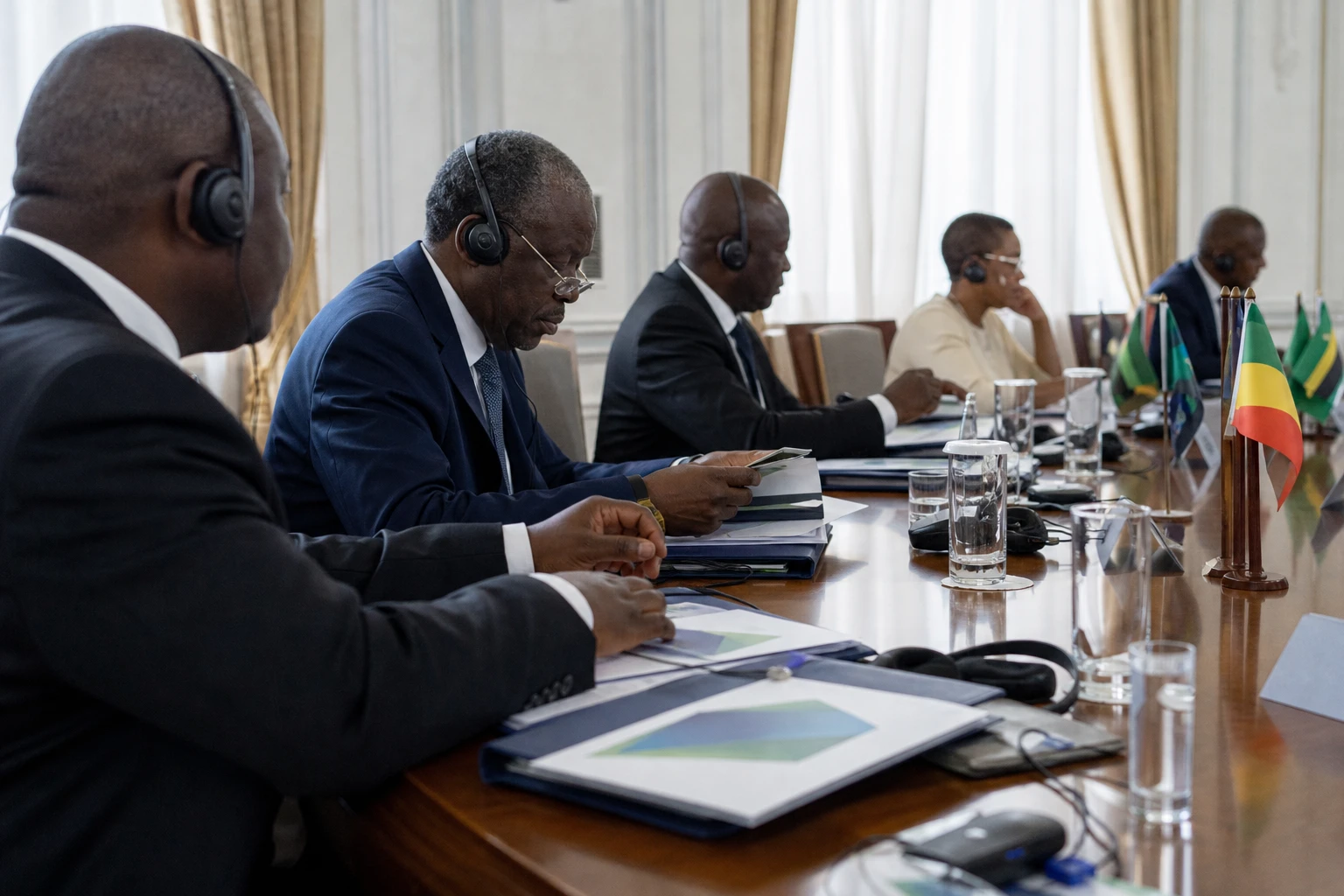
In Congo, the question is no longer simply how to produce. It is also how to process, sell and retain more value locally. The second edition of the Great Agricultural Fair of Congo is part of this shift. For sixteen days, from 5 to 20 August 2026, the Bambou-Mingali exhibition grounds hosted an event designed to be a market, a forum and a laboratory all at once. The official programme announced 16 pavilions, 5 thematic hubs, 14 panel discussions and an agricultural entrepreneurship academy, with a focus on young people aged 18 to 40.
This format is no coincidence. In Congo, agriculture remains a strategic sector, but one that is still undervalued compared with the weight of hydrocarbons in the economy. The FAO notes that the national economy remains dominated by oil, while agriculture still accounts for only a small share of GDP. At the same time, the country is seeking to better integrate food production, local processing and climate resilience. The regional framework also matters: Brazzaville is part of CEMAC, the Economic and Monetary Community of Central Africa, which brings together six countries and is pushing for more tangible market integration.
Solid figures, a clear political message
The most substantial details of the event were confirmed by several sources. The fair brought together more than 650 exhibitors from the country’s fifteen departments. It covered 10 hectares at Bambou-Mingali, in Djoué-Léfini. The official programme also lists 16 pavilions, 5 hubs and 14 departmental days, giving the event an explicitly national dimension rather than making it a simple sectoral exhibition in Brazzaville.
The schedule was also designed to encourage the exchange of knowledge. Each day highlighted a different department, with discussions on marketing, financing, post-harvest losses, mechanisation, product quality and market access. This structure reflects a simple idea: the main obstacle is not just a lack of land or initiatives, but the entire chain, from production to market. B2B meetings and technical demonstrations helped bring producers, processors, distributors, investors and public institutions closer together.
The environmental dimension was prominent. The pavilion of the ministry responsible for the environment situated the fair within the debate on sustainable agriculture, the agroecological transition and the implementation of Congo’s nationally determined contribution, or its revised climate pledge. This framing is consistent with a country where forests cover a large share of the territory, and where conservation of the Congo Basin is an economic as well as an ecological concern. The challenge is not to set nature against production, but to build agriculture that creates more value without exhausting soils or undermining ecosystems.
What the fair reveals about Congo’s rural economy
The presence of delegations from Mali, Senegal and China, as well as companies from Cameroon, shows that the Congolese market attracts interest beyond national borders. This is significant. It indicates that Congolese agriculture is not merely a domestic issue, but a sector where inputs, seeds, technologies, services and prospects for South-South cooperation converge. For producers, the challenge is to gain access to more reliable solutions. For the state, it is to reduce food dependence. For investors, the question is whether value chains are visible and markets secure.
The political message put forward during the event points in the same direction. The authorities now present the fair as a tool for food sovereignty, diversification and job creation. It is also a response to a very practical problem: in rural areas, producers often sell at low prices because of a lack of roads, storage, financing and local processing. In cities, households pay more when supply chains are long or unreliable. The fair therefore highlights a familiar but still pressing divide between farm and market.
This second edition also points to an emerging method. Congo is no longer content to announce its agricultural ambitions; it is showcasing them, equipping them and breaking them down into value chains, professions and target groups. This is an important development in a country where rural policies have long suffered from a lack of continuity and measurement. If the momentum continues, the next test will not simply be attendance at a fair. It will be whether projects launched in Bambou-Mingali can survive beyond the exhibition stands, in fields, processing workshops and marketing networks across Central Africa.