Algeria
 Egypt
 Libya
 Morocco
 Sudan
 Tunisia
 Benin
 Burkina Faso
 Cabo Verde
 Côte d'Ivoire
 Ghana
 Guinea
 Guinea-Bissau
 Liberia
 Mali
 Mauritania
 Niger
 Nigeria
 Senegal
 Sierra Leone
 The Gambia
 Cameroon
 Central African Republic
 Chad
 DR Congo
 Equatorial Guinea
 Gabon
 Republic of the Congo
 São Tomé and Príncipe
 Burundi
 Comoros
 Djibouti
 Eritrea
 Ethiopia
 Kenya
 Madagascar
 Malawi
 Mauritius
 Mozambique
 Rwanda
 Seychelles
 Somalia
 South Sudan
 Tanzania
 Uganda
 Angola
 Botswana
 Eswatini
 Lesotho
 Namibia
 South Africa
 Zambia
 Zimbabwe
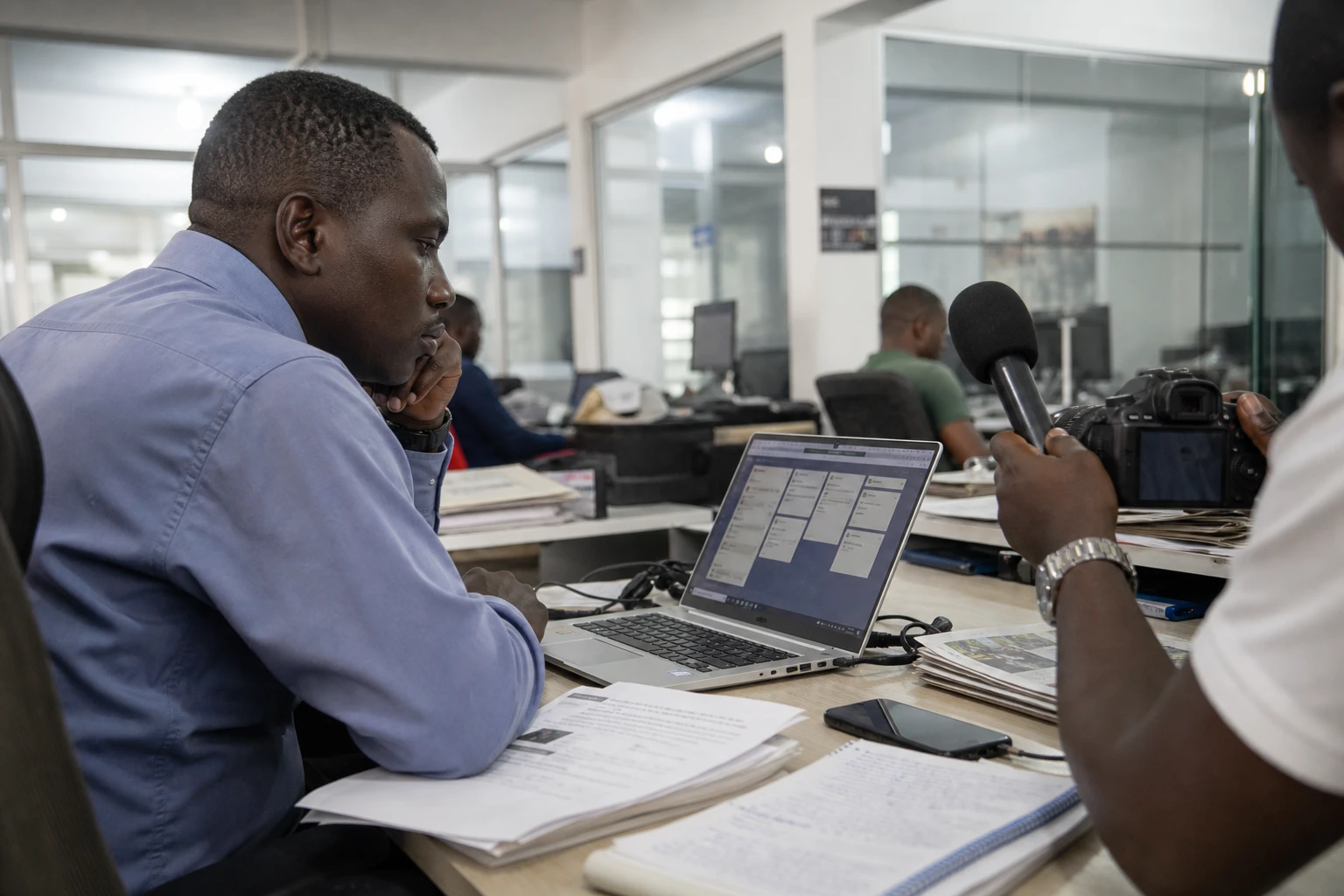
In Lomé, a detention case that goes beyond a simple filming assignment
In Togo, an arrest can quickly become a political test. When two camera professionals are arrested in the north of the country while filming a report, the issue is not just a judicial one. It also touches on the space allowed for investigative work, outside scrutiny and the flow of information from Lomé.
The case of Gaël Mocaër and Sebastian Perez-Pezzani, two Frenchmen working on a documentary for French public television, is part of this tension. They were arrested on 27 July 2026 in Kara, in northern Togo, and then held in custody before being brought before the Togolese justice system, according to several corroborated sources. A Togolese associate, described as a fixer, was also targeted by the proceedings. The authorities say the case concerns the conditions under which they were working in the country. The debate is therefore less about the presence of foreign journalists than about the framework in which they worked and the legal characterisation adopted by the authorities.
In cases of this kind, words matter. Proceedings opened over alleged “false statements” do not mean the same thing as an espionage charge, which was widely reported at the start of the case and then denied or dropped, depending on published accounts. The available information points chiefly to tension between an investigation conducted by Togolese services and press organisations’ defence of journalistic work. At this stage, the judicial facts matter more than speculation.
Togo, the press and the question of control over public space
Togo is not dealing with this case in an institutional vacuum. The country has a High Authority for Audiovisual and Communication, which regulates print, broadcast and digital media. In late July 2026, the authority and the Ministry of Communication again met media professionals to discuss badges and working conditions during the Evala, traditional Kabyè wrestling ceremonies held in the north of the country. This episode shows that media accreditation remains a highly sensitive issue in the country.
This comes on top of an already deteriorating climate since June 2025, when the Togolese authorities suspended broadcasts by RFI and France 24 for three months, citing a lack of impartiality and rigour. The decision had already signalled a new hard line towards international media, at a time when the country was rocked by protests and intense political polarisation. The suspension did not affect only foreign newsrooms. It also sent a message to local media, correspondents and the fixers who work with them.
RSF denounced the detention of the two Frenchmen, saying they were doing their jobs. The organisation also points to a broader deterioration in Togo’s media environment. On the 2026 press freedom map, Togo is in the zone of countries where the situation remains problematic to difficult, confirming a long-term trend. The problem is therefore not isolated. It concerns journalists’ ability to work without being treated as political actors, intruders or suspects as soon as they film in the wrong place or at the wrong time.
What the case reveals for Togolese people, the media and the region
For Togolese people, the stakes are tangible. When a foreign media outlet is blocked or a report becomes the subject of a judicial case, it is not just the country’s image that is at stake. It is also the public’s access to a range of accounts of daily life, services, markets, roads, rural areas and towns in the north. In a country where Lomé accounts for much of the national spotlight, the regions too often come into view only when an incident occurs. On-the-ground journalism is precisely what helps correct this blind spot.
For media professionals, both local and foreign, the case is a reminder that a documentary shoot involves more than filming. It entails permits, intermediaries, administrative constraints and sometimes areas of uncertainty. When the rules are unclear, the risk is twofold. Reporters censor themselves out of caution, and the authorities may interpret the mere presence of a camera as a threat. In such a context, fixers, translators and local assistants remain the most exposed, even though they are often the least visible in public debate.
Regionally, the case resonates beyond Togo. ECOWAS, which brings together West African states, also depends on the movement of people, goods and information. Every restriction affecting the press further complicates trust between states, the media and the public. It also fuels a trend already seen across the subregion: the more governments feel challenged, the more security and sovereignty are used to justify restrictions on information. Yet Togo, which regularly hosts diplomatic and institutional meetings in Lomé, knows how important its external credibility is over the long term.
The continental significance is clear. In several African countries, press freedom is tested not only during major crises. It is also measured through routine procedures: accreditation, equipment checks, pre-trial detention, the targeting of a local fixer and access to the field. It is often in these details that the line between a state that regulates and one that intimidates takes shape. In Togo, what happens next will show whether the authorities are seeking to clamp down on a sensitive case or to set out clearer rules for all journalists, Togolese and foreign alike. Until then, 27 July 2026 will remain another marker in an already fragile relationship between Lomé and the international media.