Algeria
 Egypt
 Libya
 Morocco
 Sudan
 Tunisia
 Benin
 Burkina Faso
 Cabo Verde
 Côte d'Ivoire
 Ghana
 Guinea
 Guinea-Bissau
 Liberia
 Mali
 Mauritania
 Niger
 Nigeria
 Senegal
 Sierra Leone
 The Gambia
 Togo
 Cameroon
 Central African Republic
 Chad
 DR Congo
 Equatorial Guinea
 Gabon
 Republic of the Congo
 São Tomé and Príncipe
 Burundi
 Comoros
 Djibouti
 Eritrea
 Ethiopia
 Kenya
 Madagascar
 Malawi
 Mauritius
 Mozambique
 Rwanda
 Seychelles
 Somalia
 South Sudan
 Tanzania
 Uganda
 Angola
 Botswana
 Eswatini
 Lesotho
 Namibia
 South Africa
 Zimbabwe
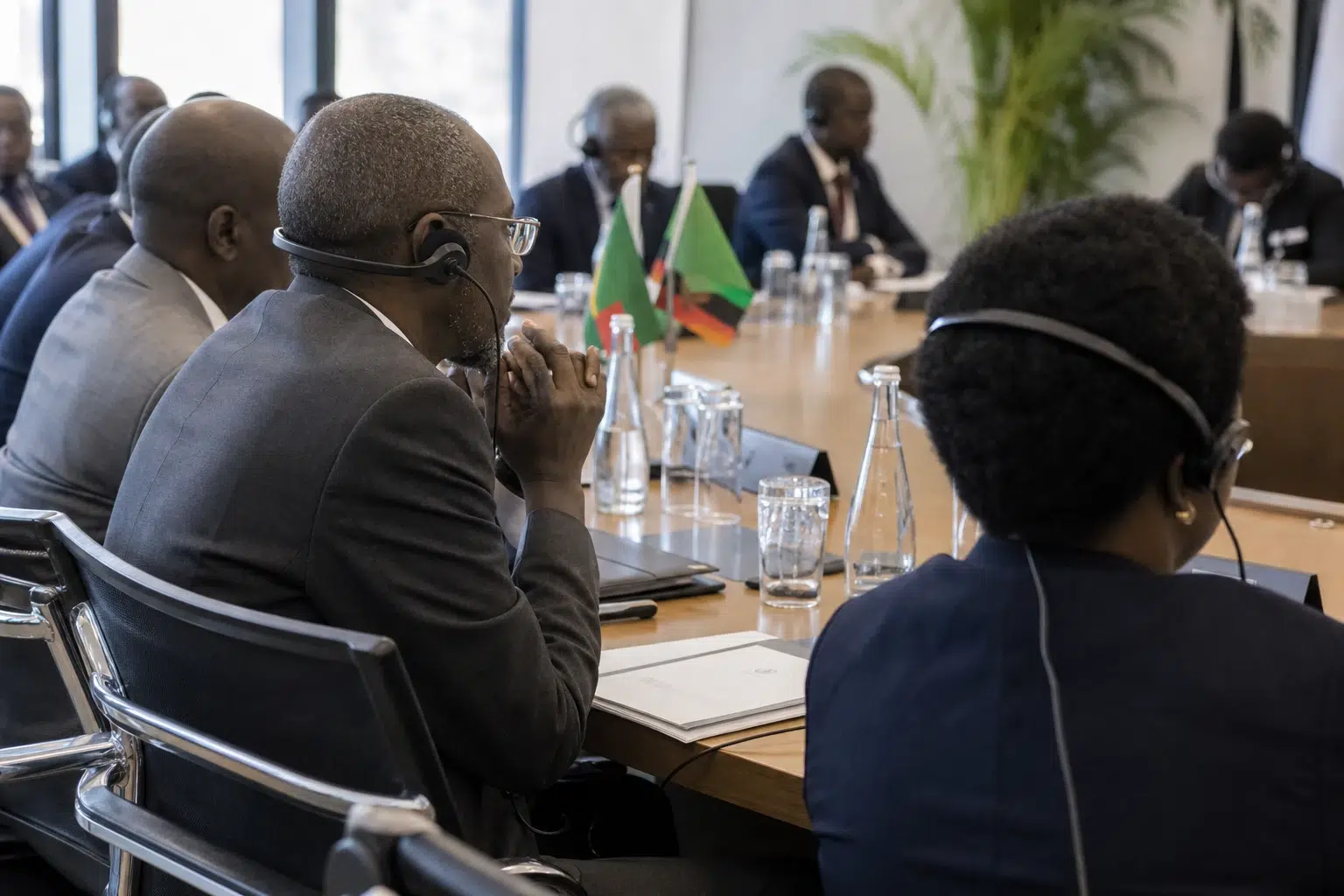
In Lusaka, a security operation intended to address suspicions of weapons possession has opened up a broader political and human crisis.
When an opposition MP disappears from view for several days, and his family speaks of anguish and a lack of news, the issue quickly extends beyond the confines of the justice system. In Zambia, the Mutotwe Kafwaya case has taken that turn: a security operation in the capital, arrests, conflicting accounts, and then the announcement that he had died from gunshot wounds. In a country that was preparing to vote, the question is no longer just what happened at a residence in Lusaka. It is also an institutional one: who oversees the use of force, and with what safeguards?
A country under electoral scrutiny and political tension
Zambia, which held its general election on 13 August 2026, was already under the scrutiny of the Southern African Development Community, SADC, whose observer mission was launched in Lusaka on 6 August. The regional mission had urged parties, candidates and voters to reject violence and protect the peaceful nature of the vote.
This context matters. During an electoral cycle, security operations conducted near a political camp can have a significant impact on public confidence. Zambia is no stranger to recurring debates over the arrests of opposition figures, restrictions on meetings and the role of the police in handling political protests. The Office of the United Nations High Commissioner for Human Rights had already received reports of concerns about arrests deemed arbitrary and intimidation targeting the opposition, journalists and human rights defenders.
What the established facts tell us
According to information made public by the authorities and corroborated by APA, a joint operation in the Kabulonga neighbourhood of Lusaka on 13 August led to the arrest of 11 people. Security services say they found military weapons and ammunition there, in a case presented as being linked to a planned armed insurrection. The authorities also said that Brian Mundubile, an opposition figure and presidential candidate, was at the scene, without specifying his exact status.
It was in this same climate that Mutotwe Kafwaya’s name began circulating widely. Aged 49, the MP for Lunte in northern Zambia served under the Patriotic Front before joining the opposition benches. He is no marginal figure in the country’s political landscape: a former minister and experienced parliamentarian, he belonged to a generation of leaders who had lived through several changes of government and party realignments. The official website of the Zambian Parliament confirms his career, as well as his past ministerial roles.
In the days that followed, his family publicly appealed for news, saying they had had no contact with him since the operation. The authorities then confirmed that he had died, after initially leaving his fate unclear. Available information indicates that he was shot during or after the operation. At this stage, the key issue is not only the timeline. It is the lack of immediate clarity about his care, any transfer and the precise circumstances of his death. On such a sensitive issue, this grey area inevitably fuels mistrust.
Why this case undermines far more than one political camp
For the government, the issue is the authority of the state. The authorities have presented the operation as a response to a serious threat, involving weapons, suspects who had been under surveillance for a long time and a risk to national security. That account exists and must be reported. But on its own, it is not enough to dispel questions about the proportionality of the force used and the protection owed to every person, including a political opponent.
For the opposition, the stakes are twofold. First, it must ensure that the case is not reduced to a simple security matter. Second, it must prevent it from becoming a lasting precedent in which opposition members can be targeted, arrested or injured amid an already tense electoral climate. This concern has not come out of nowhere. Political tensions and alleged repression have been documented repeatedly in the country, at least in communications submitted to the United Nations.
For families, finally, the case is a reminder of a very tangible reality: hours without information are often more devastating than the announcement itself. When a wife, children and relatives do not know where a family member is or what condition they are in, the nature of the public debate changes. It is no longer only about public order. It is about the state’s duty of transparency, the chain of command and the right to life. In a capital such as Lusaka, this expectation is immediately political, but it is first and foremost personal.
What the episode says about Zambia and the region
In the context of southern Africa, Zambia remains a country noted for its relative stability and institutional tradition. That is precisely why such an episode has such a strong impact. SADC closely monitors elections in its member states, because any local deterioration can affect the regional climate, particularly at a time when security, changes of government and electoral credibility are central concerns.
Across the continent, this case is a reminder of a constant: the line between domestic security and political competition remains fragile in several African countries. When a police or military operation takes place during an election period, the way the state documents events, informs families and accounts for its actions becomes as important as the operation itself. This is where trust is at stake, not only in the police, but also in electoral and judicial institutions.
For Zambia, the Mutotwe Kafwaya case will therefore have consequences beyond the mourning. It will raise questions about the accountability of the security forces, standards for detention and arrest, the place of the opposition in public life and how the state treats its political adversaries during an electoral period. In a democracy, strength is not measured by the sound of gunfire. It is measured by the ability of institutions to explain, oversee and remedy. Lusaka is now facing that test.