Algeria
 Egypt
 Libya
 Morocco
 Sudan
 Tunisia
 Benin
 Burkina Faso
 Cabo Verde
 Côte d'Ivoire
 Ghana
 Guinea
 Guinea-Bissau
 Liberia
 Mali
 Mauritania
 Niger
 Nigeria
 Senegal
 Sierra Leone
 The Gambia
 Togo
 Cameroon
 Central African Republic
 Chad
 DR Congo
 Equatorial Guinea
 Gabon
 Republic of the Congo
 São Tomé and Príncipe
 Burundi
 Comoros
 Djibouti
 Eritrea
 Ethiopia
 Madagascar
 Malawi
 Mauritius
 Mozambique
 Rwanda
 Seychelles
 Somalia
 South Sudan
 Tanzania
 Uganda
 Angola
 Botswana
 Eswatini
 Lesotho
 Namibia
 South Africa
 Zambia
 Zimbabwe
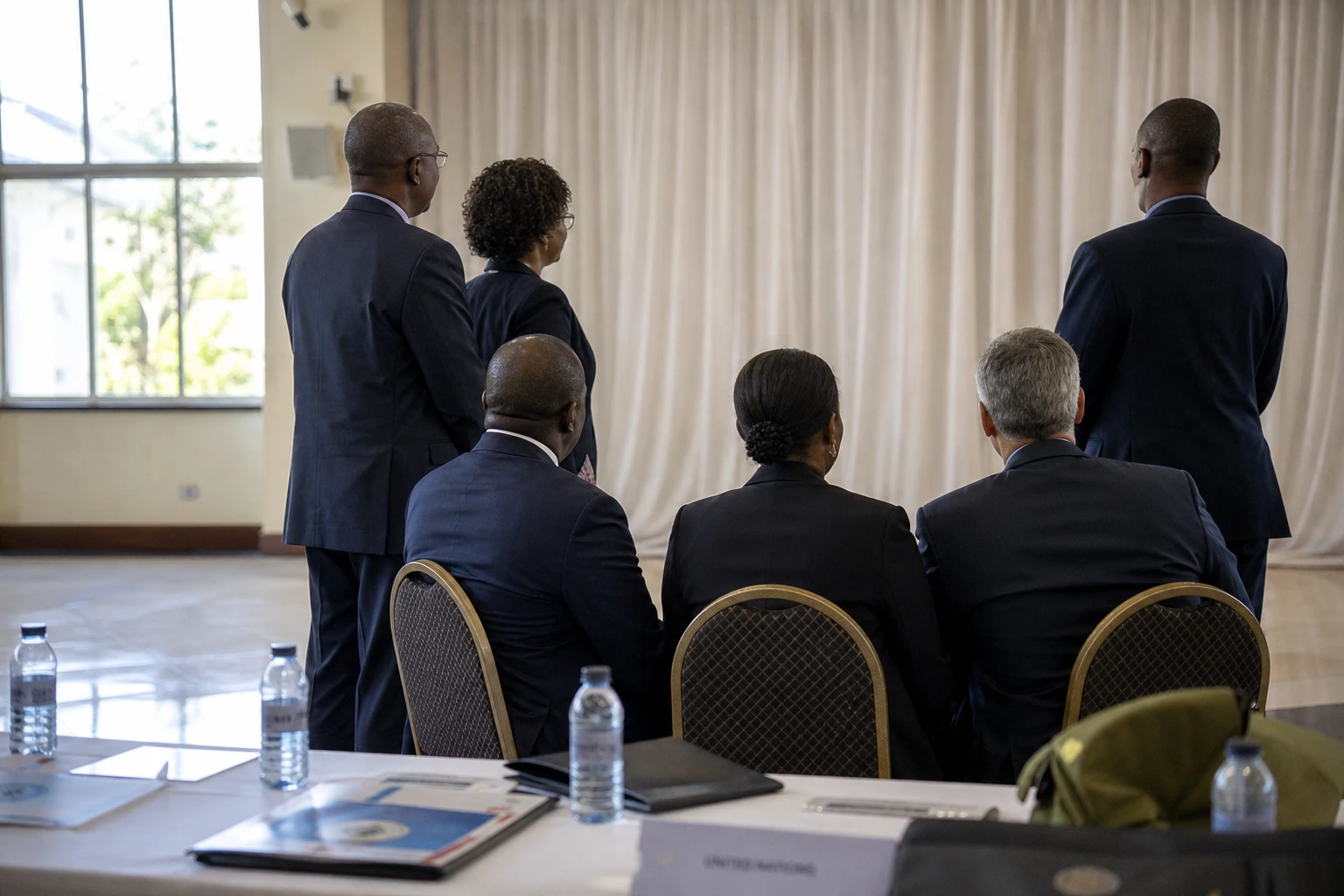
In Nairobi, a tribute that also reflects the scale of the crisis
The UN flag flying at half-mast in the heart of Gigiri is more than a gesture of mourning. In Nairobi, home to the United Nations’ African headquarters, the symbol is a reminder that in East Africa humanitarian aid is no longer simply emergency support: it has become a lifeline for millions of people caught between war, drought, floods and economic shocks. As host country to UNON, Kenya is once again at the centre of a key debate: how to protect those who provide care, food and hope when crises are piling up.
World Humanitarian Day, marked every 19 August, was established by the UN General Assembly in memory of the 22 aid workers killed in the bombing of the Canal Hotel in Baghdad on 19 August 2003. Twenty-three years later, the organisation’s message is more stark than commemorative: the humanitarian system is underfunded, overwhelmed and under attack. The UN says more than 380 aid workers were killed in 2024 and warns that 2025 could be worse.
A region under pressure, from Sudan to Kenya
The warning extends far beyond Kenya. Across southern and eastern Africa, the UN estimates that 56.6 million people will need humanitarian assistance in 2026. UNICEF, for its part, says nearly 30 million children in the same area are in urgent need. The figures point to a simple reality: the region is shouldering a major share of the global burden even as funding declines.
The situation in Sudan epitomises this emergency. Since war broke out in April 2023, displacement has spread within the country and across its borders to neighbouring countries, including South Sudan, Chad, Egypt and Ethiopia. For East Africa more broadly, this adds pressure on transit corridors, camps, hospitals and already fragile national systems. Several UN regional agencies coordinate the response from Nairobi.
Kenya is not on the sidelines of this dynamic. The UN country office in Gigiri serves as a regional coordination hub. The Kenyan authorities, too, are holding more meetings on risk preparedness, particularly in the face of floods, droughts and food crises. In July 2026, the national disaster management centre again brought together humanitarian and government partners to strengthen the response to climate risks.
The facts: tribute, human toll and call to protect access
On 19 August 2026, the UN flag was flown at half-mast at the United Nations headquarters in Nairobi in tribute to aid workers killed, injured, abducted, detained or arrested while carrying out their mission. The organisation says more than 1,100 aid workers were affected by such violence in 2025, according to figures released by OCHA. The UN also stresses the systemic nature of these attacks: they do not just target individuals; they cut off entire populations from food, healthcare and protection.
This year’s official message is clear: protecting aid workers is not an abstract moral issue, but a matter of upholding international humanitarian law. The UN is calling on states and parties to conflicts to ensure staff safety, facilitate safe, rapid and unimpeded access, and end arbitrary arrests. This position carries particular weight in a region where operations are often hampered by blocked roads, bureaucracy, insecurity or the collapse of public services.
Why this makes a practical difference for people
For aid workers, violence is measured in more than lives lost. It delays distributions, blocks medical evacuations, complicates vaccination efforts and undermines trust with communities. For displaced families, it means longer waits, smaller rations and greater exposure to disease, hunger and further violence. For states, it is also a meaningful test of sovereignty: the more humanitarian access deteriorates, the less able public authorities are to protect civilians.
In East Africa, this situation is also reflected in everyday economic life. In cities, aid networks support health systems, schools and displaced households. In rural areas, they make up for shortfalls caused by drought, livestock losses or supply disruptions. When a humanitarian corridor closes, local markets, clinics and schools bear the brunt. The crisis is therefore not only humanitarian; it is also social, economic and territorial.
Kenya has a particular role here. The country hosts one of the nerve centres of UN coordination in Africa, but it is also exposed to spillover effects: refugee flows, pressure on resources, climate hazards and rising needs in the north and east of the country. UNHCR also noted in January 2026 that Kenya was part of a regional effort to find solutions for refugees, with the aim of moving from an assistance-based response towards dignity and self-reliance.
A continental significance beyond the ceremony
The commemoration in Nairobi resonates far beyond Kenya. It speaks to the African Union, IGAD, the EAC and the region’s capitals: protecting civilians and aid workers is becoming a condition for stability, not a peripheral issue. At the continental level, it also serves as a reminder of an often-overlooked fact: responses to African crises are led first and foremost by African teams, institutions and societies, even when they work with international partners.
The next point of concern is financial and political. OCHA and partner agencies are entering a period in which needs continue to rise while funding contracts. Decisions still to come on Sudan, the Horn of Africa and refugee-hosting countries will show whether international solidarity remains a concrete commitment or becomes a mere annual ritual. In Nairobi, then, the lowered flag carries a broader meaning: it signals a regional emergency requiring protection, access and resources all at once.