Algeria
 Egypt
 Libya
 Morocco
 Tunisia
 Benin
 Burkina Faso
 Cabo Verde
 Côte d'Ivoire
 Ghana
 Guinea
 Guinea-Bissau
 Liberia
 Mali
 Mauritania
 Niger
 Nigeria
 Senegal
 Sierra Leone
 The Gambia
 Togo
 Cameroon
 Central African Republic
 Chad
 DR Congo
 Equatorial Guinea
 Gabon
 Republic of the Congo
 São Tomé and Príncipe
 Burundi
 Comoros
 Djibouti
 Eritrea
 Ethiopia
 Kenya
 Madagascar
 Malawi
 Mauritius
 Mozambique
 Rwanda
 Seychelles
 Somalia
 South Sudan
 Tanzania
 Uganda
 Angola
 Botswana
 Eswatini
 Lesotho
 Namibia
 South Africa
 Zambia
 Zimbabwe
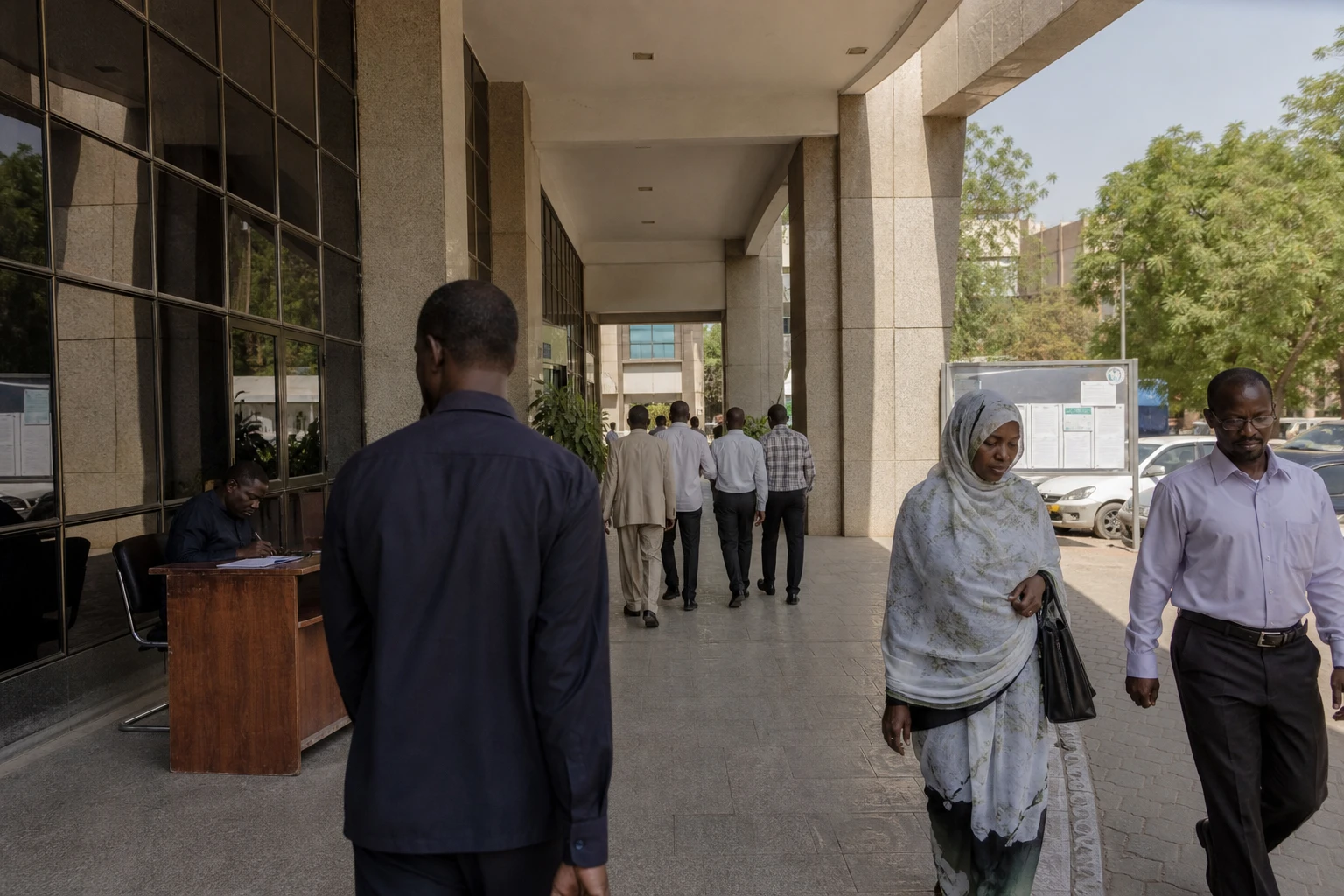
In Kordofan, civilians pay the price as the front shifts
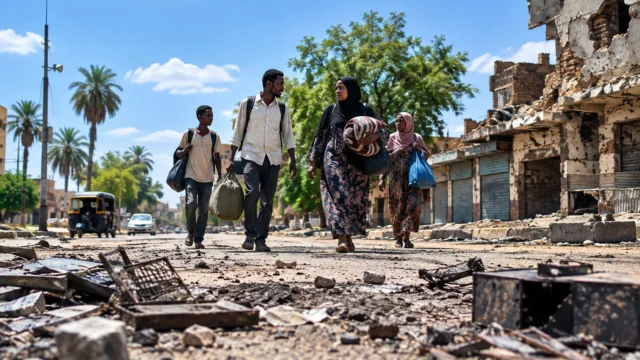
In Sudan, front lines no longer trace only a military battle. They are also redrawing escape routes, markets, clinics and water networks. In Kordofan, a pivotal region between Khartoum, Darfur and the route linking the country’s centre to the north, war has become an almost permanent driver of displacement, with villages emptying as offensives and rains unfold.
The region is among the country’s most strategic. It links trade and agricultural routes, while lying on a military corridor contested since the conflict began in April 2023 between the Sudanese Armed Forces and the Rapid Support Forces. The capital, Khartoum, long the political and logistical centre, remains scarred by destruction, increasing pressure on peripheral states and secondary cities such as El Obeid in North Kordofan.
Mass displacement, heavy rains and services stretched to breaking point
Data from the International Organization for Migration show that between 25 October 2025 and 23 June 2026, 219,319 displaced people were recorded as having left Kordofan, across 1,012 localities in 14 Sudanese states. Displacement in the region is therefore not an isolated episode, but the result of a series of shocks accumulating over several months.
Security pressures are compounded by the rainy season. In neighbouring Darfur, severe weather is worsening material losses, destroying shelters and making it harder to reach people already cut off from main roads. Humanitarian agencies also report that combat-related destruction is directly damaging basic infrastructure, including electricity, drinking water, telecommunications and healthcare facilities. In El Obeid, reduced electricity supplies have intensified service disruptions in a city already hosting many displaced people.
In North Kordofan, UNICEF said on 28 July 2026 that at least 23 children had been killed and 25 others injured in two months, following an escalation in fighting around El Obeid at the end of May. The figures illustrate a key point: in this war, civilians are not only being displaced; they are also exposed to a rapid deterioration in their most basic rights.
The toll of the conflict is also reflected in internal and cross-border movements. UNHCR estimates that, at the end of 2025, the Sudan crisis remained the world’s largest displacement situation, with about 12.9 million refugees, asylum seekers and internally displaced people linked to the conflict. Overall, since April 2023, about 14 million people have been forced to flee, either within Sudan or to neighbouring countries.
Aid is arriving, but too slowly to keep pace with the war
On the ground, humanitarian workers are trying to maintain an already fragile relief effort. The World Food Programme said it had reached about 2.3 million people across Darfur during a recent month. The IOM, meanwhile, has continued delivering emergency supplies, but logistics remain hampered by insecurity, blocked routes and growing needs across several states at once.
The problem is not just access. It is also funding. For 2026, the UN has appealed for $2.9 billion to respond to the crisis in Sudan, a figure cited by the Associated Press and in United Nations briefings in Geneva. But the funding received remains far below what is needed, forcing agencies to prioritise life-saving emergencies over stabilising displaced communities.
The constraints affect different groups in different ways. For the authorities and forces involved, control of roads, cities and logistical hubs carries weight in the military balance of power. For displaced families, it means something else: longer journeys to flee, no possibility of return and greater dependence on temporary shelters, often without regular water supplies or lasting healthcare. In a country where informal markets play a decisive role in daily supplies, every blocked road pushes up the price of rice, fuel, medicines and spare parts.
Khartoum remains the symbolic seat of power, but the reality of the conflict has shifted to peripheral fronts that have become central. Kordofan, like Darfur, is now a focus of military, agricultural and humanitarian concerns. Control of these territories will not only shape the course of the fighting; it will also determine the flow of aid and whether public services can one day resume.
Sudan’s crisis extends beyond its borders
The impact of this situation extends far beyond Sudan. Neighbouring countries, from Chad to South Sudan, as well as Ethiopia and the Central African Republic, are taking in some refugees and people displaced for a second time. The entire Horn of Africa and eastern Sahel region is under strain, with reception services overwhelmed and humanitarian funding insufficient.
Politically, the African Union and IGAD remain involved in efforts to find a way out of the crisis. The AU reiterated its mediation efforts and the return of a presence in Khartoum in June 2026, while IGAD reaffirmed its commitment at the end of July 2026 to a Sudanese-led path to peace and recovery. These efforts matter, but have yet to produce a lasting ceasefire on the ground.
Sudan therefore remains at the centre of a continental test. The conflict is testing the ability of African mechanisms to influence a protracted internal war, while serving as a reminder that a local conflict, when entrenched in cities, roads and agricultural areas, eventually spills beyond its borders. As long as fighting continues in Kordofan and elsewhere, the question will not simply be whether the military advances or retreats, but how much longer civilians can remain visible on the negotiating agenda.