
 Algeria
 Egypt
 Libya
 Morocco
 Sudan
 Tunisia
 Benin
 Burkina Faso
 Cabo Verde
 Côte d'Ivoire
 Ghana
 Guinea
 Guinea-Bissau
 Liberia
 Mali
 Mauritania
 Niger
 Nigeria
 Senegal
 Sierra Leone
 The Gambia
 Togo
 Cameroon
 Central African Republic
 Chad
 DR Congo
 Equatorial Guinea
 Gabon
 Republic of the Congo
 São Tomé and Príncipe
 Burundi
 Comoros
 Djibouti
 Eritrea
 Ethiopia
 Kenya
 Madagascar
 Malawi
 Mauritius
 Mozambique
 Rwanda
 Seychelles
 Somalia
 South Sudan
 Tanzania
 Uganda
 Angola
 Botswana
 Eswatini
 Lesotho
 Namibia
 Zambia
 Zimbabwe
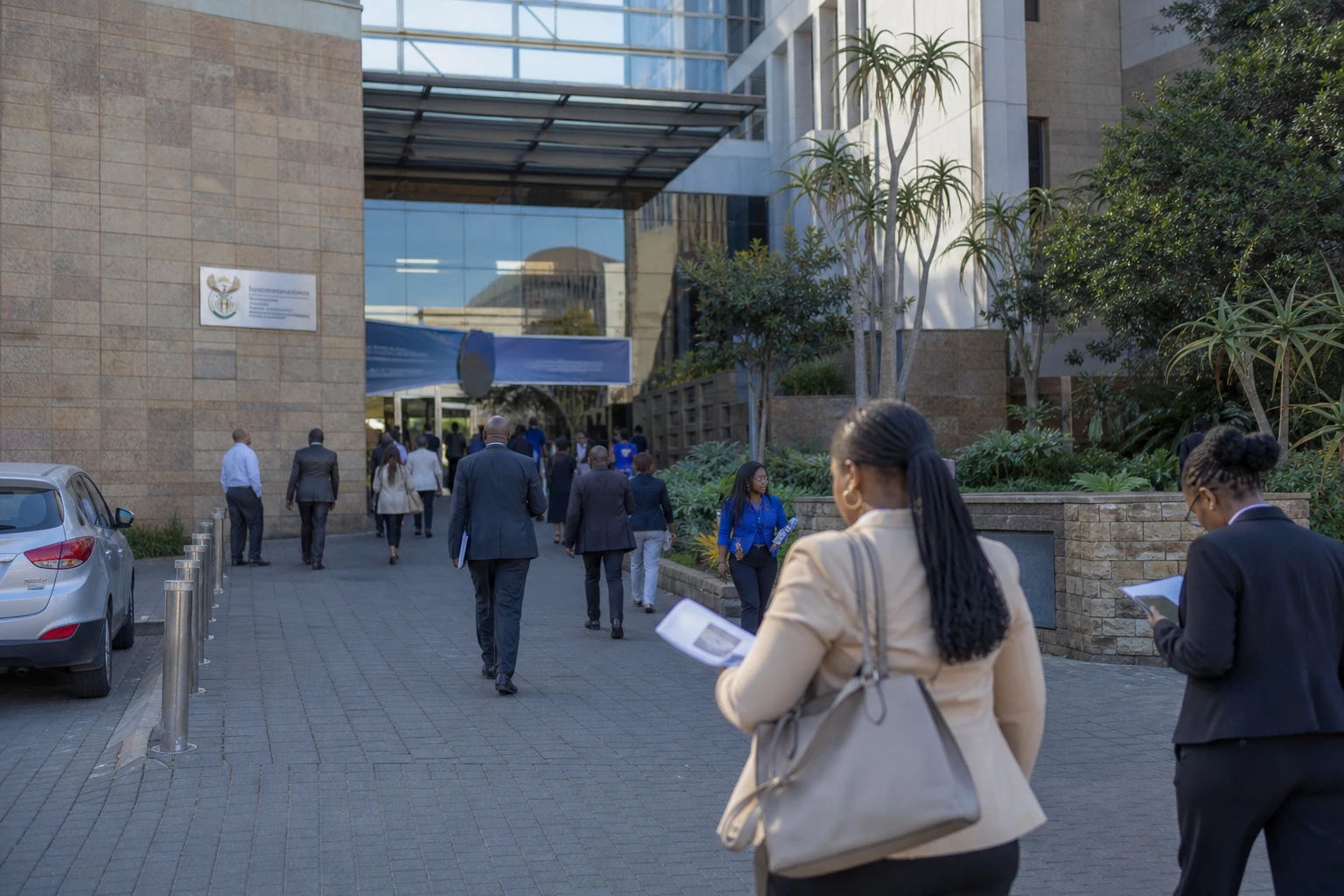
A region rich in projects, but still held back by its roads and networks
In southern Africa, growth is not decided only in meeting rooms. It also depends on a functioning port, a reliable railway line, an efficient border post and a stable electricity network. This diagnosis dominated the proceedings in Durban, where the Republic of South Africa hosted the 46th ordinary summit of the SADC, the Southern African Development Community, and assumed the chair of its official bodies for the period from August 2026 to August 2027.
The choice of infrastructure is no mere slogan. SADC texts have long identified transport corridors, energy, water and telecommunications as levers of regional integration. The organisation already links this goal to its 2020–2030 strategic plan and Vision 2050, which aim for a more integrated, more industrialised and better-connected economy.
The picture is therefore clear. The region wants to sell more, produce more and move around more easily. But it still faces very real bottlenecks: congested ports, slow borders, uneven electricity networks and a lack of investment in water and transport. SADC estimates that average access to electricity in the region stood at 56% between 2019 and 2024, far short of the 85% target set for 2030.
What Pretoria is putting on the table
In Durban, South African President Cyril Ramaphosa championed a straightforward position: without infrastructure, regional industrialisation will remain theoretical. The idea is primarily logistical. Corridors must cut costs, shorten delays and facilitate the free movement of goods and people in a region where economies are often neighbours but poorly connected. SADC also notes that its main routes should help link South African ports to inland markets, as far as the Democratic Republic of the Congo and Tanzania via the north-south corridor.
The energy component is just as central. Pretoria wants to promote regional electricity interconnection and accelerate investment in both power generation and transmission. This addresses a reality familiar to manufacturers, traders and households: without a reliable power supply, it is difficult to run a factory, preserve goods, irrigate crops or simply secure the activities of the informal economy, which remains dominant across much of southern Africa.
South Africa’s approach also reflects its own national priorities. The government is highlighting a major infrastructure modernisation drive, with more than 1,000 billion rand earmarked over three years for roads, ports, energy and other public facilities. Within this package, the port of Durban, already described as a major hub for continental trade, has a strategic place.
Different effects across countries, cities and sectors
For governments in the region, the promise is clear: more infrastructure should attract more investment and support industrialisation. For private-sector operators, it means more predictable supply chains. For the public, the stakes are more immediate: fewer power cuts, fewer delays and lower extra costs on essential goods. In an area where disparities between coastal capitals, inland corridors and rural areas remain pronounced, a modernised road or border post can change daily life much faster than a speech about integration.
The issue also concerns regional governance. SADC is not acting alone. It works with its member states, sectoral ministries and technical bodies on transport, energy and water. In June and August 2026, several ministerial meetings again stressed hydraulic and energy infrastructure as levers for sustainable development, climate resilience and competitiveness. In other words, the region is no longer talking only about roads and cables; it is also talking about food security, drinking water and adapting to climate shocks.
For South Africa, the stakes are political as well as economic. Pretoria wants to show that it can turn its rotating presidency into a tool for regional coordination. That means persuading partners whose budgetary capacity, institutional stability and speed of implementation vary. The question, then, is not simply whether to launch projects. It is who funds, builds and maintains them, and who actually benefits from the new networks.
A reach beyond southern Africa
The debate opened in Durban goes beyond SADC alone. It is part of a continent-wide discussion that the African Union has pursued for several years on the African Continental Free Trade Area, whose promise also rests on smoother flows of goods, services and capital. Without efficient corridors, reliable energy and effective ports, the AfCFTA will be slower to take shape in practice than on paper.
The impact is also regional. If SADC succeeds in improving electricity, water and transport, it can strengthen value chains in agribusiness, minerals, light manufacturing and logistics. If it fails, the disparities between coastal and landlocked countries risk widening. This is where much of the credibility of South Africa’s mandate will be at stake: less in announcements than in its ability to turn priorities into measurable projects, ahead of the next stages of implementation of Vision 2050 and the regional strategic plan.
The message from Durban is therefore twofold. On the one hand, southern Africa knows precisely what it needs to accelerate. On the other, it also knows that the challenge is no longer to identify needs, but to fund, coordinate and deliver on them. It is on this front that South Africa, from Pretoria, will be judged during its year in the chair.



