Algeria
 Egypt
 Libya
 Morocco
 Sudan
 Tunisia
 Benin
 Burkina Faso
 Cabo Verde
 Côte d'Ivoire
 Ghana
 Guinea
 Guinea-Bissau
 Liberia
 Mali
 Mauritania
 Niger
 Nigeria
 Senegal
 Sierra Leone
 The Gambia
 Togo
 Cameroon
 Central African Republic
 Chad
 DR Congo
 Equatorial Guinea
 Gabon
 Republic of the Congo
 São Tomé and Príncipe
 Burundi
 Comoros
 Djibouti
 Eritrea
 Ethiopia
 Kenya
 Madagascar
 Malawi
 Mauritius
 Mozambique
 Rwanda
 Seychelles
 Somalia
 South Sudan
 Tanzania
 Uganda
 Angola
 Botswana
 Eswatini
 Lesotho
 Namibia
 South Africa
 Zimbabwe
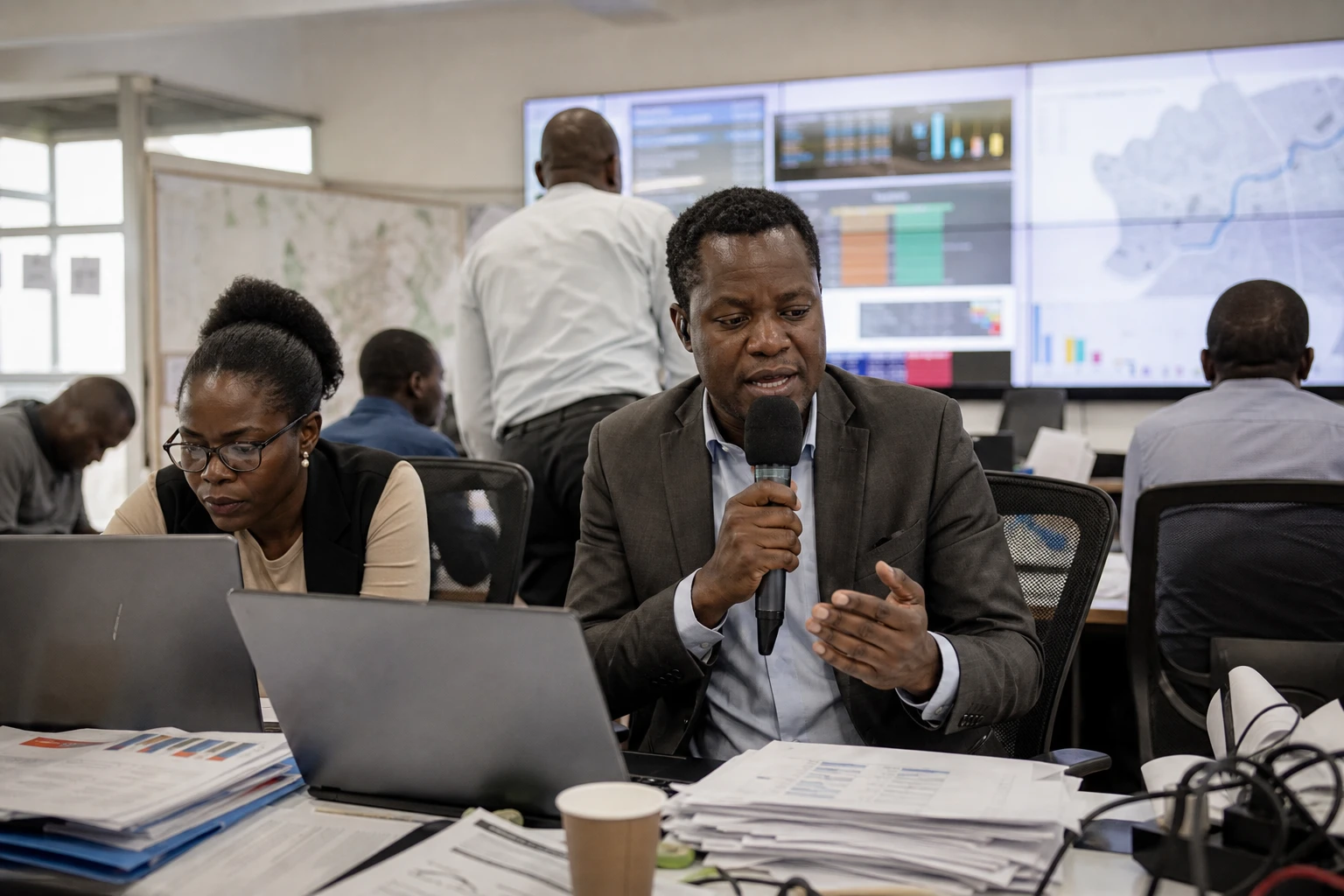
In Lusaka, the vote also served as a political test
In Zambia, a presidential election is never just a tally of ballots. It also shows whether the country accepts continuity or is calling for a new contract addressing the cost of living, political security and trust in institutions. This time, the verdict confirmed Hakainde Hichilema, in power since August 2021, for a second term, with a score that spared him a second round under Zambia’s rule requiring more than 50% of valid votes.
The context matters. Zambia remains a pivotal country in southern Africa and a founding member of SADC, the regional community bringing together 16 states and making political stability a condition for economic integration. The 13 August 2026 vote was therefore closely watched in Lusaka, but also in Harare, Pretoria, Gaborone and Maputo, where every change of government or political tension in Zambia has regional repercussions.
The facts: a clear victory, but a tense electoral climate
Zambia’s Electoral Commission declared Hakainde Hichilema president-elect for a second term on 18 August 2026. According to the announcement reported by the Associated Press based on official results, he won 61.4% of the approximately 5 million votes cast, ahead of Brian Mundubile, who received 1,856,217 votes, or just over 38%. The initial text cited 60% against 38%; the official declaration makes it possible to specify the exact figure.
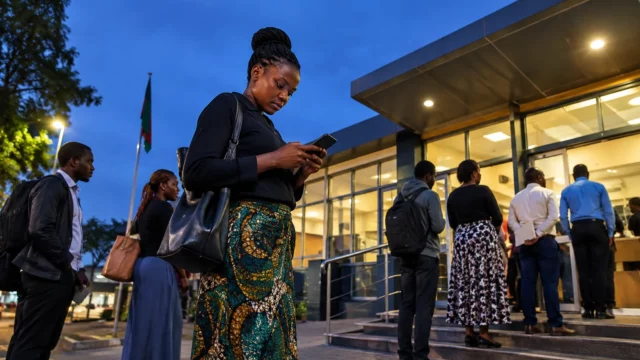
Commission chair Mwangala Zaloumis declared Hichilema “president-elect” on 18 August 2026. The 13 August vote drew about 8 million registered voters in a country of around 22 million people. It took several days for the results to come in, after counting was temporarily suspended and later resumed under heightened security. The commission cited attacks on some election officials and the theft of ballots from certain polling stations.
The vote was also accompanied by political tensions. Opposition figures were arrested during the election period, according to the government, which described the operation as targeting a suspected militia. Brian Mundubile’s camp disputed this account and said the operation took place after the vote. Here again, the issue goes beyond the legal dispute alone: it concerns freedom to campaign, parties’ access to public space and the quality of the election.
What this second term says about Zambia today
Hichilema was first elected in 2021, with 57.51% of the vote according to the electoral commission’s official results. His arrival ended a decade dominated by the Patriotic Front and Edgar Lungu. Since then, his government has been built around a simple promise: to bring the country out of its debt crisis, revive growth and restore the state’s financial credibility. The World Bank, the IMF and markets have followed the issue closely, as Zambia was the first African country to default during the Covid-19 period.
The 2026 result therefore works as an economic referendum as much as a political one. For some Zambians, particularly in urban centres and formal sectors, the argument for stability carries considerable weight. For others, inflation, youth unemployment and pressure on purchasing power remain the real fault lines. The country has made significant progress on debt restructuring and rebuilding relations with lenders, but the IMF still highlights a high risk of external debt distress and persistent vulnerability. In other words, financial breathing space has not yet resolved the social question.
The Zambian case also reveals a political reality more nuanced than a simple contest between an incumbent president and the main opposition figure. Brian Mundubile, a former minister under Lungu, led an opposition bloc described as the most serious in the election. But the fragmentation of opposition forces limited their ability to present a single alternative. In a system where the president is elected by direct universal suffrage and an absolute majority is required in the first round, this fragmentation becomes decisive. It benefits the incumbent, particularly when he controls the government agenda and enjoys greater institutional visibility.
A closely watched African and regional perspective
This re-election matters to southern Africa for two reasons. First, Zambia is a landlocked economic transit state at the heart of SADC’s trade and energy routes. Second, elections there are often seen as a regional democratic barometer. SADC deployed an observer mission for the 2026 vote, while the European Union sent its own mission, with a declaration expected two days after polling.
At the continental level, the message is broader still. Zambia shows that a country can emerge from a sovereign default, renegotiate its debt and return to the centre of political affairs without falling outside the democratic framework. But the episode also shows that a macroeconomic recovery is not enough to dispel civic distrust. The coming months will show whether Hichilema’s second term consolidates lasting stability or opens a new phase of contestation over how the benefits of the recovery are shared.
The signal to watch is simple: how the Zambian government handles the post-election period, any challenges and its relationship with an opposition that has already denounced unfair campaign conditions. In a region where political competition is often closely linked to the credibility of institutions, Lusaka is speaking not only to Zambia. It is speaking to all of southern Africa.