Algeria
 Egypt
 Libya
 Morocco
 Sudan
 Tunisia
 Benin
 Burkina Faso
 Cabo Verde
 Côte d'Ivoire
 Ghana
 Guinea
 Guinea-Bissau
 Liberia
 Mali
 Mauritania
 Niger
 Nigeria
 Senegal
 Sierra Leone
 The Gambia
 Togo
 Cameroon
 Central African Republic
 Chad
 DR Congo
 Equatorial Guinea
 Gabon
 São Tomé and Príncipe
 Burundi
 Comoros
 Djibouti
 Eritrea
 Ethiopia
 Kenya
 Madagascar
 Malawi
 Mauritius
 Mozambique
 Rwanda
 Seychelles
 Somalia
 South Sudan
 Tanzania
 Uganda
 Angola
 Botswana
 Eswatini
 Lesotho
 Namibia
 South Africa
 Zambia
 Zimbabwe
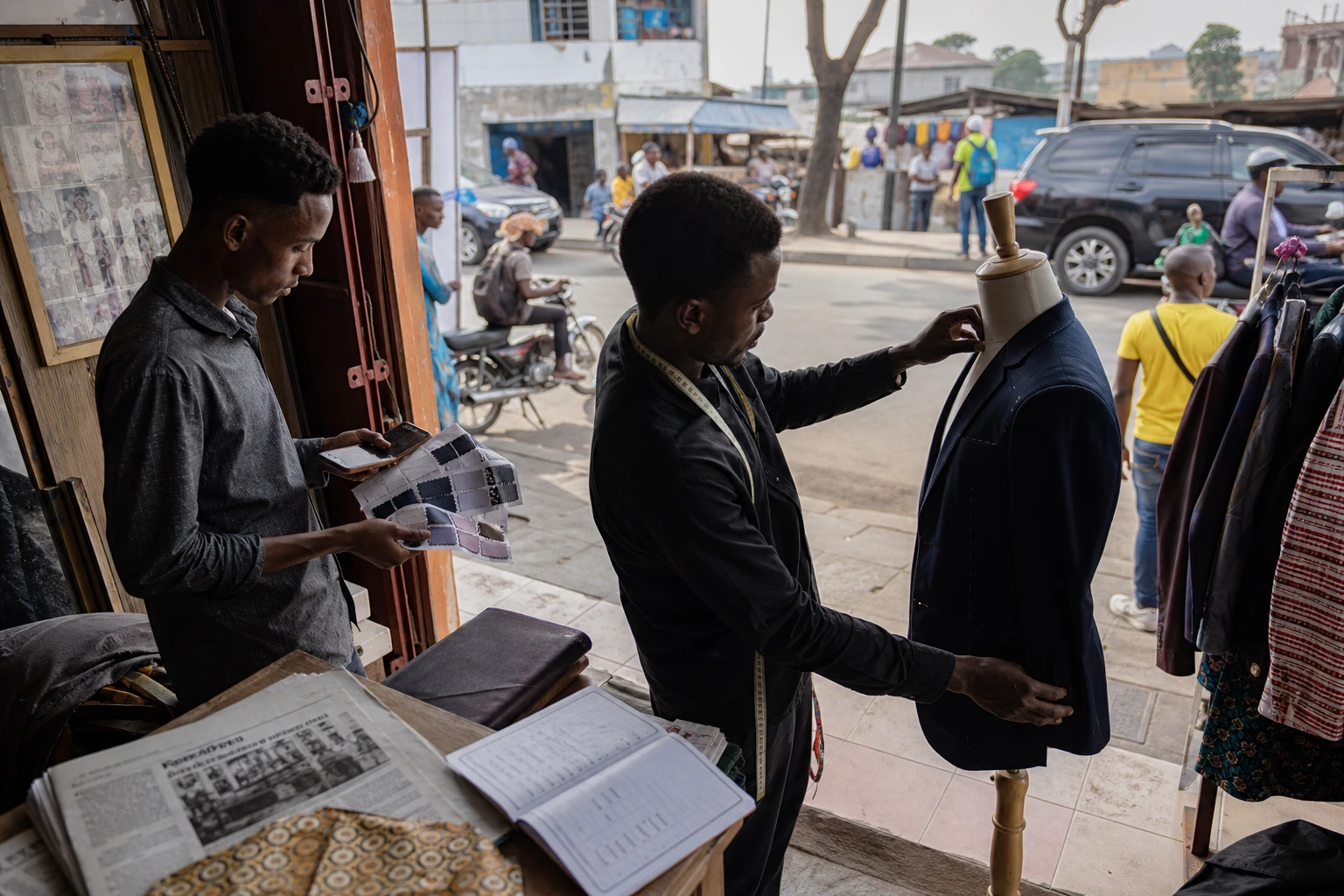
When elegance becomes a public language
In Kinshasa, fashion is about more than the catwalk. It tells a story of memory, pride and a way of inhabiting the city. That is the focus of the 6th edition of DRC Fashion Week, organised around SAPE, the Congolese dress code that makes elegance a cultural signature.
In a capital where creativity moves fast, these gatherings also say something else: young Congolese are looking for spaces in which to create, showcase, sell and make their own way. Fashion is becoming a cultural sector, but also a small market, a network and an image-making tool for the Democratic Republic of the Congo.
Kinshasa, a showcase for a fashion scene taking shape
DRC Fashion Week is part of a broader moment. Since 2025 and 2026, several initiatives have sprung up in Kinshasa and other cities across the country to organise the fashion industry, from the Fimo festival to provincial events such as Kolwezi Fashion Week. The Ministry of Culture now speaks of cultural and creative industries, with the aim of providing the sector with venues, training and greater visibility.
This shift is not insignificant. It shows that Congolese fashion is gradually moving beyond the realm of spectacle alone. It is seeking a place in the urban economy, youth entrepreneurship and the promotion of local expertise. But the obstacles remain substantial: access to raw materials, a lack of appropriate training, weak distribution channels and still-fragile financing.
In this landscape, Kinshasa has a head start. The capital brings together designers, models, studios, media outlets and emerging brands. It is also a regional meeting point, notably for designers from Congo-Brazzaville, giving the scene a Central African dimension rather than a merely local character.
SAPE, between urban heritage and contemporary reinvention
SAPE, short for Société des ambianceurs et des personnes élégantes (Society of Tastemakers and Elegant People), is one of the best-known symbols of Congolese dress identity. Academic studies note that it developed within the urban history of the two Congos, with deep roots and a strong social dimension. It is about more than clothing: it expresses style, posture, one’s relationship with oneself and the way one is seen by others.
Over time, SAPE has been interpreted in several ways. For some, it is a form of African dandyism. For others, it represents a kind of symbolic resistance, overturning the logic of social downgrading by asserting dignity through appearance. This interpretation still carries weight in Congolese society. It helps explain why SAPE continues to cross generations and inspire designers in the emerging fashion scene.
In Kinshasa, this living heritage is also attracting institutional attention. Recent initiatives have been presented to the Ministry of Culture to promote SAPE more effectively and include it in a broader policy to support cultural industries. The gesture is significant: it means the state no longer sees SAPE merely as an urban curiosity, but as an element of Congolese soft power.
What the 6th edition means for designers and the country’s image
The decision to honour SAPE during DRC Fashion Week speaks first and foremost to young designers. It gives them an instantly recognisable visual vocabulary, as well as a story to reinvent. The challenge is to avoid confining SAPE to nostalgia. Designers are instead seeking to bring it into dialogue with more contemporary cuts, locally available materials and a clientele concerned not only with prestige, but also with price and practicality.
For the public, the stakes are different. These events bring visibility to an often discreet economy. They show that a dress, a suit or a silhouette is about more than taste. They involve tailors, models, set designers, photographers, make-up artists, suppliers and organisers. In other words, fashion creates a value chain, even when it remains informal.
In terms of image, the DRC is also gaining symbolic ground. In a Central African region where cultural capitals engage with one another, Kinshasa is asserting its ability to produce its own codes without waiting for them to be validated elsewhere. The presence of designers from Congo-Brazzaville strengthens the flow of styles between the two banks of the Congo River. It is a reminder that culture crosses borders more easily than administrations do.
The main question to watch remains practical and central: how can this creative momentum be turned into a sustainable sector? Events are multiplying, but industrial development is moving more slowly. What happens next will depend on the ability of public authorities, organisers and private-sector players to link training, production, distribution and financing. In fashion, as elsewhere, visibility matters. Economic stability matters even more.
A local scene with regional resonance
DRC Fashion Week is about more than the calendar of catwalk shows. It is part of a broader trend across Central Africa, where several countries are seeking to better structure their cultural industries and retain their talent. In this respect, Kinshasa is a laboratory. The city is testing formats, attracting audiences and giving regional visibility to designers who still work with limited means.
What is happening here is also of interest to the continent as a whole. African fashion advances when it draws on its own stories, networks and markets. In the DRC, SAPE offers a strong anchor: a popular memory, an urban aesthetic and a distinctly Congolese way of turning appearance into a social statement. This is the continuity that Kinshasa is showcasing and that the 6th edition aims to put back at the centre.