Algeria
 Egypt
 Libya
 Morocco
 Sudan
 Tunisia
 Benin
 Burkina Faso
 Cabo Verde
 Côte d'Ivoire
 Ghana
 Guinea
 Guinea-Bissau
 Liberia
 Mali
 Mauritania
 Niger
 Nigeria
 Senegal
 Sierra Leone
 The Gambia
 Togo
 Central African Republic
 Chad
 DR Congo
 Equatorial Guinea
 Gabon
 Republic of the Congo
 São Tomé and Príncipe
 Burundi
 Comoros
 Djibouti
 Eritrea
 Ethiopia
 Kenya
 Madagascar
 Malawi
 Mauritius
 Mozambique
 Rwanda
 Seychelles
 Somalia
 South Sudan
 Tanzania
 Uganda
 Angola
 Botswana
 Eswatini
 Lesotho
 Namibia
 South Africa
 Zambia
 Zimbabwe
A meeting that means much more than a match
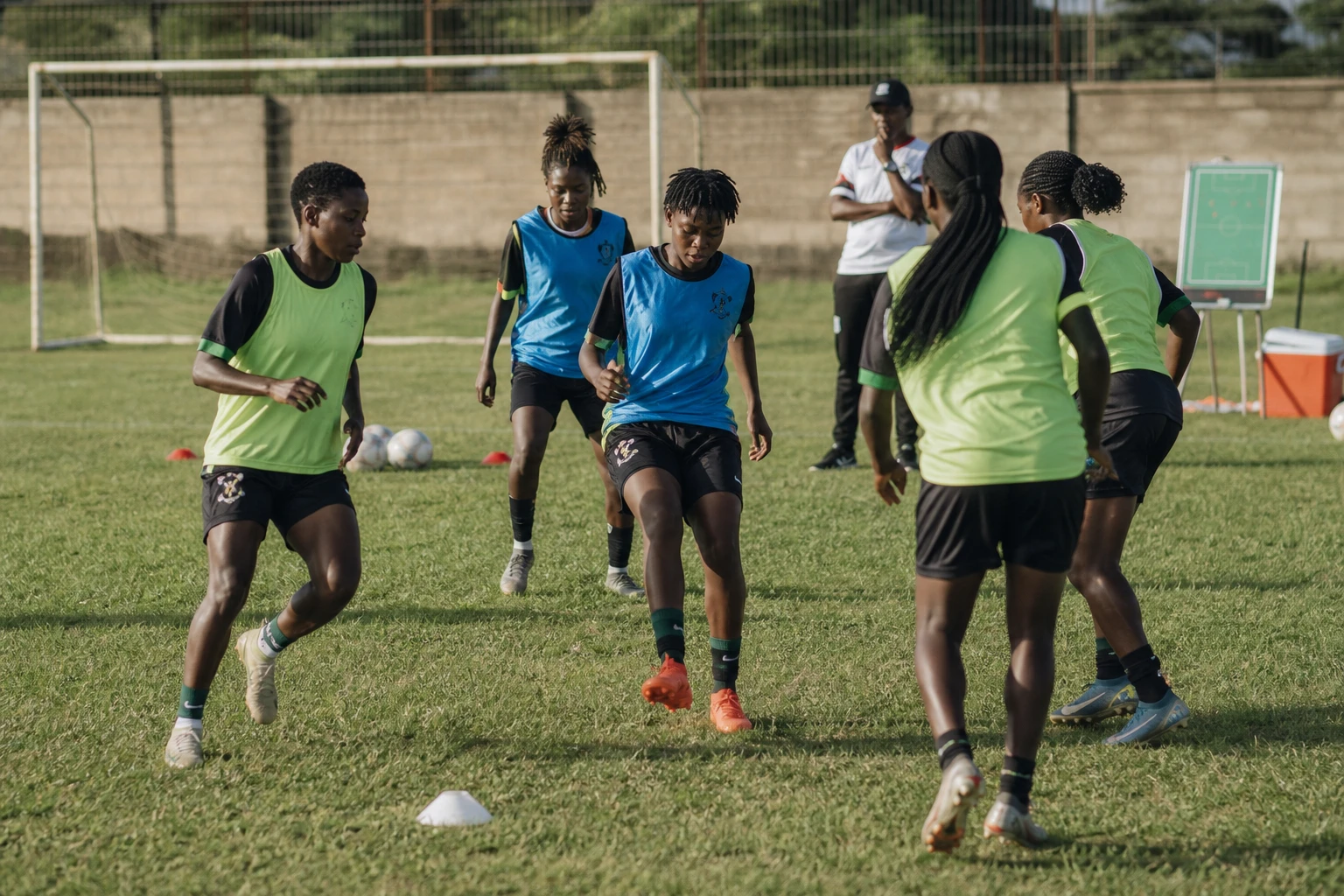
As the 2026 Women’s Africa Cup of Nations in Morocco approaches, one underlying message is clear: the competition is no longer the preserve of the usual powerhouses. It is now opening up real opportunities for teams that, until recently, could only watch the final four from afar. Malawi, qualified for the first time in its history, and Cameroon, which endured a difficult campaign before being selected among the best teams to be reinstated, illustrate this shift.
The continental women’s tournament, which will be held in Morocco from 25 July to 16 August 2026, will bring together 16 teams for the 14th edition. This expansion, decided by CAF, has widened the field of possibilities and changed how the competition is viewed from a sporting perspective. It also counts towards African qualification for the 2027 Women’s World Cup in Brazil.
The context: host nation Morocco and a changing landscape for African women’s football
Morocco will host the final tournament in several cities, as part of the growing influence of women’s football in North Africa. The country has already invested in infrastructure and in raising the profile of the competition, after its Atlas Lionesses played two continental finals at home, in 2022 and 2024. The 2026 competition is therefore set to be a sporting test, but also a showcase for the development of the game across the continent.
Malawi arrives with considerable symbolic weight. Its first qualification for the Women’s Africa Cup of Nations was hailed by CAF as a historic milestone. For Malawian football, often low-profile on the continental stage, this appearance reflects sustained work in clubs, local teams and the COSAFA region, which comprises the federations of southern Africa.
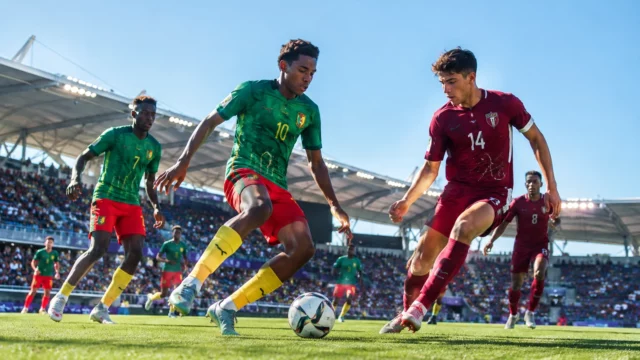
Cameroon, meanwhile, remains an African women’s football heavyweight despite a more unsettled period. The Indomitable Lionesses have reached the Women’s Africa Cup of Nations final several times, and FIFA says they are among the continent’s most consistent teams at this level. Their qualification for 2026 was ultimately secured through the mechanism for selecting the four best teams eliminated in the final round, based on the women’s world rankings.
The facts: Malawi, Cameroon and the new map of the Women’s Africa Cup of Nations
The key point here is not a final that would have pitted Malawi against Cameroon, but their presence in the same Women’s Africa Cup of Nations, now more open, more expansive and more competitive. Malawi secured its first-ever qualification after its qualifying campaign. Cameroon, beaten by Algeria in the final qualifying round, was included in the final tournament through the system adopted by CAF to complete the list of participants after the expansion to 16 teams.
This change is significant. It was made possible by the increase in the number of teams, announced by CAF for the Moroccan edition. The stakes go beyond simply taking part: the 2026 Women’s Africa Cup of Nations will also serve as the African qualifying tournament for the 2027 Women’s World Cup. In other words, every match will count in two competitions, continental and global.
In this context, Cameroon and Malawi do not represent the same trajectory, but they point to the same trend: African women’s football is moving beyond a closed system. It is becoming more accessible to federations investing, sometimes with limited resources, in talent identification, coaching and regular competition.
Sporting, economic and institutional stakes
For Cameroon, the issue is its status. The team retains considerable historical weight, but can no longer rely on its past. Recent results show growing competition from North Africa, southern Africa and West Africa. Reinstatement based on the world rankings offers a second chance, but also serves as a reminder that an established nation cannot keep moving forward without technical continuity and institutional stability.
For Malawi, the challenge is different. The first task is to turn a qualification triumph into a lasting project. A first appearance in the final tournament can raise the players’ profile, attract new backing and boost local interest in women’s leagues. But that requires resources. Without a stable domestic calendar, medical support and continuity in competitions, the achievement remains fragile.
At regional level, Zambia, South Africa, Nigeria, Morocco, Algeria and Senegal already form the competition’s core. The presence of newcomers such as Malawi, Cape Verde and Kenya reflects a gradual redistribution of strength. The continental championship is thus becoming a platform for rising teams as well as a measure of the development gaps between federations.
A continental significance that goes beyond the trophy
The 2026 Women’s Africa Cup of Nations will therefore matter less as a mere tournament than as an indicator of the health of African women’s football. CAF has expanded the competition, FIFA has linked it to qualifying for the 2027 Women’s World Cup, and several federations are already using it as a tool for development. The tournament is becoming a platform for rankings, visibility and international ambition.
In this context, Morocco will seek to confirm its rise. Nigeria will want to maintain its leading position. Cameroon will try to reclaim its standing. Malawi, meanwhile, will be playing for more than a debut: it will seek to prove that a first qualification can mark the beginning of a lasting presence, rather than an isolated achievement. That is where this edition’s continental significance lies. Not in nostalgia for past hierarchies, but in the emergence of a new, still unsettled balance between established nations and developing teams.