Algeria
 Egypt
 Libya
 Morocco
 Sudan
 Tunisia
 Benin
 Burkina Faso
 Cabo Verde
 Côte d'Ivoire
 Ghana
 Guinea
 Guinea-Bissau
 Liberia
 Mali
 Mauritania
 Niger
 Nigeria
 Senegal
 Sierra Leone
 The Gambia
 Togo
 Cameroon
 Central African Republic
 Chad
 DR Congo
 Equatorial Guinea
 Gabon
 São Tomé and Príncipe
 Burundi
 Comoros
 Djibouti
 Eritrea
 Ethiopia
 Kenya
 Madagascar
 Malawi
 Mauritius
 Mozambique
 Rwanda
 Seychelles
 Somalia
 South Sudan
 Tanzania
 Uganda
 Angola
 Botswana
 Eswatini
 Lesotho
 Namibia
 South Africa
 Zambia
 Zimbabwe
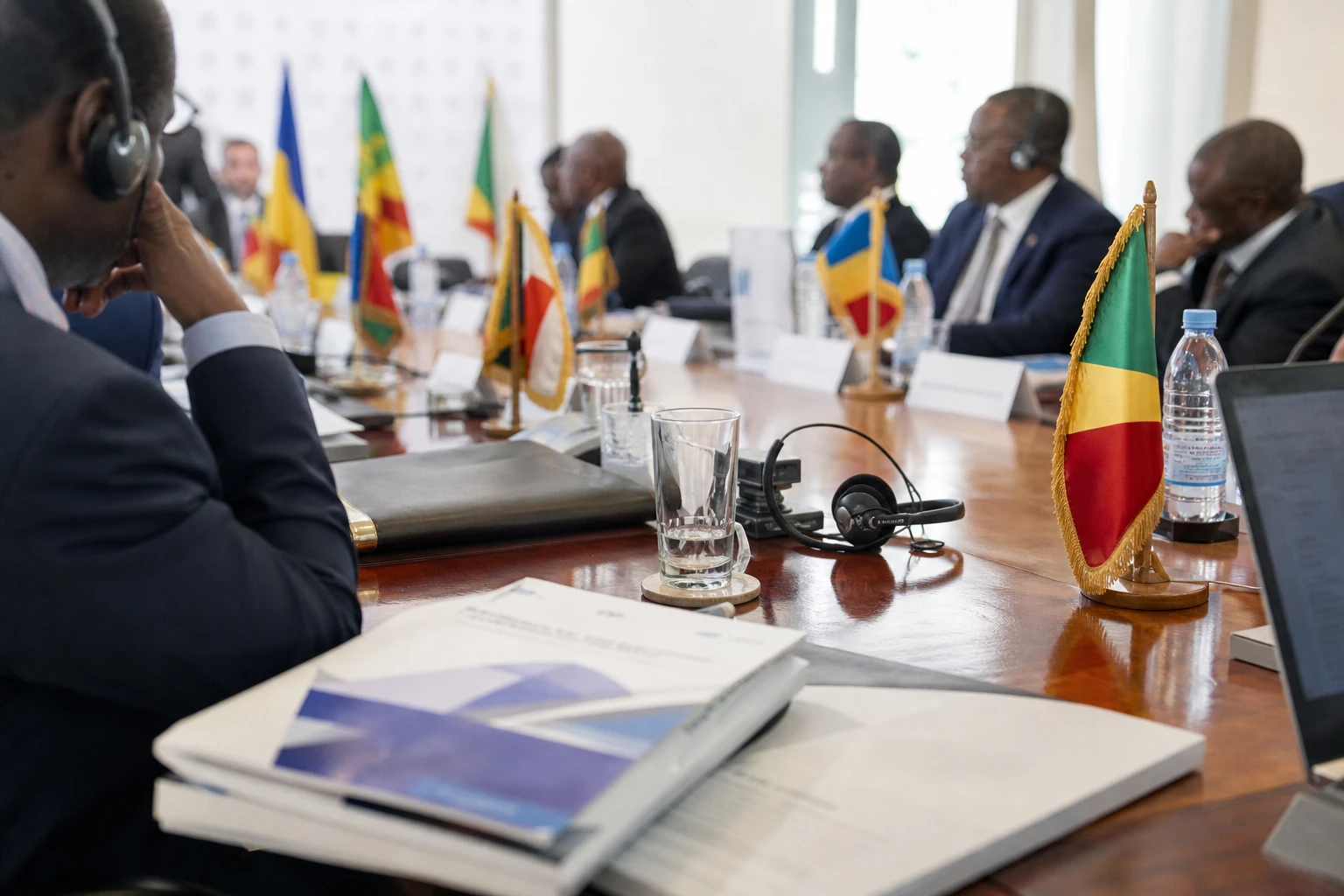
In Brazzaville, knowledge is also becoming a language of diplomacy
In the Congolese capital, universities no longer serve only to award degrees. They are also becoming places of memory, prestige and political projection. In Kintélé, Denis Sassou-N’Guesso University is part of this trend: it presents itself as a “pan-African” university for the 21st century, focused on education, research and development.
On Thursday 13 August 2026, this mission took a highly visible form when three former African heads of state were awarded honorary doctorates: Macky Sall, Mahamadou Issoufou and Umaro Sissoco Embaló. The event was attended by Congolese President Denis Sassou N’Guesso at a university that had already welcomed the same leaders for its official inauguration on 5 February 2021.
A university created to make an impact beyond Congo
UDSN is no ordinary university in the Congolese landscape. Its official website describes it as Congo’s second public university, inaugurated in Kintélé, near Brazzaville, in the presence of three West African leaders. It also says the institution aims to advance a pan-African vision, with courses geared towards development needs.
This focus takes on particular significance in a country that belongs to CEMAC, the Economic and Monetary Community of Central Africa, which comprises six states: Cameroon, Congo, Gabon, Equatorial Guinea, the Central African Republic and Chad. In this region, Brazzaville has long sought to combine regional roots with a role as a political hub.
The institutional timetable reinforces this message. In May 2026, the university announced the launch of its doctoral schools, describing it as a step towards putting research at the heart of development. In other words, the Kintélé campus now wants to move from symbolism to scientific output.
What the distinction says about Africa’s current political moment
An honorary doctorate remains an academic distinction. It is awarded to people whose actions are considered significant by the institution conferring it. The choice of recipients here is no coincidence. Macky Sall led Senegal until 2024, Mahamadou Issoufou was president of Niger from 2011 to 2021, and Umaro Sissoco Embaló has been Guinea-Bissau’s head of state since 2020. Bringing them together in Brazzaville gives the ceremony a significance that goes beyond academia.
The gesture first speaks of continuity. At UDSN’s inauguration in February 2021, the three leaders were already among the guests of honour. Five years later, they have returned in a different capacity, this time in recognition of their academic standing. The symbolism is powerful: the university presents political careers as paths that can become subjects for academic reflection.
But the stakes are also institutional. By honouring former African heads of state at an institution bearing his name, Denis Sassou N’Guesso is consolidating a form of university diplomacy. Brazzaville is thereby sending a message to several audiences at once: the continent’s political elites, academic partners and the domestic public, which it shows a capital capable of hosting events with pan-African significance.
This display is not aimed only at leaders. For students, teachers and researchers, it signals that the Congolese university is seeking to join a wider network of exchanges, prestige and co-operation. For the state, it showcases an instrument of soft power that complements traditional diplomatic channels.
Between academic prestige, influence strategy and continental reach
At a time when African universities are often seeking greater visibility, the Brazzaville ceremony carries significance beyond Congo. It is a reminder that higher education institutions can become forums for dialogue between countries, generations and political careers. At continental level, this kind of recognition also fosters a particular vision of institutional pan-Africanism: not a slogan, but an exchange of legitimacy between African capitals.
The choice of three figures from West Africa further reinforces this interpretation. It links Brazzaville with Dakar, Niamey and Bissau through a shared ceremony, at a time when West African political balances have shifted considerably in recent years. Congo, meanwhile, is positioning itself as a quiet but active crossroads between Central and West Africa, through its university as well as its presidency.
The most practical question remains: what does this kind of distinction achieve beyond protocol? For UDSN, it helps assert an identity and boost its appeal. For the former leaders honoured, it adds a layer of symbolic recognition to their careers. For Congo, it bolsters the image of a country seeking to have a say in African discussions on knowledge, co-operation and political memory.
The lasting impact will probably become clear in the coming months, with the effective opening of UDSN’s doctoral schools and the institution’s ability to turn the announcement into scientific output. That is where the consistency between a one-day ceremony and the ambition of a university seeking to make a real impact in CEMAC and beyond will be put to the test.