Algeria
 Egypt
 Libya
 Morocco
 Sudan
 Tunisia
 Benin
 Burkina Faso
 Cabo Verde
 Côte d'Ivoire
 Ghana
 Guinea
 Guinea-Bissau
 Liberia
 Mali
 Mauritania
 Niger
 Nigeria
 Senegal
 Sierra Leone
 The Gambia
 Togo
 Cameroon
 Central African Republic
 Chad
 DR Congo
 Equatorial Guinea
 Gabon
 Republic of the Congo
 São Tomé and Príncipe
 Burundi
 Comoros
 Djibouti
 Eritrea
 Ethiopia
 Kenya
 Madagascar
 Malawi
 Mauritius
 Mozambique
 Rwanda
 Seychelles
 Somalia
 South Sudan
 Tanzania
 Uganda
 Angola
 Botswana
 Eswatini
 Lesotho
 Namibia
 South Africa
 Zimbabwe
In Lusaka, a vote on the cost of living rather than slogans
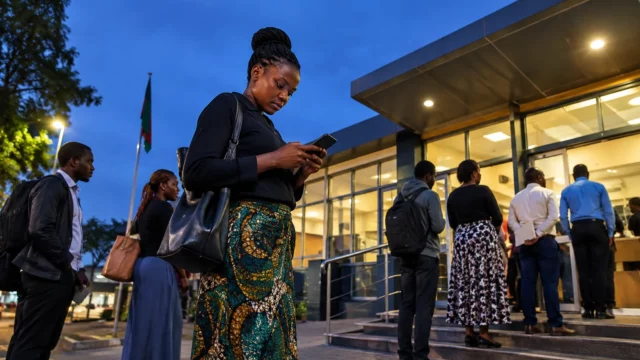
In Zambia, the election is not being decided only at the ballot box. It is also being decided in markets, outside petrol stations and in homes where every price rise is immediately felt in the day’s shopping basket. In Lusaka, the Zambian capital, many voters approached the 13 August poll with a simple question: have the economic reforms really changed their daily lives?
The country is emerging from a difficult period. Debt has been restructured, the IMF-backed programme has eased pressure on public finances, and inflation fell to 6.8% in April 2026, according to the International Monetary Fund. Growth has also picked up, although the IMF revised its 2026 growth forecast to 4.3%, after citing 5.8% a few months earlier when it completed the programme review.
This contrast explains the current tension. On one hand, macroeconomic indicators have improved. On the other, a large majority of Zambians remain poor by international standards. The World Bank estimates that 71.7% of the population lived on less than $3 a day in 2022, and its database puts the population at 21.3 million in 2024.
A real economic record, but one felt very unevenly
Incumbent president Hakainde Hichilema is seeking a second term against thirteen other candidates, including Brian Mundubile, presented as his main rival. The presidential election is being held alongside parliamentary and local polls. The Electoral Commission of Zambia has set voting for Thursday 13 August 2026, from 6am to 6pm, with 226 constituencies at stake.
On the economic front, the government points to a series of concrete achievements. The kwacha has stabilised, inflation has returned to the Bank of Zambia’s target range, and restructuring agreements cover about 94% of the debt in question, according to the IMF. The government argues that this recovery proves stricter fiscal discipline can replace the improvisation of the past.
But households often see things differently. When employment remains precarious and purchasing power improves slowly, macroeconomic results become abstract. Unemployment remains a significant reality, and rural poverty weighs heavily. The World Bank notes that 80% of poor people live in rural areas, where subsistence farming remains dominant. In cities, including Lusaka, the high cost of living remains a blind spot in official assessments.
This gap between figures and perceptions is fuelling the campaign. On the ground, frustration is not just about the currency or statistics. It also concerns transport, food, access to electricity and the slow pace of visible improvements. The election debate is therefore less technical than it might seem: it pits a promise of stability against a demand for more tangible results.
Copper, the driving force behind recovery and a test of sovereignty
Zambia cannot be understood without its copper. The country remains one of Africa’s major producers of the red metal, which is central to its export revenues, industry and ability to fund public services. Zambia’s Ministry of Mines cites the goal of reaching 3 million tonnes of copper a year by 2031, compared with an average of about 800,000 tonnes today, according to official documents.
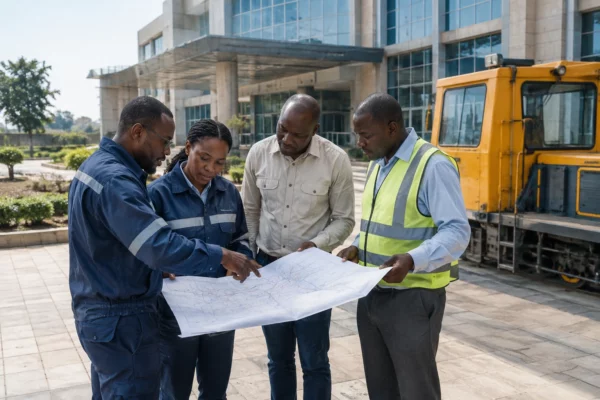
This goal has immediate political significance. If achieved, it could broaden the tax base, support direct and indirect employment, and reduce reliance on borrowing. But it requires substantial investment, reliable energy, stable relations with major mining operators and a clear regulatory environment. In an economy where the extractive sector remains dominant, the presidential campaign is therefore also becoming a vote of confidence in the state’s ability to turn mining revenues into broader development.
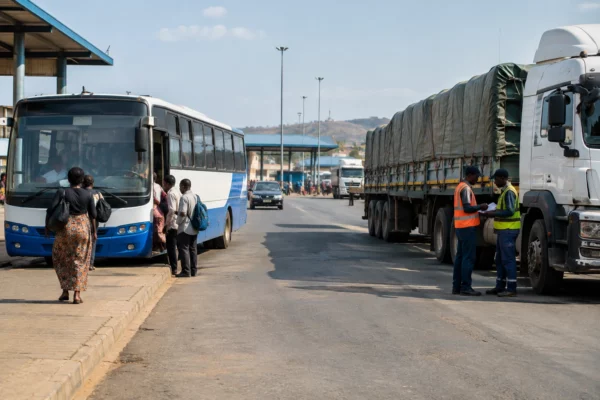
The issue extends beyond Zambia’s borders. Copper attracts major global buyers, particularly amid the energy transition, and puts Lusaka in a balancing act between Western partners, Asian investors and multilateral creditors. For southern Africa, the question is strategic: a more stable Zambia has a bearing on regional value chains, trade corridors and confidence in the Southern African Development Community, or SADC, of which the country is a member.
What the election says about Zambia and southern Africa
The 13 August 2026 vote is therefore a test of the government’s credibility, but also of the population’s patience. President Hichilema can point to a genuine macroeconomic recovery. He must, however, convince voters that economic stability benefits not just Lusaka’s dashboards, but also villages, small towns and informal workers whose lives are shaped by prices.
If voters back the incumbent, they will endorse the idea that recovery from crisis must begin with restoring financial discipline, restructuring debt and rebuilding confidence. If they give the opposition the advantage, they will mainly be expressing impatience with the slow pace of reform. Either way, the message to the region will be clear: in southern Africa, economic performance alone is not enough. It must become visible in everyday life.
Results are expected after the vote, according to the timetable announced by the Electoral Commission. The winner must secure more than 50% of the vote to be elected in the first round. Beyond the identity of the next president, Lusaka, the region and much further afield will be watching Zambia’s ability to turn a fragile recovery into shared prosperity.