Algeria
 Egypt
 Libya
 Morocco
 Sudan
 Tunisia
 Benin
 Burkina Faso
 Cabo Verde
 Côte d'Ivoire
 Ghana
 Guinea
 Guinea-Bissau
 Liberia
 Mali
 Mauritania
 Niger
 Nigeria
 Senegal
 Sierra Leone
 The Gambia
 Togo
 Cameroon
 Central African Republic
 Chad
 DR Congo
 Equatorial Guinea
 Gabon
 Republic of the Congo
 São Tomé and Príncipe
 Burundi
 Comoros
 Djibouti
 Eritrea
 Ethiopia
 Kenya
 Madagascar
 Malawi
 Mauritius
 Mozambique
 Rwanda
 Seychelles
 South Sudan
 Tanzania
 Uganda
 Angola
 Botswana
 Eswatini
 Lesotho
 Namibia
 South Africa
 Zambia
 Zimbabwe
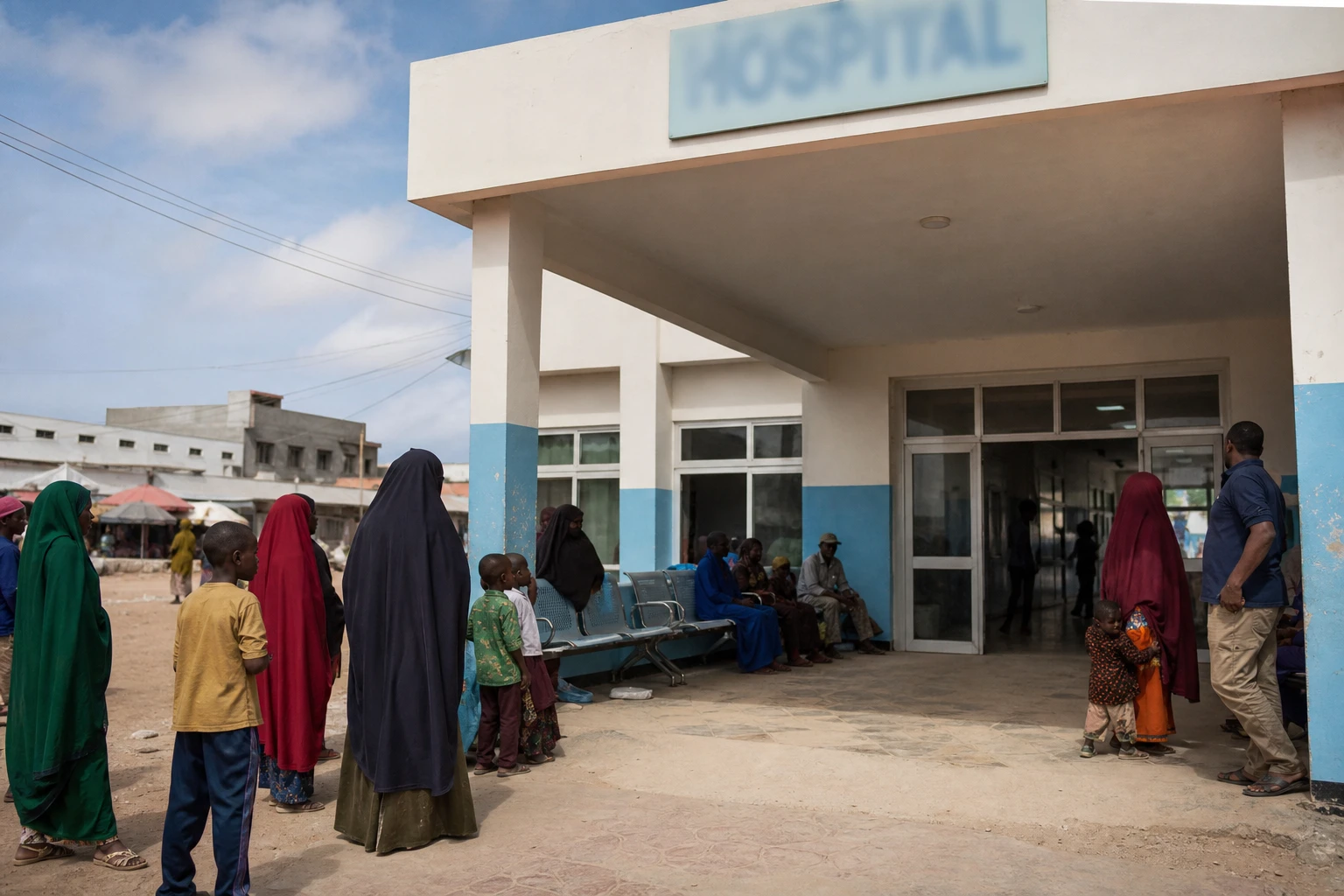
In Baidoa, hunger never comes alone
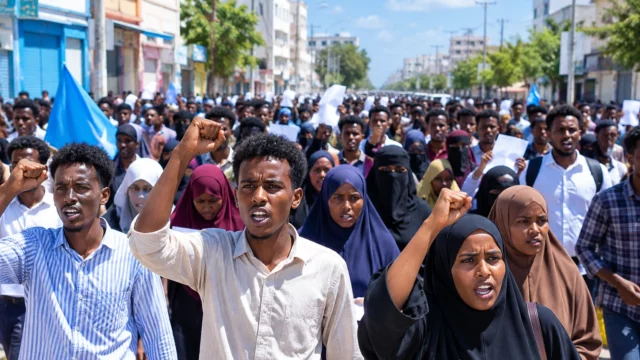
In south-western Somalia, the crisis is visible not only in the drought figures. It can also be seen in the queues at health centres, where displaced families come seeking therapeutic food, an infusion or an available bed for a child who is too weak. In Baidoa, a city that has become a gathering point for displaced people, the pressure on health and nutrition services tells a very tangible story of emergency: when water runs short, harvests decline, prices rise and children arrive for treatment too late.
Baidoa is also a national barometer. Somalia, in East Africa, remains exposed to drought, displacement and insecurity, while IGAD, the Intergovernmental Authority on Development, closely monitors climate shocks affecting the Horn of Africa. Humanitarian needs in the country overlap with a fragile health system and limited public finances, leaving local authorities, hospitals and humanitarian organisations to absorb most of the impact.
Tens of thousands of children screened
Since January 2026, Médecins Sans Frontières says it has screened more than 21,000 children under five in Baidoa. The organisation says it found acute malnutrition rates of around 50% among children in displacement sites in the south-west of the country. If confirmed across the sites assessed, this proportion means that one in two displaced households is facing an immediate nutrition emergency, rather than simply temporary food insecurity.
MSF also reports a survey conducted in July among 888 households across 14 displacement sites around Baidoa: only 2% of families were said to be able to afford three meals a day. Such data shed light on how the crisis unfolds. When a household cannot pay for transport, healthcare or basic purchases, malnutrition becomes an almost inevitable consequence of poverty, displacement and rising prices.
The findings echo other warnings from the humanitarian system. In 2026, United Nations agencies and the Somali government estimated that 6 million people, or 31% of the population analysed, faced acute food insecurity between April and June. At the same time, the IPC, the international framework that classifies the severity of hunger, also points to a marked deterioration linked to poor rains, displacement and soaring prices.
Funding shortages deepen food shortages
The main challenge is not only climate-related. It is also financial. MSF says Somalia’s humanitarian response plan was cut by 40% in 2026 and was less than one-third funded in July. The UN, for its part, launched the 2026 humanitarian plan with a request for $852 million to assist 2.4 million people. In other words, the gap between needs and resources remains vast.
On the ground, this contraction leads to difficult choices. Healthcare teams prioritise emergencies at the expense of prevention, community-based screening and continuous nutrition monitoring. MSF says its centre expanded from 50 to 120 beds in June, while the readmission rate in programmes supported by the NGO exceeded 60%. The message is clear: treating without being able to prevent perpetuates a cycle in which the same children return, weaker each time.
The burden falls first on displaced families, especially mothers, who must choose between finding water, seeking shelter, selling what remains of their household’s possessions or travelling long distances to a health centre. Cities such as Baidoa are thus bearing the concentrated effects of a rural, climate and economic crisis, as villages of origin lose workers, livestock and markets. The contrast between the administrative capital, Mogadishu, and inland cities such as Baidoa is also a contrast between access to services and daily survival.
Displacement, climate and security: a triangle of vulnerability
In the first quarter of 2026, the UN agency for refugees and displaced people recorded 511,797 internal displacements in Somalia. It said the vast majority were linked to drought. In February, the UN Secretary-General also said that nearly half a million people had already left their homes since September 2025. These figures show that malnutrition in Baidoa is not an isolated episode, but part of a broader movement of uprooting.
Somalia also continues to face persistent insecurity, particularly in its fight against al-Shabaab. As funding dwindles, health, water and sanitation programmes are scaled back even as needs grow. This is where the humanitarian crisis becomes an issue of stability: less prevention means more displacement; more displacement means greater pressure on cities; and greater pressure on cities means more interruptions to care.
The case of Baidoa also highlights a continental reality. The Horn of Africa remains one of the regions most exposed to climate shocks, and Somalia is among the countries most vulnerable to climate change worldwide. When international funding declines, the impact is not confined to humanitarian assessments. It also affects African states’ ability to protect their most vulnerable populations from droughts that are longer, more frequent and more costly.
In the short term, attention remains focused on two factors: rainfall patterns and the actual availability of pledged funds. If the season remains poor and funding does not increase, health centres in Baidoa and south-western Somalia risk remaining under strain, with more admissions, more relapses and less scope to prevent the most severe forms of malnutrition.