Algeria
 Egypt
 Libya
 Morocco
 Sudan
 Tunisia
 Benin
 Burkina Faso
 Cabo Verde
 Côte d'Ivoire
 Ghana
 Guinea
 Guinea-Bissau
 Liberia
 Mali
 Mauritania
 Niger
 Nigeria
 Senegal
 Sierra Leone
 The Gambia
 Togo
 Cameroon
 Central African Republic
 DR Congo
 Equatorial Guinea
 Gabon
 Republic of the Congo
 São Tomé and Príncipe
 Burundi
 Comoros
 Djibouti
 Eritrea
 Ethiopia
 Kenya
 Madagascar
 Malawi
 Mauritius
 Mozambique
 Rwanda
 Seychelles
 Somalia
 South Sudan
 Tanzania
 Uganda
 Angola
 Botswana
 Eswatini
 Lesotho
 Namibia
 South Africa
 Zambia
 Zimbabwe
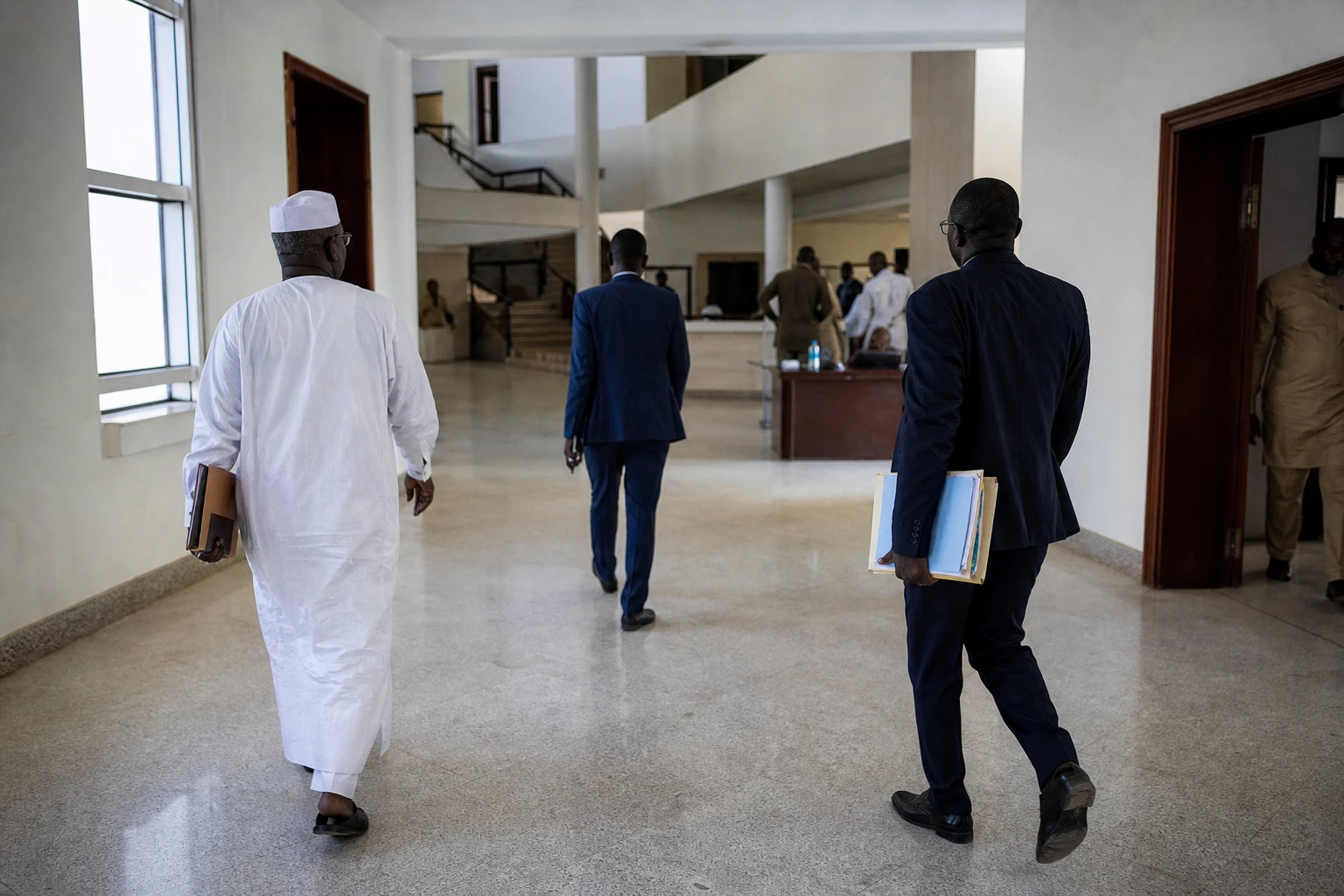
A pardon from the head of state, a signal awaited by the country
In Chad, the words “unity” and “reconciliation” never carry the same weight when spoken in the presidential palace as they do in the street. In N’Djamena, many now view every presidential gesture through a simple question: does it genuinely open up political space, or merely provide a brief respite after months of tension? The institutional framework gives the head of state the right to grant pardons, but that power alone says nothing about the political direction it serves.
This question arises at a particular political moment. Chad, a member of CEMAC — the Central African economic and monetary organisation comprising six states — remains a closely watched crossroads, amid security challenges in the Sahel, regional movement and a shared monetary framework based on the CFA franc. In this context, any decision affecting opposition figures, political prisoners or national cohesion quickly extends beyond the domestic sphere.
The political fact: an announcement without names, but with a horizon
On the eve of the 66th anniversary of independence, celebrated on 11 August, Mahamat Idriss Déby Itno called for national unity and reconciliation, while announcing a presidential pardon for several convicted people. At the time of his speech, the number and identities of the beneficiaries had not been specified, according to information cross-checked by several media outlets and news websites.
The Chadian executive does have this prerogative. The Presidency of Chad states that the president of the Republic “has the right to grant pardons”. But the anticipated gesture will only become meaningful once the presidential decree is published, with the names of those covered, its scope and its limits. That is where the announcement’s real significance will be determined: targeted easing of tensions, a symbolic gesture or a broader opening.
Attention is first turning to opposition figures who are imprisoned or facing prosecution. The most active opposition party coalition on this issue has called for measures to ease tensions, including the release of detained political leaders. It has also called for the removal of restrictions deemed excessive on democratic space. These appeals come amid a period in which the justice system and internal security have been at the heart of power struggles.
Succès Masra, the test of strength at the heart of the case
The most sensitive case remains that of Succès Masra. The former prime minister and leader of the Les Transformateurs party was sentenced to 20 years in prison, and the Supreme Court rejected his appeal in May 2026, according to several sources cross-checked. A presidential pardon could, in theory, ease his situation; an amnesty, by contrast, would more broadly erase the criminal consequences of the conviction. This distinction is essential, as it determines not only his freedom but also his ability to return to the political arena in the long term.
Consistent sources in N’Djamena report that direct exchanges have taken place between the head of state and his former ally. But the sticking point, reported by several media outlets, lies in the very nature of the measure under consideration. While a pardon is an act of presidential clemency, an amnesty has a clearer political dimension because it more fully restores the person concerned to civic life. In a country where the executive remains highly central to the architecture of power, the choice is not a technical one: it sets out the hierarchy of concessions.
This also sheds light on the wider situation facing opposition figures. In April and May 2026, several GCAP leaders were arrested and then sentenced to eight years in prison, following a tense judicial episode surrounding a banned rally. Their cases, like that of Succès Masra, fuel the view that any easing of tensions cannot be limited to a single name. If it is to happen, it must reflect a more coherent approach to political détente.
What this episode says about Chad today
Since the end of the transition and the May 2024 election, Mahamat Idriss Déby Itno’s government has consolidated its institutional base. Constitutional amendments adopted in 2025 lengthened the presidential term and removed the limit on the number of terms, according to Human Rights Watch and several regional sources. In other words, the discussion of a pardon is not taking place in a legal vacuum; it comes at a time when the executive has strengthened its room for manoeuvre.
For the authorities, a gesture to ease tensions could help defuse a period of friction, quiet international criticism and bring to a close a spell of open hostility with part of the opposition. For detainees’ families, activists and parties excluded from the centre of political life, the question is more concrete: will the presidential gesture be accompanied by a lasting change in the political treatment of dissent? As long as the criteria remain unclear, caution prevails.
The country is also being watched beyond its borders. In Central Africa, Chad carries weight because of its size, geographical position and membership of CEMAC. Its political choices therefore have regional resonance, particularly in a subregion where military transitions, electoral disputes and constitutional changes have produced a range of conflicting signals. A carefully calibrated pardon could be seen as a step towards easing tensions; a partial measure, by contrast, would confirm a controlled opening, with no fundamental shift.
The continental significance lies here: once again, Chad will test whether political tensions can be eased without the state relinquishing its authority. The episode will also show how N’Djamena intends to reconcile internal stability, control of the political sphere and its image as a reliable partner in a Central Africa where the institutional balance remains fragile. The next marker will be the publication of the presidential decree and, above all, the exact list of beneficiaries. That will show whether the outstretched hand is intended merely to calm the moment or to genuinely reopen the political horizon.