Algeria
 Egypt
 Libya
 Morocco
 Tunisia
 Benin
 Burkina Faso
 Cabo Verde
 Côte d'Ivoire
 Ghana
 Guinea
 Guinea-Bissau
 Liberia
 Mali
 Mauritania
 Niger
 Nigeria
 Senegal
 Sierra Leone
 The Gambia
 Togo
 Cameroon
 Central African Republic
 Chad
 DR Congo
 Equatorial Guinea
 Gabon
 Republic of the Congo
 São Tomé and Príncipe
 Burundi
 Comoros
 Djibouti
 Eritrea
 Ethiopia
 Kenya
 Madagascar
 Malawi
 Mauritius
 Mozambique
 Rwanda
 Seychelles
 Somalia
 South Sudan
 Tanzania
 Uganda
 Angola
 Botswana
 Eswatini
 Lesotho
 Namibia
 South Africa
 Zambia
 Zimbabwe
When public spending becomes a test of credibility
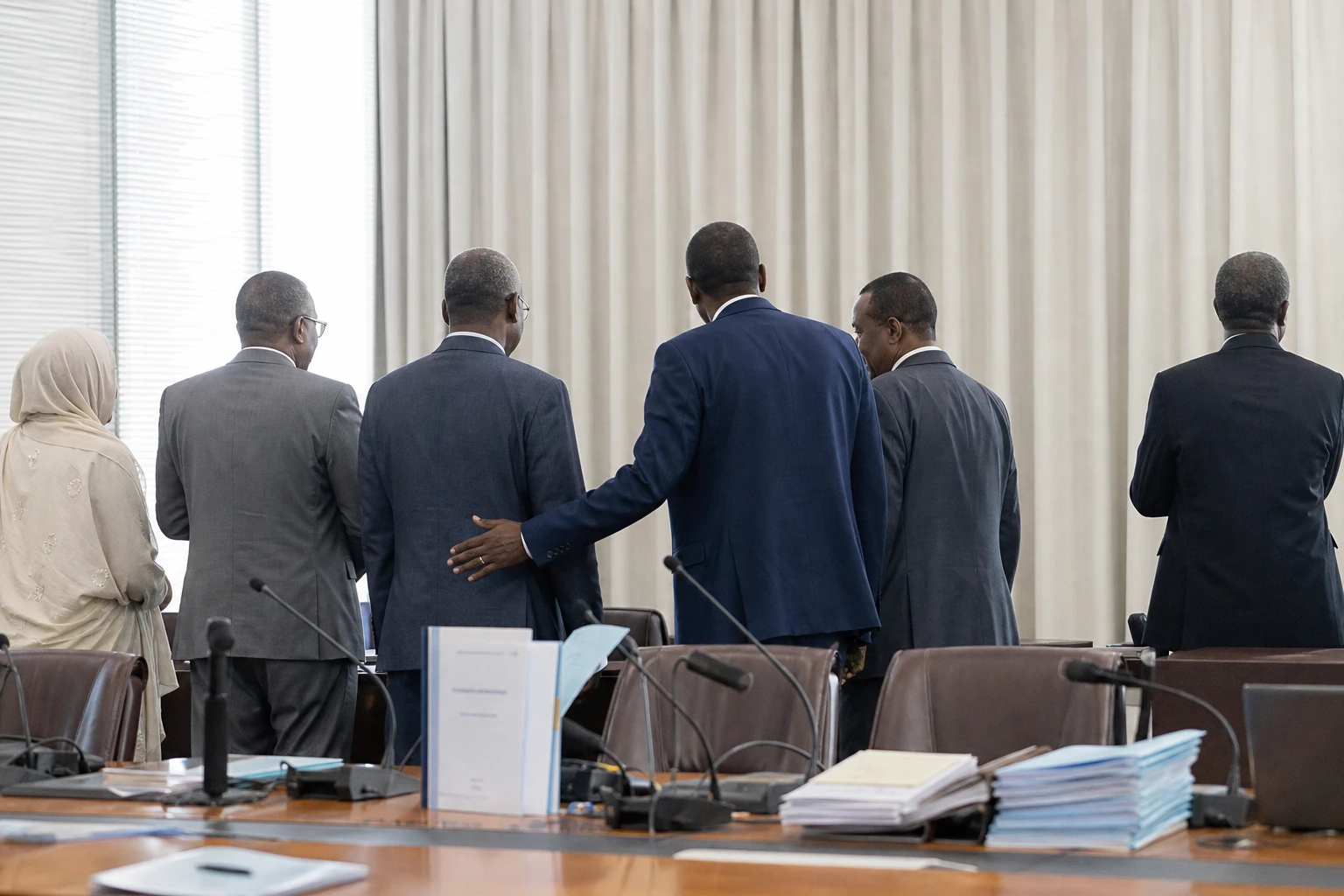
In a country at war, every public contract counts twice. Payments must be made quickly, but every dinar, supplier and step must also be traceable. In Sudan, this equation has become even more sensitive since the collapse in state revenues and the fragmentation of the administration. The launch of a digital public procurement platform is therefore more than an IT project. It is a political signal about how Khartoum intends to buy, oversee and justify its spending.
The issue arises at a time when Sudanese institutions are trying to survive while modernising. The country remains caught up in the conflict that began in April 2023, which has had a heavy impact on productive capacity, public finances and essential services. Sudan is also a member of IGAD, the regional organisation for East Africa and the Horn of Africa, which closely monitors peace and stability issues in the region. In this context, digitising public procurement serves governance as much as administrative reconstruction.
What the new platform sets out to do
On 17 March 2026, the Minister of State for Finance, Mohamed Nour Abdel-Daem, had already announced that the national electronic procurement system was ready to be launched. He said at the time that the tool would move the state from manual procedures to a fully digital platform covering tenders, bids, monitoring and the entire contracting cycle. He also presented the project as a way to reduce paper use, save time and strengthen transparency.
The announcement in early August confirms this direction. The system, named Nazaha, is intended to digitise public procurement procedures, improve competition among suppliers and connect government agencies to the state’s financial and reporting systems. The platform is part of a broader public financial management reform programme, which also covers the budget, the Treasury Single Account and the digitisation of financial management. In short, the aim is not simply to go digital. It is to tighten the public spending chain around more traceable tools.
This drive for reform takes on greater significance when viewed against the state of Sudan’s accounts. The World Bank estimates that the conflict caused real GDP to contract by 29.4% in 2023 and by about 14% in 2024. The African Development Bank, for its part, forecasts a modest recovery of 1.2% in 2025, following a 13.5% drop in 2024. State revenues fell to less than 5% of GDP in 2024-2025, down from 10% in 2022, according to figures cited in World Bank analyses.
A useful reform, but no magic fix
In Sudan’s economy, digitising public procurement could have tangible effects. For the administration, it limits opaque channels and makes it easier to keep records. For businesses, it could open up a more transparent space for competition, provided access is real and the rules are stable. For public finances, it could also help centralise information and improve the monitoring of spending. But a digital tool cannot replace state authority, staff safety or the continuity of services in a country where infrastructure remains fragile.
The main risk is well known: a platform that performs well on paper may remain incomplete if government agencies lack connectivity, skills or the capacity to enforce the new rules. The conflict has already reduced the tax base, disrupted logistics and weakened oversight capacity. Under these conditions, the challenge is not merely to launch Nazaha, but to embed it in a coherent administrative chain, from identifying needs through to payment. Without that, the reform will remain symbolic, even if it marks a genuine change in approach.
The humanitarian context is a reminder of the scale of the task. In February 2026, the United Nations launched its humanitarian plan for Sudan, appealing for about $2.9 billion to help more than 20 million people. UNICEF and other agencies later confirmed that tens of millions of Sudanese still depended on urgent assistance. In such an environment, modernising public spending is no technocratic luxury. It is a condition for institutional survival, as well as a test of credibility for a state seeking to retain control of its basic functions.
A significance that extends beyond Khartoum
Across the continent, the launch is part of a broader trend: several African administrations are adopting digital procurement tools to cut costs, secure procedures and better document public spending. For Sudan, however, the significance is even more strategic. In the Horn of Africa, where security crises, population displacement and political tensions intersect, any reform capable of restoring a minimum level of administrative trust has regional value. IGAD, whose members include Sudan, closely monitors these fragile balances.
What needs to be watched now is not just the launch announcement, but the actual implementation: the timetable for opening the platform, ministries’ ability to use it, the degree of integration with budget systems and the first tenders published. That is where the difference between a governance announcement and a transformation of the state will be made. In Sudan, where war has damaged finances as much as institutions, the fight for transparency often begins with the ability to circulate reliable information.