Algeria
 Egypt
 Libya
 Morocco
 Sudan
 Tunisia
 Benin
 Burkina Faso
 Cabo Verde
 Côte d'Ivoire
 Ghana
 Guinea
 Guinea-Bissau
 Liberia
 Mali
 Mauritania
 Niger
 Nigeria
 Senegal
 The Gambia
 Togo
 Cameroon
 Central African Republic
 Chad
 DR Congo
 Equatorial Guinea
 Gabon
 Republic of the Congo
 São Tomé and Príncipe
 Burundi
 Comoros
 Djibouti
 Eritrea
 Ethiopia
 Kenya
 Madagascar
 Malawi
 Mauritius
 Mozambique
 Rwanda
 Seychelles
 Somalia
 South Sudan
 Tanzania
 Uganda
 Angola
 Botswana
 Eswatini
 Lesotho
 Namibia
 South Africa
 Zambia
 Zimbabwe
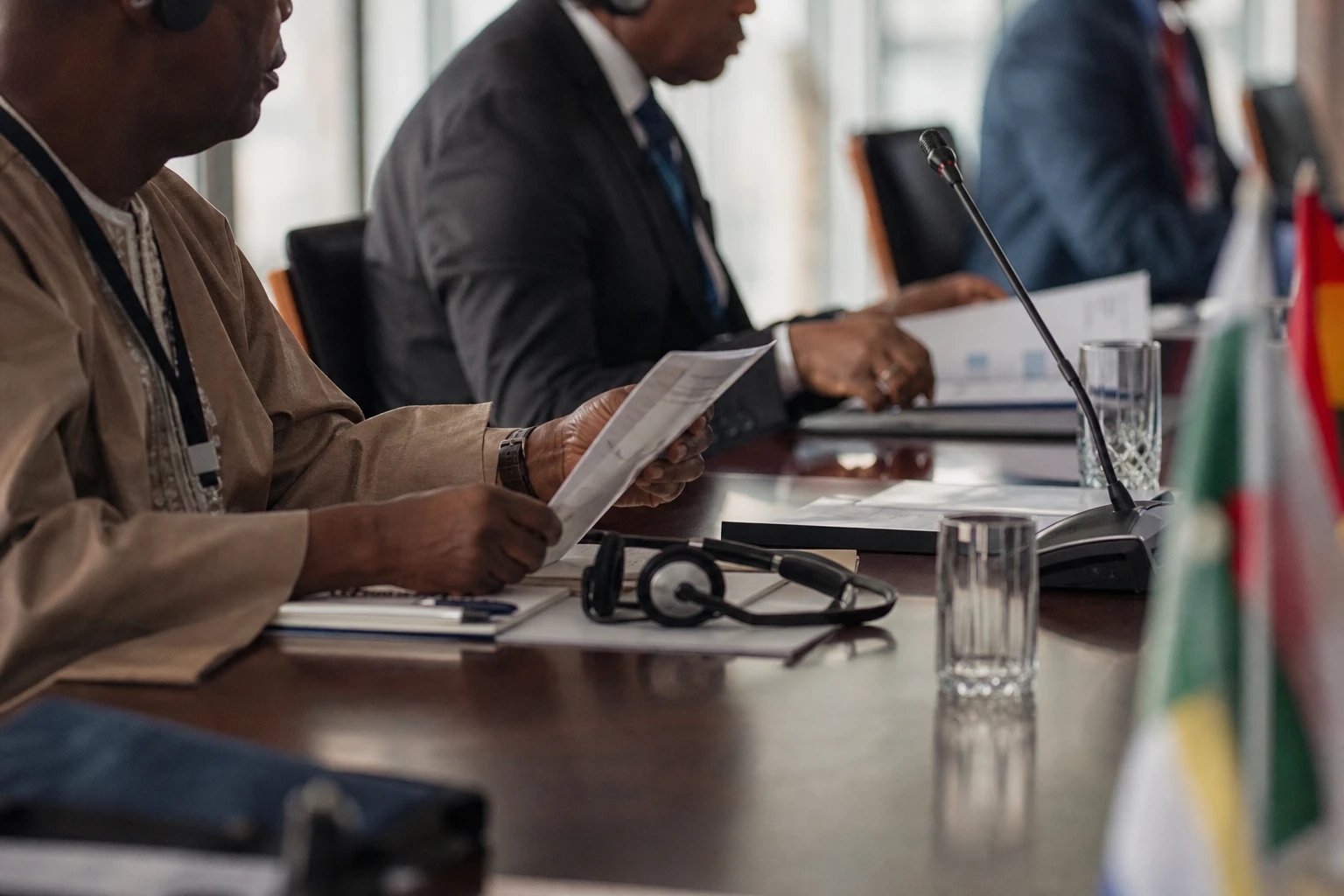
In Freetown, gender parity is no longer just a matter of speeches
In Sierra Leone, debate over women’s representation has moved beyond good intentions and into the realm of legal safeguards. In Freetown, the government now wants to go further than a simple electoral rule: it wants to make gender parity harder to dismantle by enshrining it in the Constitution.
The issue goes beyond Parliament alone. In a country where political decisions are also shaped by the balance between the capital, districts and traditional authorities, the question is straightforward: how can a gain secured by law be prevented from disappearing at the next shift in the political balance?
A reform driven by the executive amid a favourable regional climate
President Julius Maada Bio reaffirmed this direction as part of the ongoing constitutional reform process. Official documents on the reform project set out a clear objective: to guarantee a minimum of 30% women candidates, applying to national and local elections. The state’s proposed reform text explicitly includes this idea.
The regional context matters. In July 2026, Sierra Leone hosted the ECOWAS summit in Lungi, under the chairmanship of Julius Maada Bio. On that occasion, West African leaders adopted a declaration on gender parity in political representation, giving the Sierra Leonean initiative immediate regional resonance.
Across ECOWAS, pressure to expand women’s role in politics is not new. It gathered pace in 2026, when ministers responsible for gender affairs endorsed an advocacy strategy for a regional political declaration on gender parity and the participation of women and young people. Sierra Leone, which at the time chaired the relevant ministerial body, played a prominent role.
The facts: a law already in force, but still deemed insufficient
The foundations are already in place. The Gender Equality and Women’s Empowerment Act, adopted in 2022 and brought into force in January 2023, requires at least 30% women in elected parliamentary seats, as well as in the cabinet and other institutions. The law is complemented by electoral rules requiring parties to submit compliant lists.
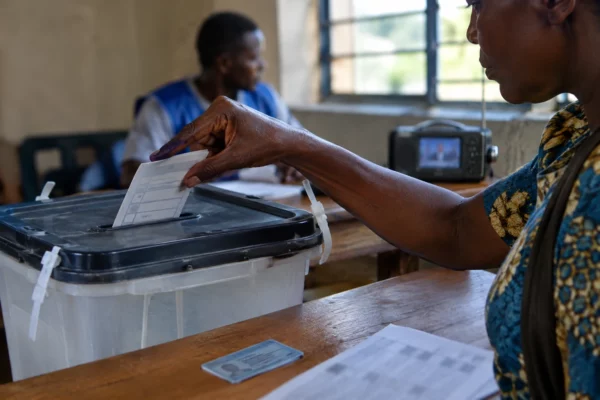
The effects were rapid. After the 2023 elections, women held 30.4% of elected seats in the National Assembly, compared with 14.5% in the previous legislature. The IPU also notes that women candidates won 41 of the 135 seats decided by direct election, although the female share falls to 28.2% when the 14 paramount chief seats are included, as only one woman was indirectly elected to those seats.
In other words, progress is real, but incomplete. The West African average for women in parliament remains 18.4%, according to the IPU. Sierra Leone is therefore doing better than its neighbours on this measure, but remains far from equal representation and influence.
What enshrining it in the Constitution would change
The government’s idea is political before it is symbolic. Enshrining gender parity in the Constitution would make the rule more stable than an ordinary law. It would make backtracking more difficult in the wake of a change of government, a parliamentary compromise or an opportunistic revision. In a country where constitutional reform is already a sensitive undertaking, this safeguard could carry significant weight.
On the ground, this concerns more than elected representatives. It also affects party machinery, selection committees, districts and the way candidates are chosen before a vote. Men still dominate Sierra Leone’s parliamentary landscape, while the current provision does not apply to the 14 paramount chiefs, who are also part of Parliament. This exception reduces the reform’s overall impact on representation.
For women in politics, the debate is therefore less about access than durability. A useful measure can be circumvented if it remains fragile. A constitutional provision, by contrast, obliges the state to defend it over time. That is precisely the purpose of the campaign being waged by the reform’s supporters.
Significance beyond Sierra Leone
Sierra Leone finds itself at an interesting crossroads for West Africa. It has shown that a quota rule can produce measurable results within a few electoral cycles. It is now a practical case study for ECOWAS, which is seeking to turn a regional commitment into a concrete political mechanism.
The issue also speaks to a broader question about the quality of democratic transitions in Africa. In several countries, quotas already exist on paper, but their impact depends on political parties, electoral administrations and the will to protect them over time. Sierra Leone is testing a further step: moving gender parity from the status of a useful rule to that of a constitutional principle.
What happens next will depend on Parliament, and then on the government’s ability to maintain a balance between institutional reform and political negotiation. In Freetown, the matter is therefore not settled. Instead, it is opening a new phase in which women’s place in public decision-making could become a lasting marker of Sierra Leone’s democratic development.