
 Algeria
 Egypt
 Libya
 Morocco
 Sudan
 Tunisia
 Benin
 Burkina Faso
 Cabo Verde
 Côte d'Ivoire
 Ghana
 Guinea
 Guinea-Bissau
 Liberia
 Mali
 Mauritania
 Niger
 Nigeria
 Senegal
 Sierra Leone
 The Gambia
 Togo
 Cameroon
 Central African Republic
 Chad
 DR Congo
 Equatorial Guinea
 Gabon
 Republic of the Congo
 São Tomé and Príncipe
 Burundi
 Comoros
 Djibouti
 Eritrea
 Ethiopia
 Kenya
 Madagascar
 Malawi
 Mauritius
 Mozambique
 Rwanda
 Seychelles
 Somalia
 South Sudan
 Tanzania
 Uganda
 Angola
 Botswana
 Eswatini
 Lesotho
 Namibia
 Zambia
 Zimbabwe
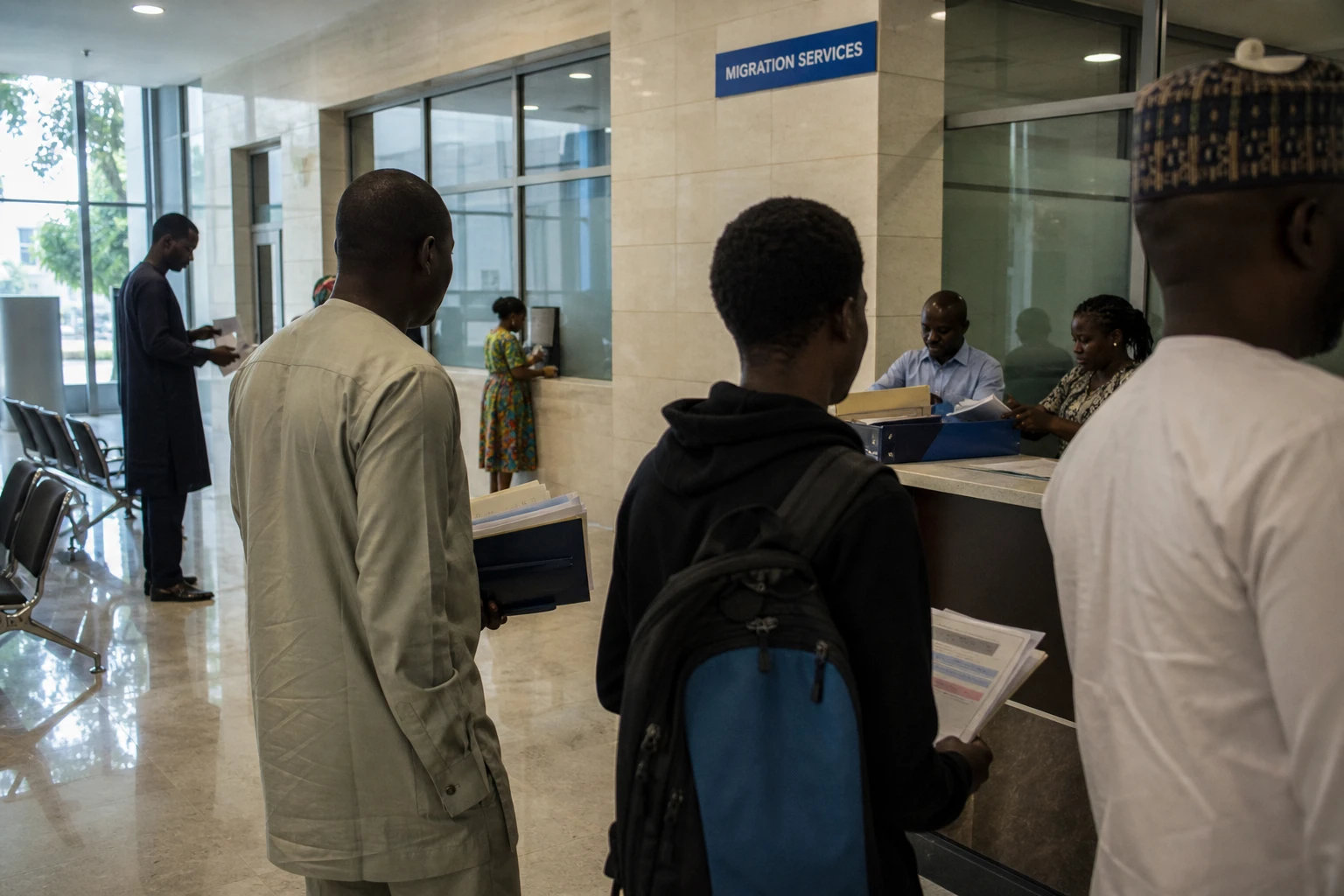
Between forced return and rebuilding a life
In Lagos and Enugu alike, many Nigerian families are discovering the same reality: returning home does not, by itself, heal the wounds left by months of tension in South Africa. For those repatriated, the flight home often felt like an emergency exit. For the Nigerian state, it has above all exposed the vulnerability of a diaspora exposed to migration tensions in a major neighbouring country.
The issue is also weighing on the balance of power between Abuja and Pretoria. Nigeria, whose capital is Abuja, has made protecting its nationals a central tenet of its diplomacy. South Africa, meanwhile, has toughened its rhetoric against irregular immigration and document fraud, amid anti-migrant protests and stepped-up checks. The two countries are among the continent’s most influential economies, and their disagreement goes beyond the repatriation cases alone. It affects the movement of people, capital and African businesses.
What the figures say — and what they conceal
South African authorities confirmed that they had processed 586 Nigerian nationals for repatriation as of 11 June 2026, specifying that those concerned were in the country unlawfully under South African law. The Nigerian government, for its part, described the evacuation as entirely funded by Abuja and carried out with the support of its diplomatic mission in Pretoria.
The operation was subsequently expanded. Nigeria’s Ministry of Information said the final flight, on 15 July 2026, brought the total to 1,490 repatriates. NEMA, Nigeria’s emergency management agency, meanwhile, announced that 1,516 people had been received between 11 June and 15 July 2026. This difference of 26 people shows that figures for organised returns can vary depending on the scope used: passengers, people registered, or arrivals actually assisted at the airport.
On the ground, the accounts of those repatriated offer another perspective. Several Nigerian media outlets have reported testimony of significant material losses, sometimes following a sudden departure, with documents lost, savings tied up and plans abandoned. It is precisely these experiences that turn a consular operation into a political issue. Behind every figure are lost earnings, unpaid rent and families forced to start over.
Abuja has also suggested that discussions about possible compensation for abandoned property remain open. Pretoria, for its part, has defended its policy by emphasising the fight against irregular immigration and rejecting any simplistic portrayal of the country as hostile to foreigners. This divergence lies at the heart of the dispute: Nigeria speaks of xenophobia and the protection of Africans on the continent; South Africa stresses administrative sovereignty and border management.
A consular case becomes a regional issue
The issue extends beyond the two capitals. It comes at a time when several African governments face the same dilemma: how to ensure the safety of African migrants while responding to domestic pressure on jobs, housing and public services. In South Africa, the issue has taken on a regional dimension, as returns also involve Malawians, Zimbabweans, Mozambicans, Ghanaians and Nigerians. Pretoria has also said it intends to raise the issue at continental level, focusing on the root causes of African migration.
For ECOWAS, of which Nigeria is a pillar, the episode highlights a familiar tension: freedom of movement in Africa is advancing on paper, but still runs up against national practices of control, screening and regularisation. The reality is even more complex for Nigerians in the diaspora, who often work in the informal economy, trade, logistics or services, where formalisation remains incomplete and residence permits can be precarious.
In Abuja, the issue also has domestic implications. The government must show that it protects its citizens without worsening a diplomatic crisis with a major economic partner on the continent. In Lagos, Enugu and elsewhere, those repatriated must find their way back into an already strained labour market, with skills to redeploy, debts to manage and households to stabilise. This is where the real significance of the issue lies: less in the statement than in the often slow reintegration of those who have returned.
What happens next will depend above all on the two countries’ ability to maintain dialogue, as South Africa continues its consultations on migration and Nigeria keeps monitoring the fate of its nationals abroad. For now, the case says something broader about the continent: African mobility remains a political promise, but in many cases it is still a fragile experience whenever the domestic climate hardens.



