
 Algeria
 Egypt
 Libya
 Morocco
 Sudan
 Tunisia
 Benin
 Burkina Faso
 Cabo Verde
 Côte d'Ivoire
 Ghana
 Guinea
 Guinea-Bissau
 Liberia
 Mali
 Mauritania
 Niger
 Senegal
 Sierra Leone
 The Gambia
 Togo
 Cameroon
 Central African Republic
 Chad
 DR Congo
 Equatorial Guinea
 Gabon
 Republic of the Congo
 São Tomé and Príncipe
 Burundi
 Comoros
 Djibouti
 Eritrea
 Ethiopia
 Kenya
 Madagascar
 Malawi
 Mauritius
 Mozambique
 Rwanda
 Seychelles
 Somalia
 South Sudan
 Tanzania
 Uganda
 Angola
 Botswana
 Eswatini
 Lesotho
 Namibia
 South Africa
 Zambia
 Zimbabwe
A bet on population beyond the health sector alone
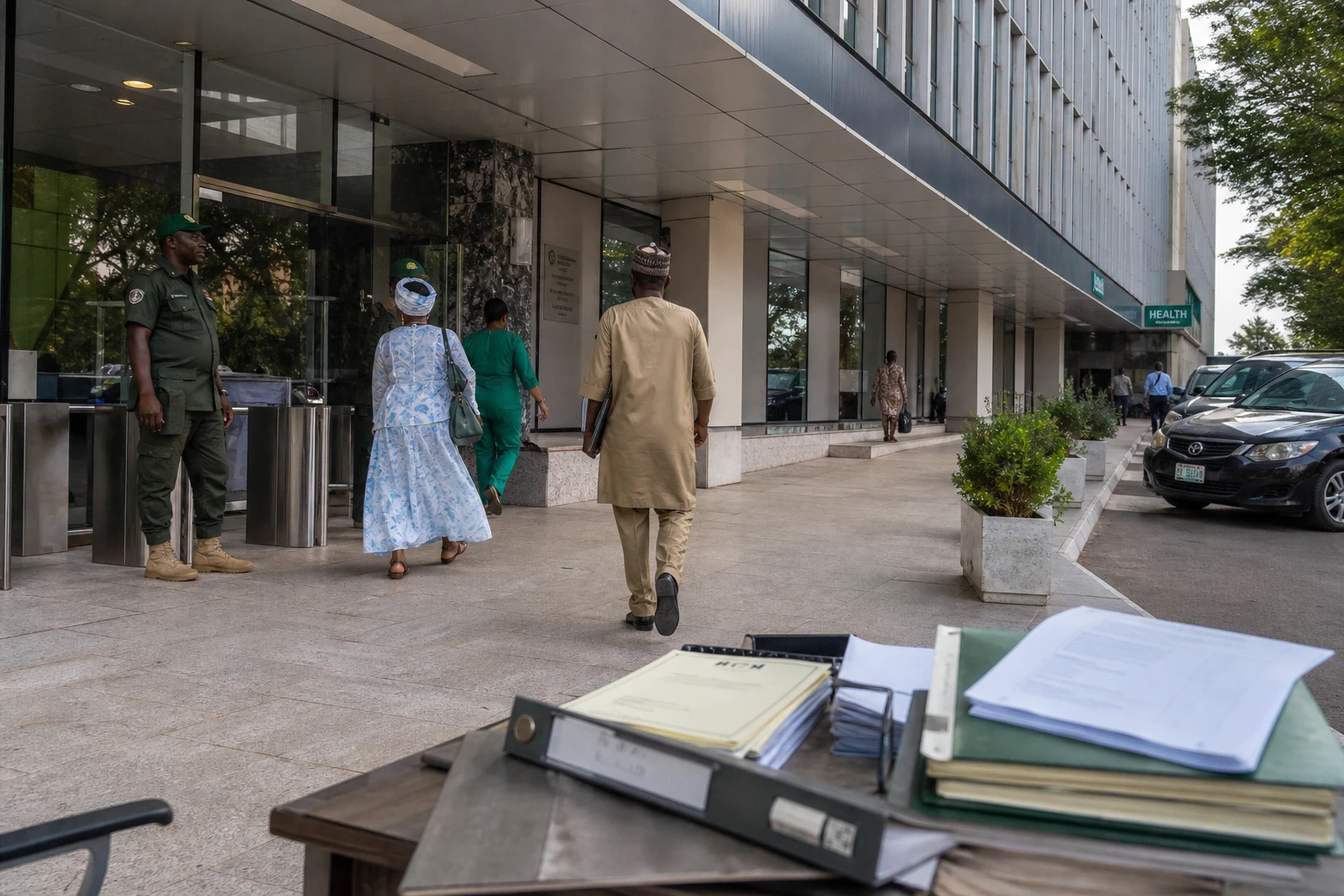
In Nigeria, the question is no longer simply how many children are born. It is how a country of more than 220 million people can turn its youth into a productive force without allowing pressure on schools, health centres and the labour market to widen the disparities already visible between cities and rural areas. It is in this spirit that Abuja has launched a high-level cross-ministerial platform on family planning, health, human capital and national development.
The choice is no accident. Nigeria remains a pillar of ECOWAS, the Economic Community of West African States, whose leaders also stress that regional growth now depends on macroeconomic stability, integration and job creation. In a country whose population could reach about 359 million by 2050 according to the WHO, while UNFPA projections still point to a threshold of 400 million by then, coordinating public policy is a central issue, not a mere administrative slogan.
What the government is putting in place
According to a statement from the Federal Ministry of Health and Social Welfare, the platform announced on 7 August 2026 brings together several government departments around shared priorities: family planning, reproductive health, maternal and child health, girls’ education and youth empowerment. The stated aim is clear: to get ministries that have often worked in silos to work together, so that health, education and employment policies reinforce rather than contradict one another.
Minister Muhammad Ali Pate has defended this approach by directly linking demography and development. He recalled that Nigeria’s population is estimated at about 230 million and that future growth will require greater investment in essential services. The message is also economic: Abuja wants to encourage local production of family planning products to reduce dependence on imports, support employment and retain more value added within the country.
Figures that highlight the urgency
Health data give this strategy added weight. The 2024 Nigeria Demographic and Health Survey, launched by the federal government, shows a fall in the total fertility rate from 5.3 children per woman in 2018 to 4.8 in 2024. This change points to wider use of family planning services, but is not enough to absorb the pace of growth in the working-age population. The government therefore sees it not as a victory already secured, but as an opportunity for action that must be consolidated.
Employment remains the most sensitive issue. A projection cited in the West African business press, based on the ECOWAS Bank for Investment and Development, estimates that Nigeria could have 3.72 million unemployed people in 2026. Even if this figure should be treated with caution, it points to a solid reality: more than 3.5 million Nigerians enter the labour market each year, while the formal economy is not creating skilled jobs quickly enough. In this context, technical training, basic healthcare and girls’ education are employment policies as much as social policies.
What this means for Nigerians and the region
The stakes vary among social groups. For urban families, better reproductive health and maternal care services could ease the cost of childbirth and medical follow-up. For rural households, where access to services remains more fragile, the impact will depend above all on the state’s ability to reach beyond Abuja and state capitals. For young people, finally, the issue is not theoretical: without recognised skills and jobs, the demographic dividend can quickly turn into economic frustration.
Bola Tinubu’s government has already begun rolling out reforms in education, health and vocational training. The WorldSkills Nigeria National Team Committee, launched in January 2026, for example, aims to bring technical training closer to international standards. In healthcare, Abuja points to primary care funding, the digitalisation of services and the centralisation of procurement through Medipool. This is on top of a $2.5 billion commitment to primary healthcare for 2024-2026, previously announced by the presidency. These measures will only matter if they produce visible results in the states, not just in press releases.
The implications extend beyond the country. In a West Africa where ECOWAS is pursuing an agenda of economic integration and social resilience, Nigeria often serves as a test case. If it succeeds in better aligning health, education, employment and local production, the country can turn its demographic weight into a regional engine. If it fails, pressure on migration, inequality and the informal economy will be felt far beyond Abuja. The real question in the months ahead, then, is whether this cross-ministerial platform can move from political signal to measurable implementation.



