Algeria
 Egypt
 Libya
 Morocco
 Sudan
 Tunisia
 Benin
 Burkina Faso
 Cabo Verde
 Côte d'Ivoire
 Ghana
 Guinea
 Guinea-Bissau
 Liberia
 Mali
 Mauritania
 Niger
 Nigeria
 Senegal
 Sierra Leone
 The Gambia
 Togo
 Cameroon
 Central African Republic
 Chad
 DR Congo
 Equatorial Guinea
 Gabon
 Republic of the Congo
 São Tomé and Príncipe
 Burundi
 Comoros
 Djibouti
 Eritrea
 Ethiopia
 Kenya
 Madagascar
 Malawi
 Mauritius
 Mozambique
 Rwanda
 Seychelles
 Somalia
 Tanzania
 Uganda
 Angola
 Botswana
 Eswatini
 Lesotho
 Namibia
 South Africa
 Zambia
 Zimbabwe
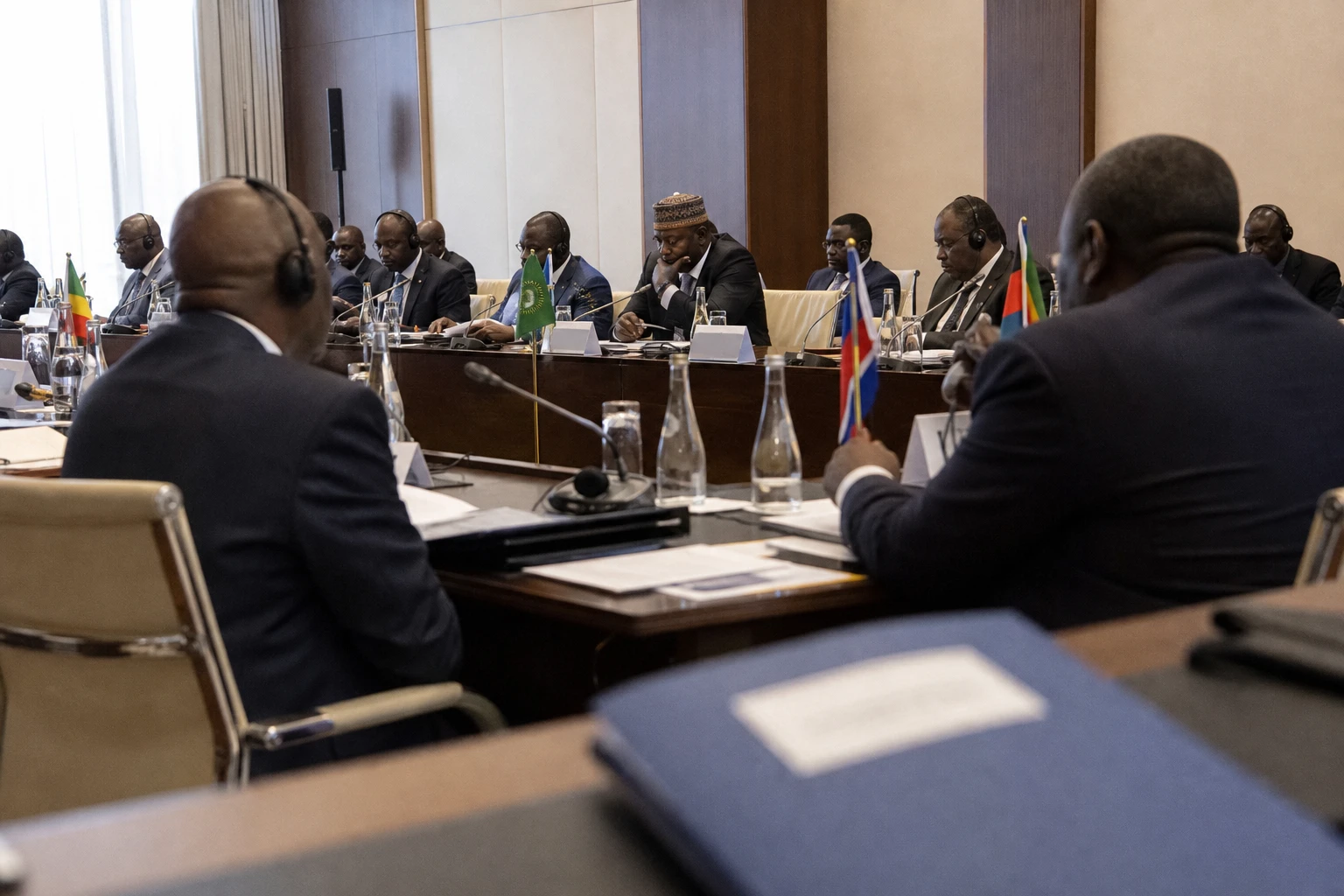
In Juba, the election countdown is exposing an unfinished transition
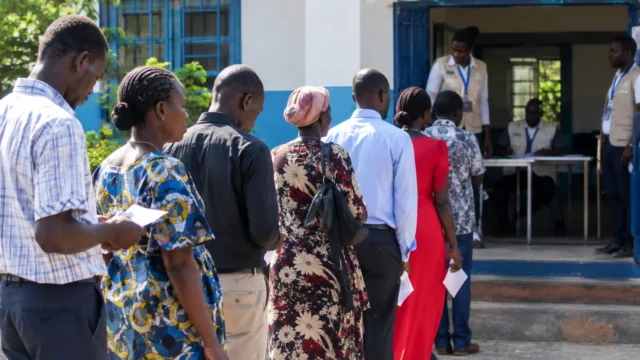
In South Sudan, an election is about more than a date on a calendar. It has implications for security, the role of women, trust between political camps and the state’s ability to organise a vote without reigniting divisions. In the capital, Juba, that equation remains fragile.
The country is still emerging from civil war in stages, with the Revitalised Peace Agreement signed in 2018 serving as the main framework for the transition. But that framework has yet to deliver all its intended results. The forces remain only partially unified, the permanent constitution has not been finalised, and the transitional justice mechanisms provided for in the agreement are advancing slowly. In the region, the Intergovernmental Authority on Development, IGAD, is closely monitoring the issue, as South Sudan remains a factor in stability across East Africa.
The official timetable has been postponed several times. The United Nations has noted that general elections are now scheduled for December 2026, while the political transition is due to run until February 2027. But several signs suggest the country still lacks the basic conditions for a credible vote. In November 2025, UN officials said that a credible election within that timeframe was becoming increasingly unlikely. In 2026, the Security Council extended sanctions measures related to South Sudan, a sign that the international community continues to regard the situation as unstable.
The obstacles are clear, but progress is too slow
The core problem is not the absence of a framework. It is the gap between commitments made and their implementation. The peace agreement’s monitoring mechanism, the Reconstituted Joint Monitoring and Evaluation Commission, has repeatedly noted that political and technical steps are progressing too slowly. The priorities are clear: protect civilians, unify the forces, finalise electoral laws and give the transition real substance.
Protecting civilians remains one of the most pressing demands. In South Sudan, sexual violence and forced displacement affect women and girls first, but also families living near conflict zones. In 2026, the UN again warned of mass displacement of civilians and a deterioration in the security climate. This reality has a direct bearing on voting: without freedom of movement, local security and trust in the authorities, an election becomes an additional risk rather than a way out of crisis.
Another stalled undertaking is transitional justice. The peace agreement provides for a Hybrid Court for South Sudan, a Commission for Truth, Reconciliation and Healing, and an authority responsible for reparations. These mechanisms are intended to address the gravest crimes and offer a form of political and moral reparation. Yet their establishment remains incomplete. Several UN sources have noted that impunity fuels the recurrence of abuses and undermines any lasting peace.
Women are central to the debate, but still far short of the target
South Sudan’s electoral process is not being shaped only by parties and security apparatuses. It is also about the role given to women. The revitalised agreement sets a target of 35% female representation in institutions and transition processes. That target has been on paper for years. In practice, representation remains well below the stipulated standard.
Women’s organisations and several UN partners stress that this representation is not a symbolic detail. It determines who speaks on behalf of the country, who takes part in drafting the constitution, who sits on electoral bodies and who can influence the rules of the game. UN Women notes that a more inclusive dynamic has begun, with women representatives included in some committees in 2026. But this progress remains partial.
In a country where local conflicts, gender-based violence and a weak ordinary justice system intersect, the role of women in the transition is also a public security issue. The smaller their presence, the greater the risk that decisions will remain captured by institutional interests and compromises between male elites. Conversely, meaningful participation can broaden the debate, strengthen the process’s legitimacy and open up channels for mediation at local level. This is precisely what women mediators and South Sudanese civic networks have been pointing out for several years.
Decisions in Juba have repercussions beyond South Sudan
The significance of the issue extends well beyond South Sudan’s borders. South Sudan is a strategic neighbour of Sudan, Uganda, Kenya, Ethiopia and the Democratic Republic of the Congo. Any political deterioration in Juba affects displacement flows, cross-border trade and security balances across the Horn of Africa. That is why IGAD, the African Union and the United Nations remain closely involved in monitoring the process.
The next major milestone is whether South Sudanese authorities can turn a theoretical timetable into a credible sequence of steps. This requires funding, coherent electoral laws, functioning electoral institutions and a broader political agreement between the main camps. Without these, the vote risks being seen as a mere extension of the transition rather than the moment when the country finally begins to normalise. Regional officials are now saying openly that time is running out for an election prepared too late and too incompletely.
For East Africa, the stakes are clear. If South Sudan manages to hold a credible election, however difficult, it will strengthen the idea that a managed transition can still produce more stable institutions. If it fails, the region will have to contend with a new cycle of uncertainty and its political, humanitarian and economic consequences. South Sudan’s situation is therefore less about a date than a test of state capacity, regional compromise and public trust.