
 Algeria
 Egypt
 Libya
 Morocco
 Sudan
 Tunisia
 Benin
 Burkina Faso
 Cabo Verde
 Côte d'Ivoire
 Ghana
 Guinea
 Guinea-Bissau
 Liberia
 Mali
 Mauritania
 Niger
 Nigeria
 Senegal
 Sierra Leone
 The Gambia
 Togo
 Central African Republic
 Chad
 DR Congo
 Equatorial Guinea
 Gabon
 Republic of the Congo
 São Tomé and Príncipe
 Burundi
 Comoros
 Djibouti
 Eritrea
 Ethiopia
 Kenya
 Madagascar
 Malawi
 Mauritius
 Mozambique
 Rwanda
 Seychelles
 Somalia
 South Sudan
 Tanzania
 Uganda
 Angola
 Botswana
 Eswatini
 Lesotho
 Namibia
 South Africa
 Zambia
 Zimbabwe
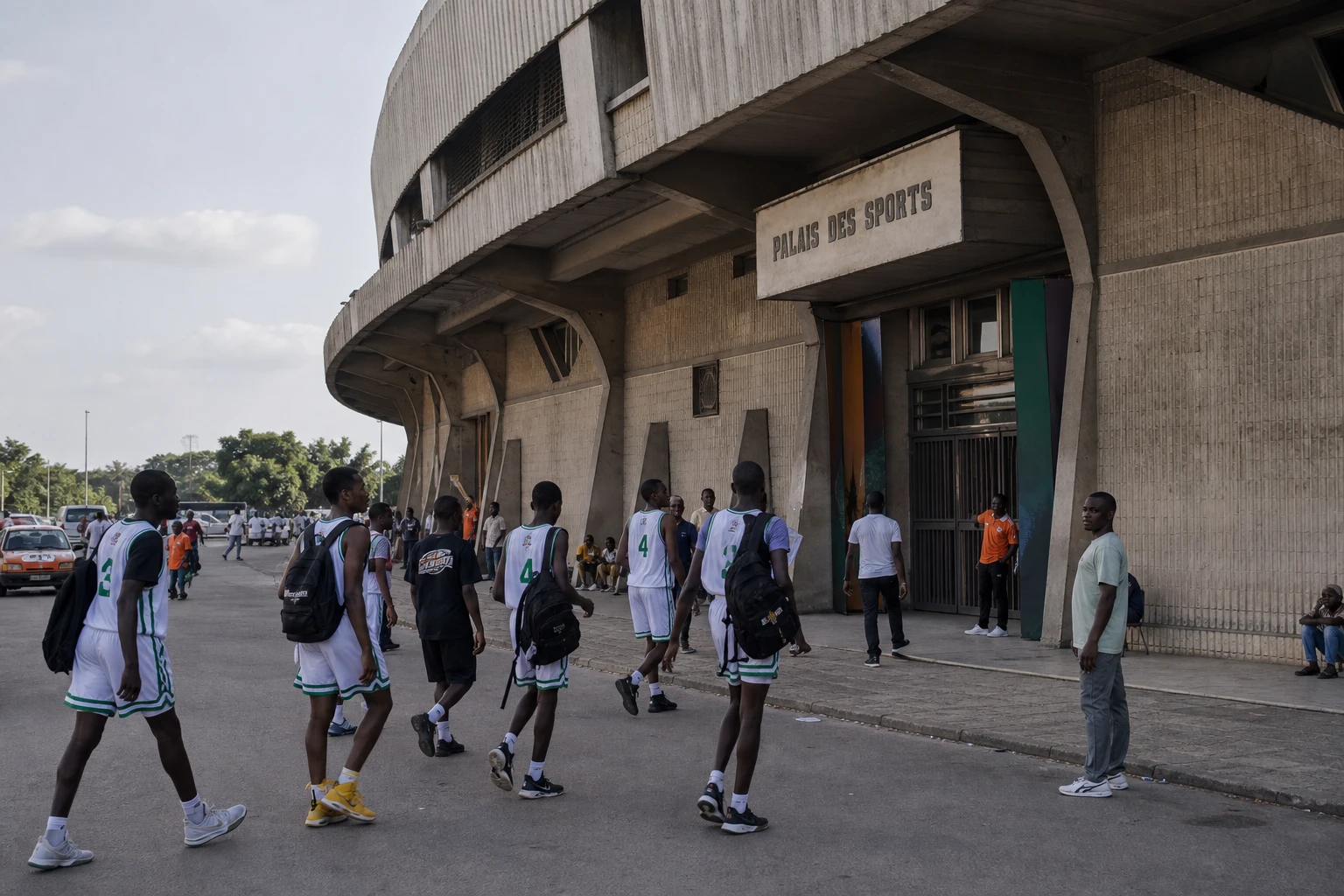
Abidjan opens a tournament with little room for error
In a youth championship, the opening match often says more than the score alone. It reveals a team’s mindset, the quality of its development work and a host country’s ability to stage a continental competition without faltering. In Abidjan, Côte d’Ivoire opened the men’s AfroBasket U18 with a clear-cut display, as several of the continent’s teams are already playing for a place in the African under-18 pecking order.
The setting matters too. The competition is taking place in Côte d’Ivoire from 5 to 16 August 2026, with 12 national teams divided into three groups. It serves as a springboard to the 2027 FIBA U19 World Cup, as the tournament’s top two teams will qualify for the global event. For the host country, the stakes go beyond sport: it is an opportunity to consolidate a reputation for staging sporting events, already bolstered by hosting major competitions in Abidjan, while Yamoussoukro remains the political capital and the large coastal city once again takes centre stage.
Strong Elephants put Group A under pressure
On court at the Treichville Sports Palace, Côte d’Ivoire dominated Chad 104-51. The gap was already clear at half-time, when the score stood at 55-26. Karl Kouamé-Zézé finished joint top scorer with 19 points, while Bryan N’Goli added 10. The Ivorian bench made a major contribution, with substitutes scoring 48 points — evidence of a deep squad and a team already working well together.
Egypt also beat Nigeria 95-68 in Group A. The result keeps the pressure on the Ivorians, as finishing top of the group could mean a more favourable path through the rest of the tournament. The Côte d’Ivoire-Egypt clash, billed as decisive in the race for group leadership, therefore takes on immediate significance. In a short tournament, every point counts, and points difference can prove crucial when the final group standings are drawn up.
This successful start says something broader about Ivorian basketball. Hosting a continental youth event also raises the profile of local development pathways, clubs, development centres and national coaches. The Elephants’ performance is about more than a big score. It also offers an indication of the depth of Ivorian talent, in a country where basketball is seeking to turn home advantage into a lasting culture of high performance.
Madagascar, Mali and West Africa’s rising generation set a high bar
The day also sent two clear messages to the rest of the continent. Madagascar snatched a 68-65 win over Gabon at the buzzer, thanks to a three-pointer from Abdoul Yvan Hanaffi. Harinosy Rasetriarivony recorded a double-double with 25 points and 10 assists. Mali, the reigning U18 champions, then beat Morocco 66-45 after a blistering start, opening with a 14-0 run. Abdoul Karim Diallo finished the game with 21 points and 17 rebounds. The results confirm that at this level, composure in the closing stages is almost as valuable as raw talent.
Mali remains a continental benchmark in this age group. FIBA notes that the Eagles won the 2024 edition, and that the 2026 competition will serve as a bridge to the U19 World Cup. In this context, the win over Morocco is no small matter: it shows that the defending champions retain a winning culture and the ability to impose a high tempo from the outset. For other nations, particularly those who have qualified through zonal tournaments, the message is simple: lost ground is quickly punished, especially against teams accustomed to Africa’s top-level competition.
The list of participating teams also reflects the continent’s sporting geography. Côte d’Ivoire qualified as hosts. Mali, Cameroon, Senegal and Morocco earned their places by reaching the semi-finals in 2024. Chad, Nigeria and Tunisia came through zonal tournaments. This structure illustrates how FIBA Africa operates through regional zones, with a system that rewards both consistency and excellence in recent performances.
Cameroon, Senegal and West Africa face a test of continuity
On Thursday, Group C takes to the court in Treichville for two much-anticipated games: Cameroon-Tunisia, followed by Rwanda-Senegal. Cameroon arrives as runner-up in the 2024 edition, bringing high expectations. Senegal, third in the last edition, also carries a recent legacy: that of a team often under scrutiny because it regularly produces competitive generations at youth level.
Rwanda’s momentum is different. The country sprang a surprise by beating Egypt in the Zone 5 qualifiers, showing that regional hierarchies can shift faster than many expect. Tunisia secured the sole ticket from Zone 1. In other words, the finals in Abidjan pit more than just familiar names against one another. They also bring together teams representing distinct trajectories: established powers, rising outsiders and sides seeking to move up a level.
At a pan-African level, the significance is clear. U18 competitions serve as a barometer of player development, but also reveal structural imbalances between federations. They show which countries are investing in the next generation, which talent-identification systems are working and which development centres are managing to turn potential into results. For Côte d’Ivoire, hosting the tournament in Abidjan is therefore an opportunity on sporting, institutional and symbolic fronts: to prove that it can host, perform and compete at the top of African youth basketball. The next few games will show whether the momentum of the opening day can become a genuine title challenge.



