Algeria
 Egypt
 Libya
 Morocco
 Sudan
 Tunisia
 Benin
 Burkina Faso
 Cabo Verde
 Côte d'Ivoire
 Ghana
 Guinea
 Guinea-Bissau
 Liberia
 Mali
 Mauritania
 Niger
 Nigeria
 Senegal
 Sierra Leone
 The Gambia
 Togo
 Central African Republic
 Chad
 DR Congo
 Equatorial Guinea
 Gabon
 Republic of the Congo
 São Tomé and Príncipe
 Burundi
 Comoros
 Djibouti
 Eritrea
 Ethiopia
 Kenya
 Madagascar
 Malawi
 Mauritius
 Mozambique
 Rwanda
 Seychelles
 Somalia
 South Sudan
 Tanzania
 Uganda
 Angola
 Botswana
 Eswatini
 Lesotho
 Namibia
 South Africa
 Zambia
 Zimbabwe
A migration case becomes a test of sovereignty
In Yaoundé, a court case poses a simple but weighty question: can a state host foreign nationals sent by an outside power without public debate or parliamentary oversight? In Cameroon’s case, the stakes go beyond immigration alone. They touch on the transparency of international agreements, the protection of people transferred and the way Cameroon reconciles its commitments to Washington with its own constitutional rules.
The issue is also part of a broader sequence. Since 2025, several African states have been named in arrangements to transfer migrants described as being from “third countries”, a practice challenged by the African Commission on Human and Peoples’ Rights, which has recalled the principle of non-refoulement and the right to an individual assessment of each case. Cameroon, a member of CEMAC, thus finds itself at the intersection of global migration pressures and an African debate on legal sovereignty.
The Cameroonian constitution provides that treaties and international agreements falling within the domain of legislation must be submitted to parliament before ratification. This rule lies at the heart of the challenge brought in Yaoundé. It does not, by itself, settle the political substance of the case, but it sets a clear requirement: an agreement of this kind cannot be treated as a simple, discreet administrative operation.
What the established facts show
According to information corroborated by several sources, the United States transferred groups of nationals from African countries other than Cameroon to the country in January and then February 2026. Human Rights Watch reports that 17 people from nine African countries were sent to Cameroon in January and February, while the Associated Press confirmed a second flight in February after an initial transfer in January.
The countries named in the case are Angola, the Democratic Republic of the Congo, Ethiopia, Ghana, Kenya, Morocco, Senegal, Sierra Leone and Zimbabwe. Several of those concerned are said to have obtained protection from being returned to their countries of origin in US courts, because of alleged risks of persecution or torture.
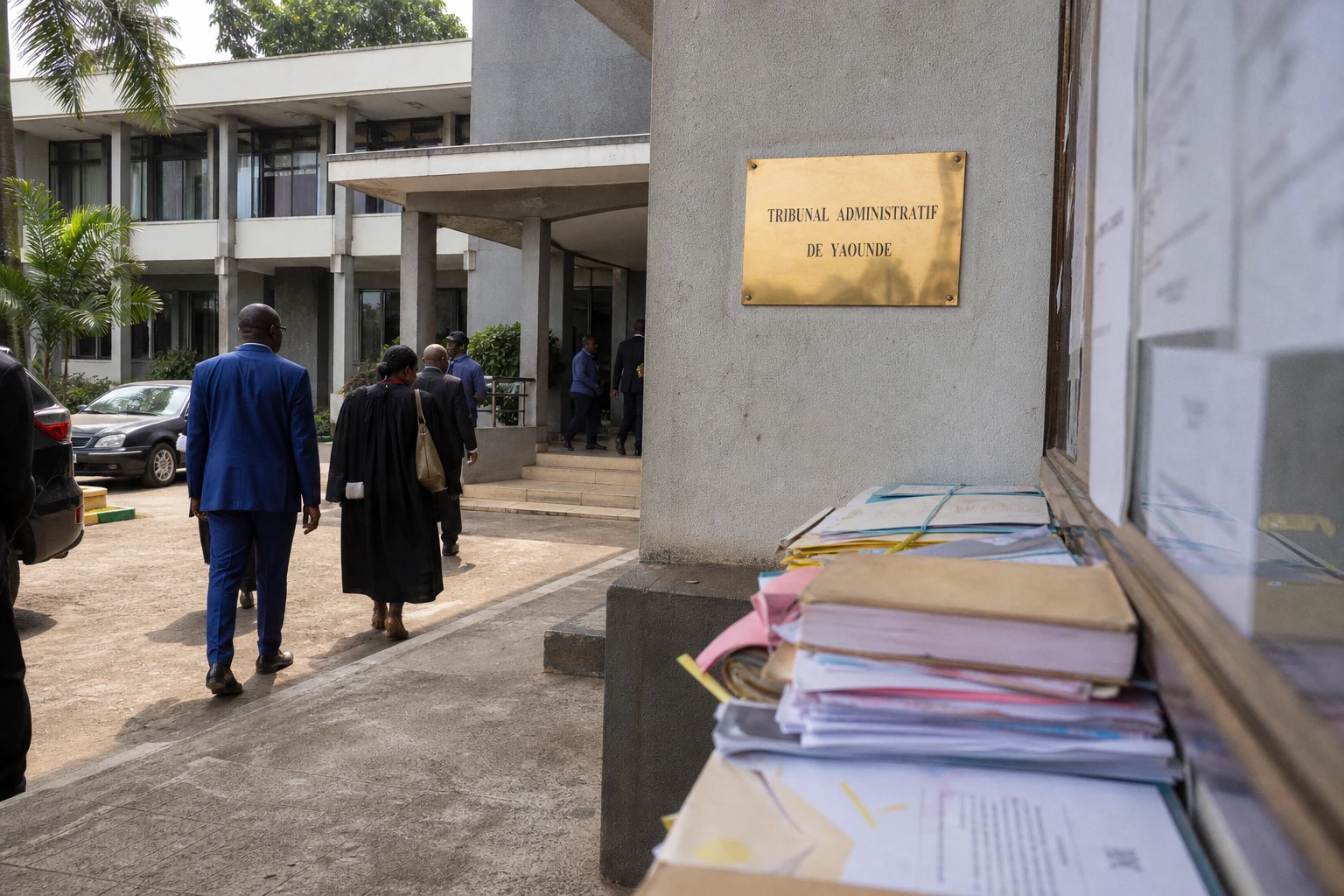
The law firm Frulaw Chambers, acting on behalf of 36 nationals from nine African countries transferred between January and May, filed a case with the administrative court in Yaoundé to challenge the legality of the agreement between Yaoundé and Washington. This adds to broader complaints about access to legal assistance and conditions of detention in Yaoundé, raised by Human Rights Watch and several media outlets covering the case.
One point remains central: neither Washington nor Yaoundé has, so far, published the full terms of the agreement cited in the press. The lack of transparency is fuelling political suspicion. It is also feeding the legal battle, as the absence of a public text makes it harder to scrutinise the legal basis, the duration of detention, the safeguards offered to those transferred and any possible reciprocal arrangements.
In the Cameroonian case, lawyer Joseph Fru Awah has become one of the faces of the challenge. Several media outlets have named him as counsel for the people transferred and as a contact for local authorities. He was also briefly detained, as were journalists investigating the transfers, broadening the case to include the issue of access to information.
Why Cameroon is at the centre of an African precedent
For Cameroon, the case is not just a dispute between lawyers and the administration. It raises questions about the state’s ability to handle sensitive issues without allowing institutional ambiguity to take hold. When an agreement concerns immigration policing, the detention of vulnerable people, security cooperation and the country’s diplomatic image, parliament becomes more than a rubber stamp: it must exercise genuine oversight, especially if the constitution provides for it.
The case also has a social dimension. For the people transferred, the stakes are immediate: knowing where they can seek protection, whether they can speak freely to a lawyer, and whether they risk being sent back to countries they left for fear of violence or persecution. For the Cameroonian authorities, the challenge is twofold: avoid appearing to yield to a system of outsourcing migration control, while managing in practice individuals whose status remains unsettled.
The impact is regional too. In Central Africa, where CEMAC is seeking to strengthen cooperation among member states, an opaque bilateral migration agreement could set a difficult precedent. It could also encourage other arrangements of the same kind, even as the African Commission specifically warned in 2025 about extra-regional transfers of migrants to Africa. The debate is therefore not just about Yaoundé. It concerns the continent’s place in the migration policies of outside powers.
The precedent is all the more sensitive because other African countries have already been named in similar mechanisms, from Ghana to Eswatini, as well as the Central African Republic and the DRC. Each time, the same questions arise: who agreed to what, in return for what, with what safeguards for migrants, and under what oversight by national parliaments? This is now the real institutional test.
The next stage of the case will play out in Cameroonian courts, but also in the African diplomatic arena. If migrant transfers become a routine bargaining tool between Washington and several capitals across the continent, the African Union and regional organisations will have to clarify their red lines. The Cameroon case already shows that an operation presented as technical can quickly become a question of law, dignity and the balance of powers.