Algeria
 Egypt
 Libya
 Morocco
 Sudan
 Tunisia
 Benin
 Burkina Faso
 Cabo Verde
 Côte d'Ivoire
 Ghana
 Guinea
 Guinea-Bissau
 Liberia
 Mauritania
 Niger
 Nigeria
 Senegal
 Sierra Leone
 The Gambia
 Togo
 Cameroon
 Central African Republic
 Chad
 DR Congo
 Equatorial Guinea
 Gabon
 Republic of the Congo
 São Tomé and Príncipe
 Burundi
 Comoros
 Djibouti
 Eritrea
 Ethiopia
 Kenya
 Madagascar
 Malawi
 Mauritius
 Mozambique
 Rwanda
 Seychelles
 Somalia
 South Sudan
 Tanzania
 Uganda
 Angola
 Botswana
 Eswatini
 Lesotho
 Namibia
 South Africa
 Zambia
 Zimbabwe
A release that does not close the political case
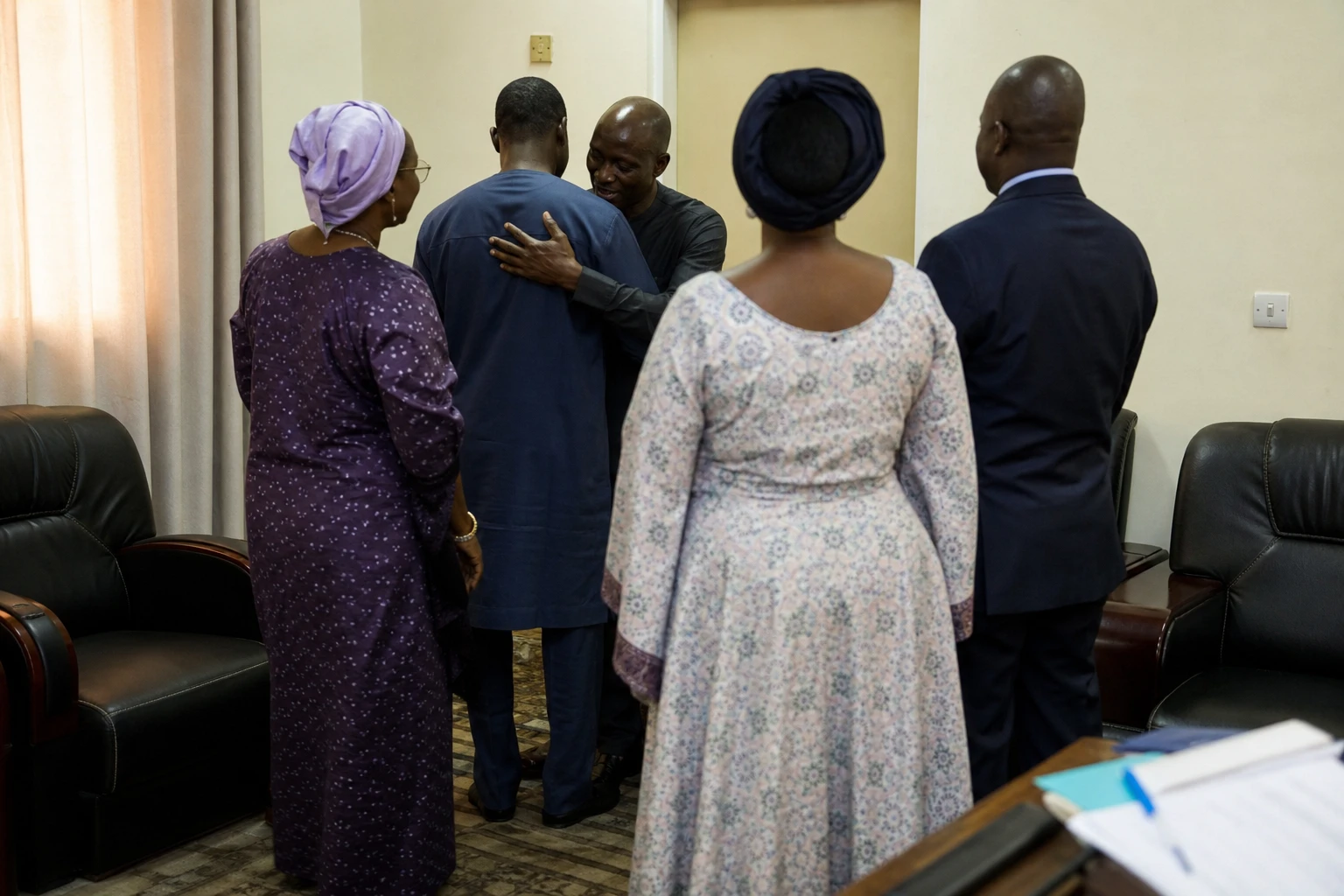
In Bamako, leaving prison does not necessarily mean a return to normality. In Mali, the freedom of a former prime minister can coexist with other political detainees still awaiting trial, in a climate where public speech remains closely monitored. Moussa Mara’s release on 1 August 2026 falls precisely within this grey area where justice, military rule and political debate intersect.
The country remains under the Transition led since the coups d’état of 2020 and 2021, within a profoundly altered institutional framework. In May 2025, the authorities dissolved political parties, then in July 2025 secured the adoption of a renewable five-year presidential term with no limit for General Assimi Goïta. This shift further narrowed the space for opposition voices, already weakened by restrictions on political meetings and party activity.
Moussa Mara is free, but his suspended sentence remains in force
The former head of the Malian government left the central prison in Koulikoro, some 60 kilometres from Bamako, after serving the custodial part of his sentence. His entourage and several media outlets confirmed that he reunited with his family on the evening of 1 August 2026. His case is not closed, however: the suspended sentence remains in force, and the appeal to the Court of Cassation has not been decided, leaving proceedings open before the Supreme Court.
Moussa Mara’s legal case began on 1 August 2025, when he was detained in Bamako after posting a message on X. In the post, he said he had visited several imprisoned figures and expressed his solidarity with them. He called them “prisoners of conscience”. At first instance, the national cybercrime unit sentenced him on 27 October 2025 to two years in prison, including one year to be served, and a fine of 500,000 CFA francs. The Bamako Court of Appeal upheld the sentence on 9 February 2026.
The charges against him — undermining the State’s credibility, inciting a breach of public order and resisting legitimate authority — were contested by his defence and criticised by several human rights organisations. Amnesty International said in February 2026 that his conviction was unjust and called for the decision to be overturned. This view forms part of a wider debate about the use of digital criminal law to regulate political statements in Mali.
Moussa Mara is no stranger to public life in Mali. He headed the government from April 2014 to January 2015, under the presidency of Ibrahim Boubacar Keïta. His case therefore has particular symbolic significance: it shows that a former prime minister can, in turn, be caught up in the shrinking political arena. In a country where major political parties have been dissolved, the case sends a strong signal to figures still active on the national stage.
Ras Bath and Rose Vie Chère: the other part of the case
Moussa Mara’s release contrasts with the fate of those he had publicly supported. Mohamed Youssouf Bathily, known as Ras Bath, a widely followed radio commentator, and Rokia Doumbia, known as Rose Vie Chère, an influencer, remain in detention. Their cases date back to March 2023. They face charges of criminal conspiracy and undermining the State’s credibility, offences that have weighed heavily amid growing tensions between the authorities and critical voices.
The Malian justice system has yet to close the case against the two defendants. In December 2025, the indictment division of the Bamako Court of Appeal ordered that they be sent before a criminal court rather than released. Their trial is scheduled for 10 August 2026 before the criminal division of the Court of Appeal. The proximity of this hearing to Moussa Mara’s release gives the judicial calendar an obvious political significance.
This sequence also sheds light on how the Malian authorities deal with influential public figures. A former prime minister, a radio commentator and an influencer do not belong to the same social world, but their cases tell the same story: the narrowing of space for criticism. For the authorities, the aim is to preserve public order and the legitimacy of the State. For political actors, journalists and part of civil society, the goalposts keep shifting, risking the entrenchment of lasting self-censorship.
The contrast is all the sharper because recent decisions have tightened the broader framework. The dissolution of parties in May 2025 weakened the traditional channels of protest. The extension of Assimi Goïta’s transition mandate then froze the political horizon. In this context, prison has become not only a place of judicial punishment, but also an instrument for regulating political competition. This is one of the most sensitive issues in Mali today, a country where the capital, Bamako, is the focus of debate, but where the effects are felt far beyond it, including in the regions and informal spaces sustained by public expression, local radio and social media.
What the case says about Mali’s transition and the Sahel
The Moussa Mara case goes beyond the judicial sphere. It raises questions about the role of checks and balances in a Mali engaged in a transition that is dragging on. Since the break with ECOWAS, regional realignment has accelerated, with the Alliance of Sahel States gaining strength, while West African mediation mechanisms have lost some of their direct influence in Bamako. In this landscape, every court decision with major political implications becomes an indicator of the balance of power at home.
The wider continental significance is clear. What is happening in Mali resonates in other African transitions where military rulers are seeking to extend their control while maintaining an institutional façade. The issue is not only the release of one man, but the law, political time and the very possibility of an organised opposition. The next events to watch are the 10 August 2026 hearing for Ras Bath and Rose Vie Chère, and the outcome of Moussa Mara’s appeal to the Court of Cassation. These two milestones will show whether the Malian justice system allows for a breathing space, or whether the current line hardens further.