Algeria
 Egypt
 Libya
 Morocco
 Sudan
 Tunisia
 Benin
 Burkina Faso
 Cabo Verde
 Côte d'Ivoire
 Ghana
 Guinea
 Guinea-Bissau
 Liberia
 Mali
 Mauritania
 Niger
 Nigeria
 Senegal
 Sierra Leone
 The Gambia
 Togo
 Cameroon
 Central African Republic
 Chad
 DR Congo
 Equatorial Guinea
 Republic of the Congo
 São Tomé and Príncipe
 Burundi
 Comoros
 Djibouti
 Eritrea
 Ethiopia
 Kenya
 Madagascar
 Malawi
 Mauritius
 Mozambique
 Rwanda
 Seychelles
 Somalia
 South Sudan
 Tanzania
 Uganda
 Angola
 Botswana
 Eswatini
 Lesotho
 Namibia
 South Africa
 Zambia
 Zimbabwe
A mature field that remains strategically important
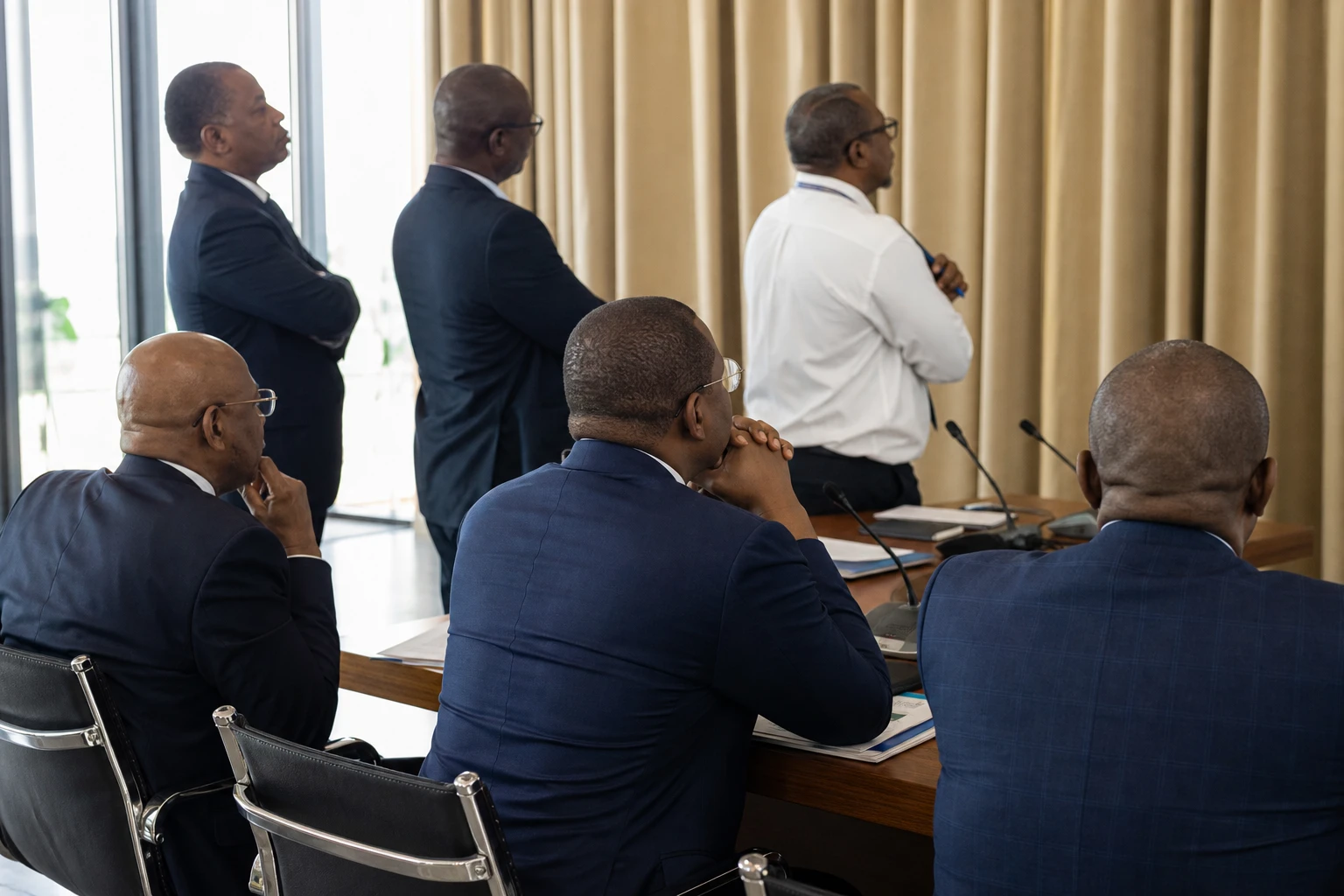
In Libreville, the debate over oil is no longer only about volumes. It is also about how much longer major legacy fields can produce, the cost of each additional barrel and the real contribution of oil revenues to Gabon’s economy. In this context, Etame remains a useful asset for Vaalco Energy, even though the offshore block is reaching maturity after more than 20 years of production.
The issue extends beyond the US operator. Gabon is a member of CEMAC, the Economic and Monetary Community of Central Africa, where hydrocarbons remain a pillar of public finances in several economies. In Libreville, the transitional authorities and then the government that came to power following the 2025 election have taken the same line: extend the life of existing assets, increase domestic participation in the value chain and prepare an economy less dependent on crude oil.
What Vaalco hopes to achieve at Etame
On the Etame Marin block, Vaalco began a new drilling phase in 2026. The company said it brought the Etame 14H well onstream in April, at an initial gross rate of 4,850 barrels of oil per day, after encountering 325 metres of good-quality Gamba sand. It has also begun drilling the EEBOM-5H well on the Ebouri platform as part of its ongoing campaign in Gabon.
The other aspect is less visible, but just as important. Vaalco confirmed that it had brought onstream a gas well to supply the field’s facilities. The idea is simple: replace diesel shipped by boat, cut operating costs and improve the reliability of operations. In a mature field, every logistical saving matters. It affects profitability as much as production rates.
The company also says it is continuing a phased drilling programme, with successive appraisal and development wells depending on the results. The strategy aims to recover oil still accessible in less-explored areas of the block. It follows a familiar approach to extending a mature field’s life: target remaining volumes, secure production rates and delay the reservoir’s natural decline.
Reserves dwindling as production comes under pressure
The core problem is well known. Fields age, wells become less productive and drilling campaigns must offset a structural decline. Vaalco said its production in Gabon fell from 19,000 barrels per day in 2024 to 14,300 barrels per day in 2025. The company holds a 58.8% working interest in Etame Marin, according to its page on Gabon.
The Gabonese market itself reflects this gradual deterioration. OPEC data show national production at around 216,000 barrels per day in January 2026, far below the country’s historic peaks. The Gabonese authorities say they want to reverse this trend through new wells, the expansion of Gabon Oil Company and better use of existing assets.
The government has also included in its 2026 road map plans to increase oil production and raise the state’s share in certain projects from 45% to 48%, according to the document published in Libreville. At the same time, the authorities have signalled their intention to take back control of some oil assets, following the purchase of Assala announced in 2024. This reflects a clear policy: protect sovereignty over oil revenues while preserving private investment.
What this means for people in Libreville, Port-Gentil and producing regions
For the state, the stakes are fiscal. A mature field that continues to produce extends revenues, royalties and indirect employment. For operators, the equation is tighter: they must drill more intelligently, spend less on surface energy and extract remaining volumes with greater technical discipline. For households, the effect is more diffuse. It can translate into greater activity in oil-producing areas, but not automatically into visible gains in purchasing power or public services.
This gap between national oil revenues and social benefits remains central in Gabon. Oil has long supported exports and public finances, but falling volumes now require a different approach to managing the resource. In Port-Gentil, the historic centre of oil activity, the questions concern jobs, subcontracting and industrial maintenance. In Libreville, they concern the budget, debt and the ability to fund social priorities without relying on a single sector.
Using a gas well to supply the facilities also points towards leaner operations. Diesel shipped by boat is expensive, creates exposure to logistical disruptions and increases the carbon footprint. In a country that regularly talks about the energy transition, this is not a trivial change. It shows that energy efficiency is becoming a source of competitiveness within the oil industry itself.
A Gabonese story, but an African question
Etame illustrates a reality common across Africa: a large share of production comes from fields discovered several decades ago. The challenge is not just to find new deposits. It is also to optimise what already exists as many basins reach maturity. This is true in Gabon, as well as in other producing countries in CEMAC and across the continent.
For the region, the message is twofold. On the one hand, producing states are seeking to secure revenues during a global energy transition. On the other, they want to avoid the gradual decline of some fields triggering a sudden shock to public budgets. The Gabonese case, with its successive drilling campaigns and the growing role of a national player such as GOC, will therefore be closely watched in Libreville and across the rest of Central Africa.
The next indicator to watch will be Vaalco’s ability to stabilise and then increase production rates across all its African assets in 2026. The company is targeting total production of between 20,100 and 22,400 barrels per day across its assets on the continent, according to its first-quarter results. In Gabon, the real question will be not how much a single well can deliver, but how long Etame can continue to contribute profitably to national production.