Algeria
 Egypt
 Libya
 Morocco
 Sudan
 Tunisia
 Benin
 Burkina Faso
 Cabo Verde
 Côte d'Ivoire
 Ghana
 Guinea
 Guinea-Bissau
 Liberia
 Mali
 Mauritania
 Niger
 Nigeria
 Senegal
 Sierra Leone
 The Gambia
 Togo
 Cameroon
 Central African Republic
 Chad
 DR Congo
 Equatorial Guinea
 Gabon
 Republic of the Congo
 São Tomé and Príncipe
 Burundi
 Comoros
 Djibouti
 Eritrea
 Ethiopia
 Kenya
 Madagascar
 Malawi
 Mauritius
 Rwanda
 Seychelles
 Somalia
 South Sudan
 Tanzania
 Uganda
 Angola
 Botswana
 Eswatini
 Lesotho
 Namibia
 South Africa
 Zambia
 Zimbabwe
In Maputo, the battle over the internet has become a test of the separation of powers
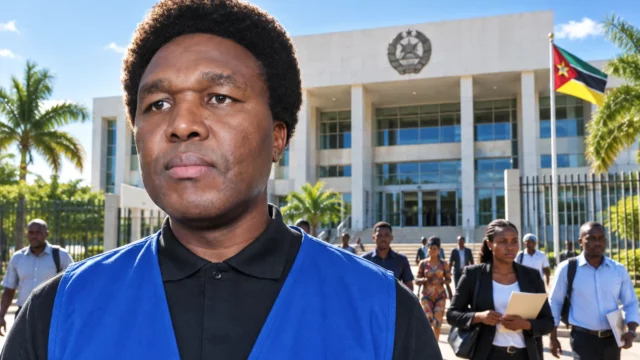
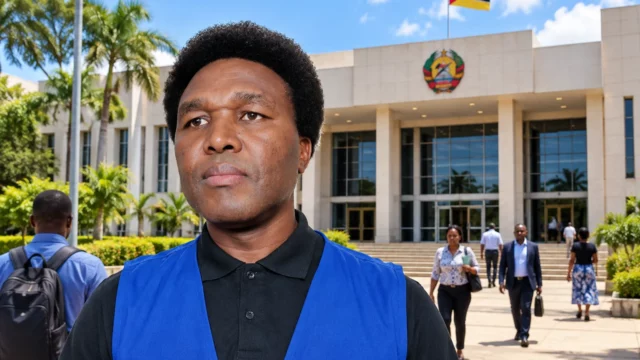
In Mozambique, cutting off access to the network is no longer just a technical issue. It is now a question of law, checks and balances, and the space afforded to citizens in the public sphere. In a country where social media, messaging apps and online services have become essential for work, information and collective organising, every text regulating telecommunications traffic affects far more than network operators’ engineers.
The debate comes amid a fraught period. After post-election tensions in 2024 and internet access restrictions reported by rights organisations, the Mozambican authorities tightened regulation of communications in the name of security. Civil society groups, for their part, have pointed out that under Mozambican law, fundamental freedoms cannot be restricted by a simple government decree. The Constitution provides that serious restrictions on freedoms must be imposed under exceptional and strictly regulated frameworks.
A contested decree, then sent to the heart of the constitutional debate
The text at the centre of the dispute is Decree No. 48/2025 of 16 December 2025, which revised the regulation on the control of telecommunications traffic. According to the document published by INCM, the regulatory authority, the regulation governs the mechanisms and procedures for monitoring operators’ network traffic, replacing the previous decree of 2023.
The controversy centres on its possible effects. Mozambican human rights organisations, including CDD, argued that the text opened the way to suspending internet access, collecting traffic data and direct intervention in networks on the grounds of an “imminent risk” to public or state security. CDD petitioned the ombudsman to seek a constitutional review, arguing that such regulation required a law passed by the Assembly of the Republic, not an executive decree. The Mozambican parliament itself questioned the government about the decree’s compatibility with the country’s commitments on digital development.
The constitutional framework explains why the case has gained such significance. Mozambique’s fundamental law protects freedom of expression, correspondence and telecommunications. It also strictly regulates the suspension of individual freedoms, reserving it for exceptional circumstances such as a state of siege, a state of war or a state of emergency. In short, the legal argument is not secondary: it goes to the very architecture of the rule of law.
Several local media outlets and organisations subsequently reported that the ombudsman had referred the matter to the Constitutional Council, following the petition lodged by CDD. The case had therefore moved beyond activism and into the institutional sphere. At that point, the issue was no longer simply criticism of a text: it was a question of who, in Mozambique, has the final say when a fundamental right is at stake.
What the standoff says about Mozambique’s digital future
This case goes beyond the fight against piracy, fraud or threats to network security. For several years, the government and INCM have advocated a stronger “digital governance” approach, with more advanced technical oversight tools. The Mozambican state also continued in 2026 to update its digital framework, with the examination of laws on cybersecurity and cybercrime.
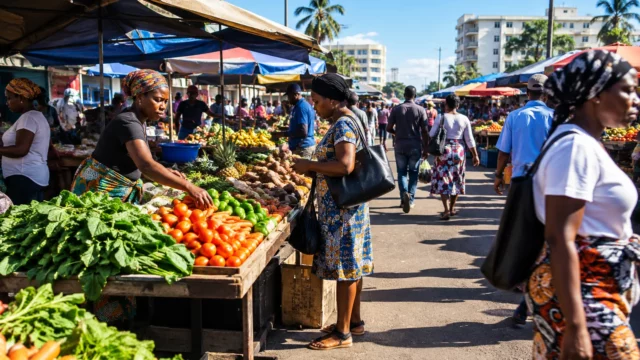
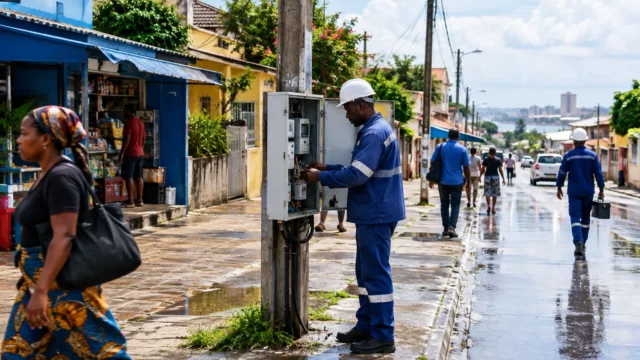
But in a country where digital technology has become a channel for work for traders, journalists, young entrepreneurs and a growing part of the administration, an internet shutdown does not affect everyone in the same way. In urban centres such as Maputo, Beira and Nampula, it disrupts formal economic activity and access to information. In rural areas, it also cuts off more practical services: mobile money, family communications, logistical coordination and access to services. This dependence explains why rights organisations have warned of a risk of mass surveillance and a dangerous precedent.
The controversy also has regional implications. Mozambique is part of SADC, the Southern African Development Community, a region where the movement of data, capital and people increasingly depends on stable digital infrastructure. In this area, internet shutdowns affect cross-border trade, the press, money transfers and investor confidence. Lawyers and rights advocates also point out that the African Charter on Human and Peoples’ Rights protects freedom of expression and access to information.
Mozambique thus finds itself at the crossroads of two approaches. On one side is a state seeking greater control over networks that have become sensitive, especially after the electoral unrest and disruptions seen in 2024. On the other is a civil society that refuses to let security serve as cover for excessively broad restrictions. This is where the case’s continental significance becomes clear: in many African countries, the real debate is no longer whether states can act on networks, but how far they can go without hollowing out rights.
In the Mozambican context, there are two points to watch. Legally, it is important to follow the outcome of the applications filed with the Constitutional Council and any clarification of its case law on digital regulation. Politically, it will be necessary to see whether the government chooses to amend the regulation to bring it closer to constitutional safeguards, or maintains a more top-down approach to regulation. In Maputo, the issue already points to something broader: democratic consolidation also depends on how a country manages its connection to the world.