Algeria
 Egypt
 Libya
 Morocco
 Sudan
 Tunisia
 Benin
 Burkina Faso
 Cabo Verde
 Côte d'Ivoire
 Ghana
 Guinea
 Guinea-Bissau
 Liberia
 Mali
 Mauritania
 Niger
 Nigeria
 Senegal
 Sierra Leone
 The Gambia
 Cameroon
 Central African Republic
 Chad
 DR Congo
 Equatorial Guinea
 Gabon
 Republic of the Congo
 São Tomé and Príncipe
 Burundi
 Comoros
 Djibouti
 Eritrea
 Ethiopia
 Kenya
 Madagascar
 Malawi
 Mauritius
 Mozambique
 Rwanda
 Seychelles
 Somalia
 South Sudan
 Tanzania
 Uganda
 Angola
 Botswana
 Eswatini
 Lesotho
 Namibia
 South Africa
 Zambia
 Zimbabwe
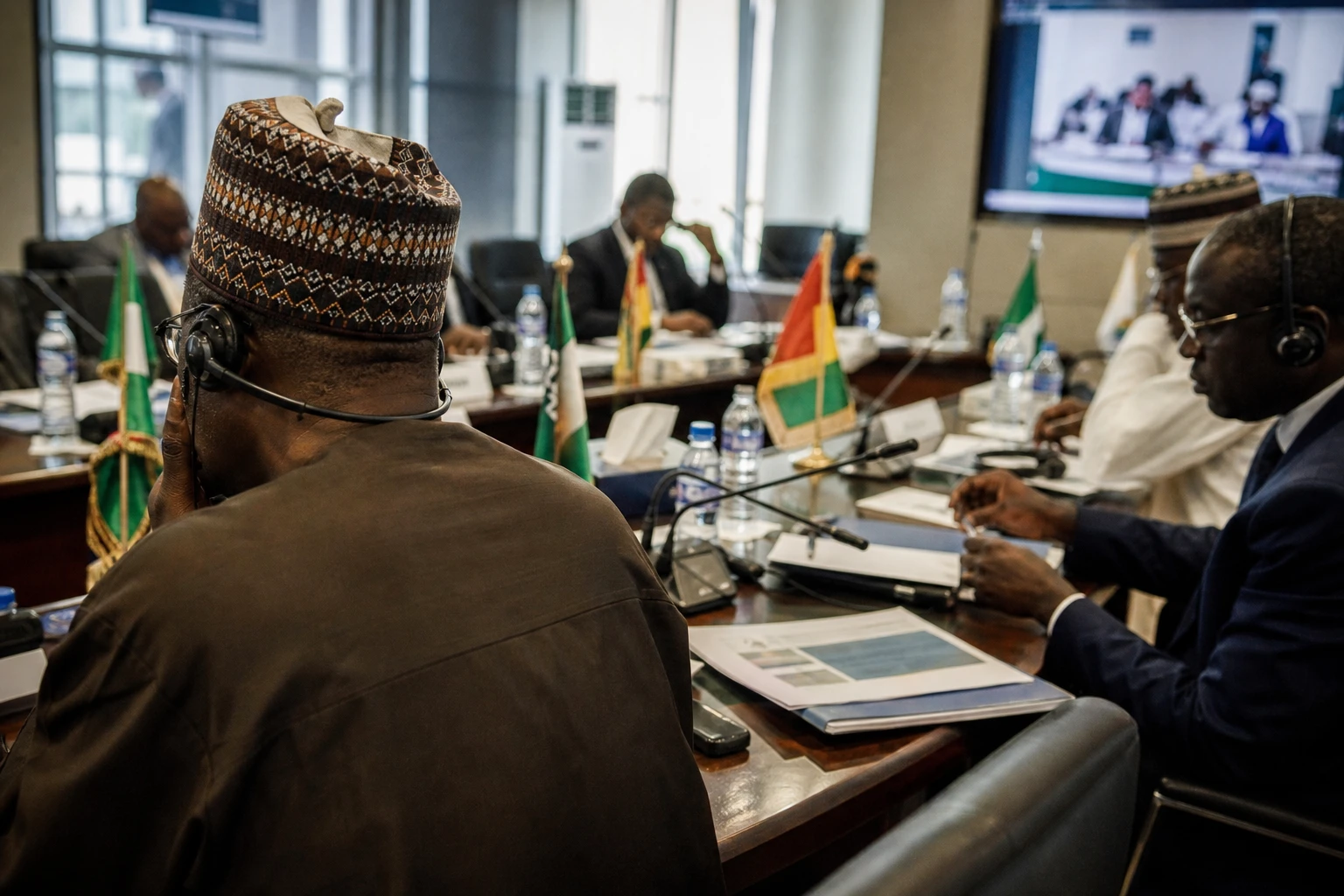
In Lomé, a procedural battle becomes a political test
In Togo, the 2024 constitutional reform continues to send shockwaves far beyond the National Assembly. For some members of Togolese civil society, the real issue is no longer just the text that was adopted, but the way it was imposed and then endorsed by regional institutions.
The case touches on a sensitive issue in West Africa: the strength of the rules governing democratic competition. ECOWAS, the regional economic community of which Togo remains a member, also aims to prevent unconstitutional changes of government and forced transitions. Meanwhile, the African Union relies on the African Charter on Democracy, Elections and Governance, adopted on 30 January 2007 and entering into force on 15 February 2012. Togo has ratified the instrument, which imposes obligations on the country regarding transfers of power, elections and respect for constitutional order.
Togo’s new Constitution was adopted by the National Assembly on 25 March 2024 and promulgated on 6 May 2024. It shifted the country from a presidential to a parliamentary system, abolishing direct universal suffrage for presidential elections and concentrating most executive power around a president of the Council of Ministers. This institutional framework prompted fierce political opposition from the outset.
What the regional ruling says and why it carries weight
The case was taken to the ECOWAS Court of Justice. In its ruling of 29 January 2026, made public in June, the regional court found that Togo’s constitutional revision of 25 March 2024 constituted an “unconstitutional change of government” within the meaning of Article 23 of the African Charter on Democracy, Elections and Governance. The Court noted that the reform had been adopted by a National Assembly whose term had expired and that it had profoundly altered the institutional balance.
According to the Court, the text did more than reorganise the branches of government. It abolished the direct election of the president of the Republic by universal suffrage and opened the way to a parliamentary system in which the head of the executive is now the president of the Council. The ruling therefore addressed the method, timing and political effects of the reform. However, it did not award individual compensation, as no personal injury had been demonstrated, and dismissed some procedural complaints as inadmissible.
The ruling’s symbolic and legal significance explains why 43 civil society organisations in Togo and other African countries have mobilised. They welcomed the decision and called for it to be implemented, including through pressure measures as far as sanctions restricting Togo’s participation in certain regional and continental bodies. Their argument rests on a simple idea: a regional decision that is left unenforced weakens the entire chain of democratic protection in West Africa.
Their initiative also reflects a broader interpretation of the African Charter on Democracy, which the African Union presents as a key instrument against unconstitutional changes of government. This is no minor point. In the region, ECOWAS has already faced military coups in Mali, Burkina Faso and Niger, and the successive departures of all three countries from the organisation, which took effect on 29 January 2025. In Lomé, the Togolese case is therefore viewed through a wider lens: the credibility of regional standards in the face of institutional circumvention.
What this means for Togolese people and the region
Domestically, the stakes extend beyond the opposition parties. The authorities presented the reform as institutional modernisation. Its critics, by contrast, say it closes off the possibility of direct alternation in power and entrenches a government that has been in place since 2005 under Faure Gnassingbé. This is not just a political interpretation. It concerns trust in institutions, the role of Parliament, the significance of expired mandates and citizens’ effective ability to hold power to account.
In Togo’s public sphere, the reform has become a marker of the rift between institutions and civil society. The organisations that signed the open letter want to turn a court ruling into a political lever in a country where electoral disputes, protests and restrictions on civic space fuel recurring tensions. The mobilisations of 2025 showed that opposition is no longer confined to traditional parties; it is also expressed through collectives, rights groups and civic movements.
Across West Africa, the case sends a double signal. On the one hand, ECOWAS is reminding member states that it still has a body of case law on violations of constitutional order. On the other, the difficulty of enforcing a regional decision shows the limits of the law when it is not backed by clear political mechanisms. This is precisely where civil society is seeking to intervene, calling for the ruling to be implemented effectively and rejecting the prospect of a legal precedent being left without consequences.
The continental implications are clear. As the African Union and ECOWAS seek to reaffirm their normative authority, the Togolese case has become a test. If enforced, the ruling will strengthen African doctrine against unconstitutional changes of government. If ignored, it will reinforce the idea that cosmetic reforms can circumvent democratic principles while remaining difficult to punish. That is why the case extends beyond Lomé. It also speaks to Dakar, Abuja, Accra, Addis Ababa and every capital watching to see whether African institutions can concretely protect transfers of power and popular sovereignty.