Algeria
 Egypt
 Libya
 Morocco
 Sudan
 Tunisia
 Benin
 Burkina Faso
 Cabo Verde
 Côte d'Ivoire
 Ghana
 Guinea
 Guinea-Bissau
 Liberia
 Mali
 Mauritania
 Niger
 Nigeria
 Senegal
 Sierra Leone
 The Gambia
 Togo
 Cameroon
 Central African Republic
 Chad
 DR Congo
 Equatorial Guinea
 Gabon
 Republic of the Congo
 São Tomé and Príncipe
 Burundi
 Comoros
 Djibouti
 Eritrea
 Ethiopia
 Kenya
 Madagascar
 Malawi
 Mauritius
 Mozambique
 Rwanda
 Seychelles
 Somalia
 South Sudan
 Tanzania
 Uganda
 Angola
 Eswatini
 Lesotho
 Namibia
 South Africa
 Zambia
 Zimbabwe
An agreement that goes beyond mining
In Abidjan and Gaborone alike, the same conclusion is clear: a rich subsoil is not enough to create value. Rules, skills, local supply chains and governance capable of keeping more wealth at home are also needed. It is in this context that Côte d’Ivoire and Botswana have formalised cooperation in mining and energy, an area where one country’s experience meets the other’s ambitions.
For Côte d’Ivoire, the stakes are clear. The country wants to make the extractive sector an industrial pillar, not just a source of raw exports. This direction is set out in the integrated strategy published by the Ivorian authorities, the PIRME, which aims to increase mining and energy’s contribution to GDP to 14% by 2040, from 7% in 2022.
Botswana, meanwhile, offers an African benchmark often cited for its management of diamond revenues. Its economy remains heavily dependent on diamonds, which still account for more than 80% of exports, according to the World Bank and several international institutions. This dependence also explains why Gaborone is now seeking to diversify its alliances and put its expertise to use beyond its traditional market.
What the partnership signed in Gaborone provides for
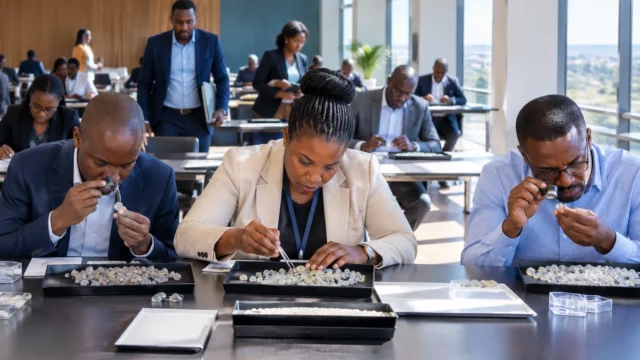
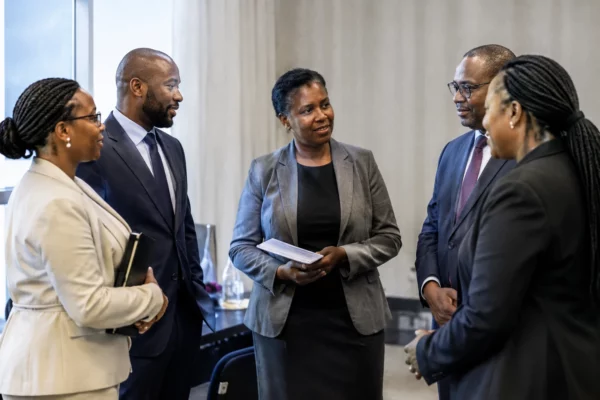
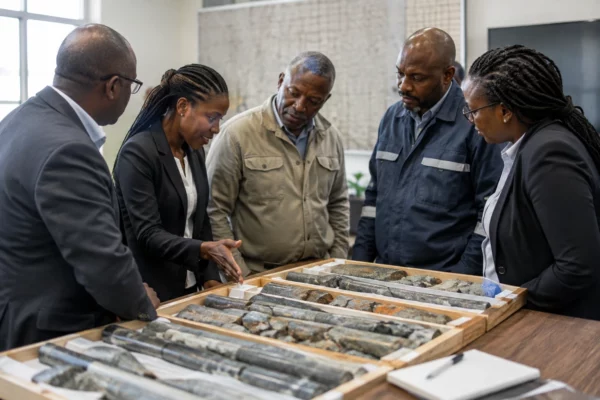
The agreement was signed on Thursday 30 July in Gaborone, according to Côte d’Ivoire’s Ministry of Mines, Petroleum and Energy. It covers geological research, exploration, the diamond sector, gold resources, critical minerals, governance, training and institutional cooperation. In other words, it is not simply a diplomatic gesture, but a technical framework for work.
The process did not begin overnight. In February 2026, Ivorian minister Mamadou Sangafowa-Coulibaly had already been received in Gaborone by Botswana’s authorities to consolidate a lasting partnership in the mining sector. According to official accounts from both countries, discussions then focused on mining governance, resource traceability and local skills development.
The Ivorian authorities also say this momentum was accelerated by a technical mission to Botswana, followed by visits from Botswana experts to diamond sites managed by the Société pour le Développement Minier de la Côte d’Ivoire, SODEMI. This step matters because it shows that the two capitals want to move beyond declarations of intent and work on processes, controls and training.
Why Botswana’s example resonates in Abidjan
Botswana is not presented in Abidjan as a perfect model. But its mining history offers useful points of reference. The country long used diamonds to finance its infrastructure, public services and integration into the global economy. The World Bank says this management has sustainably improved the economy and living conditions, even though dependence on diamonds remains high.
For Côte d’Ivoire, the comparison is relevant because the country is entering a phase of accelerated mining development. Gold discoveries at Kani-Dianra, as part of the Koné project, at Tanda-Iguela and at Doropo have made the country more attractive, as have prospects in manganese, nickel and diamonds. Côte d’Ivoire’s challenge is therefore no longer just to find resources, but to organise them into an industry.
The Ivorian government has set a quantified ambition: to make mining and energy the national economy’s second pillar after agriculture. This strategy requires skilled jobs, greater local processing and better coordination between the state, private operators, local authorities and communities living near mining sites.
The agreement’s significance is therefore also social. In mining areas, the issue is not just the volumes extracted. It concerns access to jobs, land tenure security, environmental impact, transparency over tax revenues and coexistence with the informal economy. A technical partnership can help, but it cannot replace strong institutions or clear redistribution mechanisms.
A regional signal for West and Southern Africa
This rapprochement between a West African country and a Southern African one also carries political weight. It shows that South-South cooperation can take a concrete form at a time when several African states are seeking to capture more value from their strategic resources, particularly in the context of the energy transition and rising demand for critical minerals.
In West Africa, Côte d’Ivoire operates within ECOWAS, a community that is urging its members to strengthen economic integration, value chains and skills mobility. At the other end of the continent, Botswana is also seeking to broaden its partnerships while its economy remains exposed to fluctuations in the diamond market. The agreement could therefore serve as a bridge between two complementary African approaches: one in a phase of expansion, the other seeking diversification.
The decisive question remains: what will this text deliver in practice? The coming months will show whether cooperation leads to training programmes, exchanges of engineers, traceability tools, joint missions to sites and, above all, a greater capacity in Côte d’Ivoire to turn geological wealth into local added value. That is where the agreement’s credibility will be tested, far more than in the official photograph in Gaborone.