Algeria
 Egypt
 Libya
 Morocco
 Sudan
 Tunisia
 Benin
 Burkina Faso
 Cabo Verde
 Côte d'Ivoire
 Ghana
 Guinea
 Guinea-Bissau
 Liberia
 Mali
 Mauritania
 Niger
 Nigeria
 Senegal
 Sierra Leone
 The Gambia
 Togo
 Cameroon
 Central African Republic
 Chad
 DR Congo
 Gabon
 Republic of the Congo
 São Tomé and Príncipe
 Burundi
 Comoros
 Djibouti
 Eritrea
 Ethiopia
 Kenya
 Madagascar
 Malawi
 Mauritius
 Mozambique
 Rwanda
 Seychelles
 Somalia
 South Sudan
 Tanzania
 Uganda
 Angola
 Botswana
 Eswatini
 Lesotho
 Namibia
 South Africa
 Zambia
 Zimbabwe
A gas project arrives as Malabo seeks breathing space
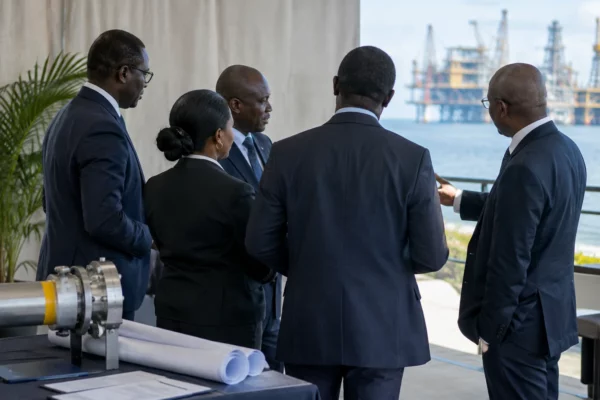
In Malabo, the question is no longer simply whether Equatorial Guinea still has offshore gas. It is also how quickly the country can turn it into contracts, drilling and revenue that benefits its economy. As oil production declines, every offshore block now matters as much for public finances as for the credibility of the national energy strategy.
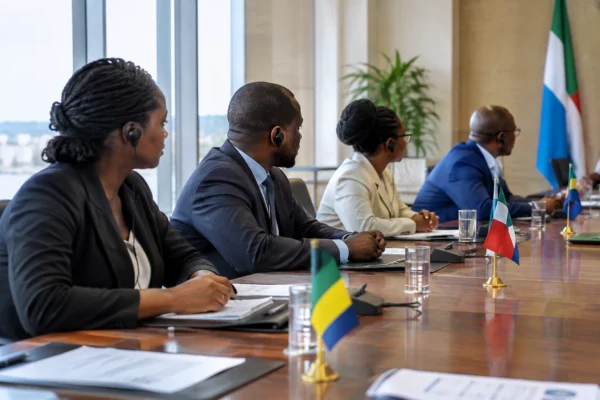
This project sits within a specific regional context. Equatorial Guinea belongs to CEMAC, the Central African organisation comprising six states, whose headquarters are in Malabo II, Malabo. The region is banking heavily on energy, interconnection and cross-border investment to offset the weakness of its non-oil economies.
The timeline is stretching, but the Barracuda project is still moving forward
On 31 July 2026, Europa Oil & Gas said that completion of the partial divestment agreement linked to offshore block EG-08 had been postponed to 31 August 2026. The delay is not due to the Equatorial Guinea dossier itself, but to China’s new rules on outbound investment, which came into force on 1 July 2026 and lengthen the approval process for projects undertaken abroad by Chinese companies.
The structure of the transaction is now clear. Fuhai Energy is to take 40% of block EG-08. Antler Global, Europa Oil & Gas’s subsidiary operating the area, would retain 40%. State-owned GEPetrol would keep the remaining 20%. Approval from the Equatorial Guinean authorities was obtained in late May 2026, but the transaction is still awaiting administrative approval from Shandong, the Chinese province where Fuhai is based.
The Barracuda project, at the heart of the block, is still presented as one of the most promising prospects in the dossier. The partners cite an area of about 731 square kilometres, water depths of close to 80 metres, and potential resources of more than 56 billion cubic metres of gas, including more than 25 billion for the Barracuda prospect alone. Barracuda-1 is now targeted for early 2027, subject to the agreement’s final completion.
Funding for the first well also reflects the logic of the arrangement. Fuhai has agreed to cover 95% of the drilling costs, capped at $53m, with Antler covering 5%. For a national company such as GEPetrol, the presence of a new external investor reduces the country’s immediate financial exposure, while leaving the state with a stake in the potential resource.
Why China sometimes slows projects it is backing itself
The sticking point is not political, in the diplomatic sense of the word. It is regulatory. Beijing adopted a new framework for outbound investment, applicable from 1 July 2026, and Chinese companies must now go through longer approval stages before completing certain international projects. The Equatorial Guinea dossier is directly affected, even though the transaction is aligned with China’s economic expansion abroad.
For Malabo, the stakes go beyond block EG-08 alone. In recent months, the government has sent out a series of signals that it is open to new operators: recognition agreements, exploratory talks and preparations for a licensing round covering 24 blocks. In April 2026, the authorities also said that reform of the hydrocarbons framework was intended to make the country more competitive while enabling the state to capture a larger share of the value created.
This push reflects a simple economic reality. According to OPEC, Equatorial Guinea’s oil production fell to about 55,000 barrels per day in 2023, from 241,000 in 2010. The country is therefore seeking to revive exploration, while also avoiding a situation in which a single field alone determines the future of public finances.
For households, the impact is not immediate. A participation agreement does not suddenly translate into large numbers of jobs or visible income. It can, however, support ancillary services, subcontracting, logistics platforms and the development of national expertise, especially if the state can better regulate local content and the value chain. For operators, by contrast, administrative time is a decisive variable: the longer approval takes, the more complicated the drilling schedule, budget and window for profitability become.
A test for Malabo, but also for Central Africa
The Barracuda dossier illustrates a broader trend in Central Africa. CEMAC is betting on energy integration, as demonstrated by the commissioning of the Equatorial Guinea-Gabon power line in February 2025. In this region, energy is not just a source of rent. It is also a lever for interconnection, trade and economic sovereignty.
Equatorial Guinea remains at the intersection of these objectives. On the one hand, it wants to attract foreign capital to revive its offshore sector. On the other, it is seeking to negotiate a stronger position in projects, with GEPetrol, the Ministry of Hydrocarbons and foreign operators all part of the equation. This sequence shows that in Central Africa, the challenge is no longer simply to sign an agreement. It is also to keep to the schedule, secure approvals and turn announcements into actual production.
The next milestone is now set for 31 August 2026, the new deadline announced for completion of the deal. If Chinese approval comes through in time, the project can move towards drilling Barracuda-1 in 2027. If it is delayed again, the country will have to wait a little longer to find out whether this offshore gas can once again become one of the pillars of its energy recovery.