
 Algeria
 Egypt
 Libya
 Morocco
 Sudan
 Tunisia
 Benin
 Burkina Faso
 Cabo Verde
 Côte d'Ivoire
 Ghana
 Guinea
 Guinea-Bissau
 Liberia
 Mali
 Mauritania
 Niger
 Nigeria
 Senegal
 Sierra Leone
 The Gambia
 Togo
 Central African Republic
 Chad
 DR Congo
 Equatorial Guinea
 Gabon
 Republic of the Congo
 São Tomé and Príncipe
 Burundi
 Comoros
 Djibouti
 Eritrea
 Ethiopia
 Kenya
 Madagascar
 Malawi
 Mauritius
 Mozambique
 Rwanda
 Seychelles
 Somalia
 South Sudan
 Tanzania
 Uganda
 Angola
 Botswana
 Eswatini
 Lesotho
 Namibia
 South Africa
 Zambia
 Zimbabwe
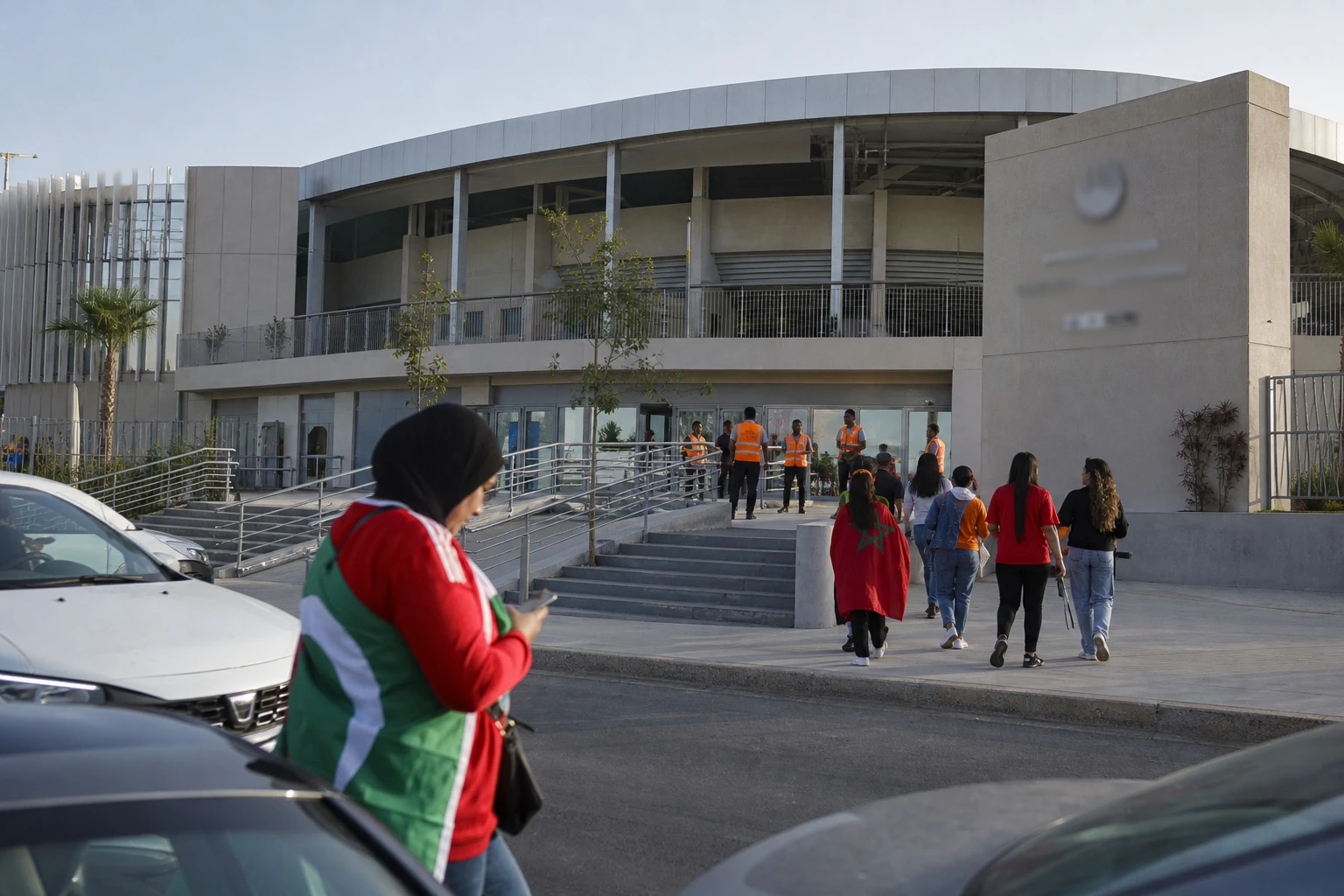
A tight group, with two matches already decisive
In Casablanca, the group stage of Women’s AFCON 2026 is quickly becoming a sporting and psychological test. In Group D, Ghana and Cameroon arrive on the back of opening-match victories. Mali and Cape Verde, meanwhile, are already under pressure before even reaching the halfway point of the group stage. The context is simple: in a competition that also serves as Africa’s qualifying tournament for the 2027 Women’s World Cup in Brazil, every point matters. The four semi-finalists will earn direct places at the World Cup, while two other teams will go through a FIFA play-off tournament.
The schedule published by the Confederation of African Football confirms that the group will be played between Rabat and Casablanca, with Ghana-Cameroon at Stade Moulay Rachid on 2 August and Mali-Cape Verde at Stade Larbi Zaouli on the same day. Both matches are part of an edition rescheduled for summer 2026 and being held in Morocco from 25 July to 16 August.
Ghana-Cameroon: a clash of history and approach
The first fixture pits two teams familiar with the competition and its demands against each other. Ghana, runners-up three times, are still seeking their first continental title. Cameroon, also finalists on several occasions, are pursuing the same goal. That similarity gives the match particular significance: two established sides, two projects, and the same urgent need to turn regular appearances at the top of African women’s football into tangible success. CAF notes that Group D brings together Ghana, Cameroon, Mali and Cape Verde in a group billed as one of the tournament’s toughest.
Ghana began their campaign with a 2-0 win over Cape Verde. CAF said Doris Boaduwaa opened the scoring in the sixth minute, before an own goal by Eleia Vieira in the 54th minute. The match also saw Kleydiana Borges sent off in stoppage time. Africanews, for its part, placed Group D in the broader context of the competition, noting Ghana’s return to a group in which Cameroon, Mali and debutants Cape Verde form a compact field with little room for error.
Cameroon, meanwhile, beat Mali 2-1 in their opening match. CAF confirmed Marie Gisèle Ngah Manga’s brace, with her first goal coming in the 14th minute and a decisive penalty in the 72nd. Mali had equalised in the meantime through an Aïssata Traoré penalty in the 30th minute. The group’s shape was therefore established on the opening day: two winners and two teams already under pressure.
Coaching setups still taking shape, but clear ambitions
Ghana are working with a recently appointed coaching staff. CAF says Kim Lars Björkegren, named in January 2025, took charge of the Black Queens after spells at Linköping and Racing Louisville. This matters. It points to a project still taking shape, with a squad of players competing in several leagues and therefore needing to build tactical and personal cohesion. In a short tournament of this kind, teamwork matters as much as individual talent.
Cameroon, meanwhile, have a particular technical setup. Valentine Nguele is head coach, while Dimitri Lipoff is described as technical coordinator. This arrangement, clearly visible in the preparations, reflects a team seeking efficiency through organisation rather than showmanship. For Gabrielle Aboudi Onguéné, this AFCON also represents continuity: 16 years after her international debut, she is competing in her eighth final tournament without yet having won the trophy. Such longevity is a reminder of the long-term nature of Cameroonian women’s football, with all its expectations and frustrations.
Mali were not outclassed in their first match, but they must turn promising spells into points. The country can draw on attacking players who have made their mark in Europe, notably Aïssata Traoré and Agueissa Diarra. In such a short group, the ability to bounce back quickly from defeat becomes crucial: another poor result would leave the Eagles chasing hope rather than controlling their own destiny.
Cape Verde, finally, are still discovering the competition. They secured their first qualification for a Women’s AFCON after a hard-fought play-off against Mali, winning 4-3 on aggregate following a 4-2 victory in Praia. CAF described the moment as a new page in Cape Verdean football history. But the tournament in Morocco quickly resets the balance. An automatic suspension after a red card, as in Kleydiana Borges’s case, is also a reminder that newcomers often learn the hard way against more established teams.
Beyond Group D, the race to the World Cup looms
This matchday is about more than a provisional table. It says something about the state of African women’s football in 2026: standards are converging, gaps are narrowing, and federations increasingly understand the value of sustained preparation. Morocco is hosting an expanded 16-team edition, a sign that CAF wants to open up the continental competition while keeping it demanding.
The continental stakes are immediate. A win for Ghana or Cameroon would take the victorious team to six points before the final round on 6 August. That final round will see Ghana face Mali and Cameroon play Cape Verde, potentially reshuffling the standings if the chasing teams get back on track. In a Women’s AFCON that serves as a gateway to the 2027 World Cup, every group-stage scenario also reshapes national ambitions, from the organisation of national teams to the visibility of domestic leagues.
Group D is therefore more than a balanced group. It is a test of maturity for Ghana, a test of consistency for Cameroon, a test of response for Mali and a test of learning for Cape Verde. In Casablanca, the standings will not just show who finishes top. They will also reveal which teams already know how to handle the pressure of a tournament that leads, very concretely, to Brazil 2027.



