Algeria
 Egypt
 Libya
 Morocco
 Sudan
 Tunisia
 Benin
 Burkina Faso
 Cabo Verde
 Côte d'Ivoire
 Ghana
 Guinea
 Guinea-Bissau
 Liberia
 Mali
 Mauritania
 Niger
 Nigeria
 Senegal
 Sierra Leone
 The Gambia
 Togo
 Cameroon
 Central African Republic
 Chad
 DR Congo
 Equatorial Guinea
 Gabon
 São Tomé and Príncipe
 Burundi
 Comoros
 Djibouti
 Eritrea
 Ethiopia
 Kenya
 Madagascar
 Malawi
 Mauritius
 Mozambique
 Rwanda
 Seychelles
 Somalia
 South Sudan
 Tanzania
 Uganda
 Angola
 Botswana
 Eswatini
 Lesotho
 Namibia
 South Africa
 Zambia
 Zimbabwe
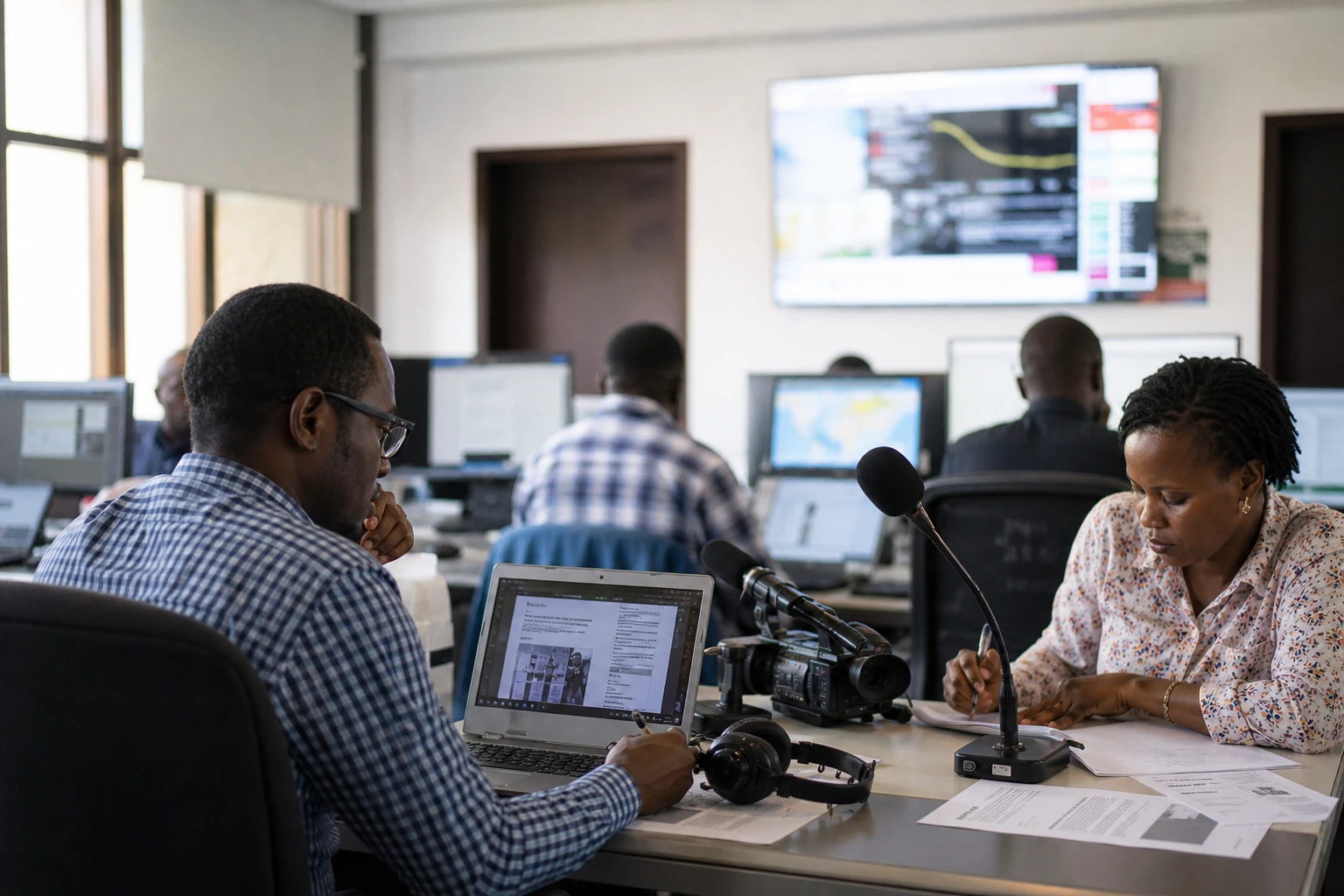
An outbreak moving faster than the response
In the Democratic Republic of the Congo, Ebola is no longer just a health emergency. It is also a race against time for field teams, in a country where distances, insecurity and overcrowded care centres complicate every day of the response. The latest available figures show a highly strained situation, despite the experience gained by Congolese authorities and their partners.
On 17 May 2026, the World Health Organization confirmed that the Ebola virus disease outbreak caused by the Bundibugyo virus in the DRC and Uganda constituted a public health emergency of international concern. A few weeks later, Africa CDC, the African Union’s health agency, described unusually rapid spread in the DRC. The warning comes as Uganda declared its outbreak over on 28 July 2026, after 42 days without a new confirmed case.
Outbreaks in Ituri, North Kivu and South Kivu
The outbreak began in eastern DRC, with cases reported in Ituri, before spreading to other provinces. On 21 May 2026, the WHO said that 83 confirmed cases and 9 deaths had been reported in 15 health zones in Ituri, North Kivu and South Kivu. By 16 July, the total had reached 2,073 cases and 796 deaths in the DRC, according to WHO Africa, illustrating rapid growth over a very short period.
The latest figures published in international bulletins confirm this trend. On 15 July, the WHO reported 2,124 confirmed cases and 828 deaths in the DRC. The agency also said the disease remained active and transmission continued to spread across several health zones.
This context helps explain Africa CDC’s warning about the speed of spread observed in late July. The African centre points to transmission that is difficult to track, with a significant proportion of cases unlinked to known chains of transmission. This is a classic sign of a breakdown in contact tracing, and therefore of wider circulation of the virus in the community.
Contact tracing remains the weak link
The challenge is not just the number of cases. It also concerns the quality of surveillance. Africa CDC says the list of contacts to be monitored in the DRC could exceed 130,000 people, while about 13,000 are actually being followed. This imbalance seriously undermines the ability to break chains of transmission in time.
Another worrying indicator is the proportion of new infections that are not linked to cases already identified. In this kind of outbreak, this often means that patients are moving around undetected, seeking medical attention too late, or that burials and home care are still escaping formal surveillance. The WHO has also highlighted detection delays and gaps in infection prevention and control at several facilities.
On the ground, the situation varies considerably from one area to another. WHO response data show continued pressure on teams and cross-border entry points, with hundreds of thousands of travellers screened since the start of the crisis. At regional level, this is a reminder that in Central Africa, health surveillance takes place as much in capitals as along the routes connecting neighbouring countries.
North Kivu, Butembo and Katwa, where access matters as much as care
The highest mortality is not explained by the virus alone. It also reflects access to care. The areas around Butembo and Katwa, often difficult to reach for security reasons, face additional risks. Patients arrive late, sometimes after first remaining in the community. Yet the later treatment begins, the lower the chances of survival. This reality, documented by response teams, is a reminder that Ebola is also a disease of logistics, trust and proximity to the health system.
In several centres, beds are under pressure. Africa CDC says care services are operating at an average of nearly 80% capacity, with more severe overcrowding in North Kivu. When facilities are overwhelmed, mild cases can deteriorate more quickly, and teams also lose time isolating, triaging and referring patients.
Another structural factor is insecurity in eastern DRC. The African agency cites displacement linked to mining activity, cross-border movements and difficulties accessing affected areas. In this part of the country, the health response rarely operates alone. It also depends on local stability, community trust and continuity of supply chains.
Vaccines, diagnostics and continental reach
The response now relies on several tools, including an initial vaccine candidate under evaluation and new diagnostic tests. On 2 July 2026, the WHO added the first diagnostic test for the Bundibugyo virus to its emergency use list. This is an important development, since faster diagnosis helps isolate cases sooner and protect contacts.
But technology is not enough without sound organisation. Africa CDC and the WHO stress cross-border coordination, contact tracing, infection control and community engagement. The stakes extend beyond the DRC. Its proximity to Uganda, Rwanda and South Sudan means that every outbreak in the Congo can become a regional concern. This is precisely why the African Union, through Africa CDC, spoke early on of the risk of regional spread.
The contrast with Uganda is also instructive. Kampala announced the end of its outbreak on 28 July, after the last patient was discharged and the regulatory 42-day countdown had elapsed. In the DRC, by contrast, transmission remained active at the same time. This divergence shows how the same cross-border outbreak can develop differently depending on the speed of detection, the capacity to trace contacts and access to care.
For the DRC, the immediate challenge is therefore not just to bring the figures down. It is to close the gaps: find contacts who have been lost to follow-up, strengthen overwhelmed facilities, secure access routes and ensure that patients do not remain outside the care system. Across the continent, this crisis is a reminder that Ebola remains a measure of health-system divides, but also of Africa’s ability to coordinate a rapid response when institutions, from national level to the pan-African stage, speak with one voice.