Algeria
 Egypt
 Libya
 Morocco
 Sudan
 Tunisia
 Benin
 Burkina Faso
 Cabo Verde
 Côte d'Ivoire
 Ghana
 Guinea
 Guinea-Bissau
 Liberia
 Mali
 Niger
 Nigeria
 Senegal
 Sierra Leone
 The Gambia
 Togo
 Cameroon
 Central African Republic
 Chad
 DR Congo
 Equatorial Guinea
 Gabon
 Republic of the Congo
 São Tomé and Príncipe
 Burundi
 Comoros
 Djibouti
 Eritrea
 Ethiopia
 Kenya
 Madagascar
 Malawi
 Mauritius
 Mozambique
 Rwanda
 Seychelles
 Somalia
 South Sudan
 Tanzania
 Uganda
 Angola
 Botswana
 Eswatini
 Lesotho
 Namibia
 South Africa
 Zambia
 Zimbabwe
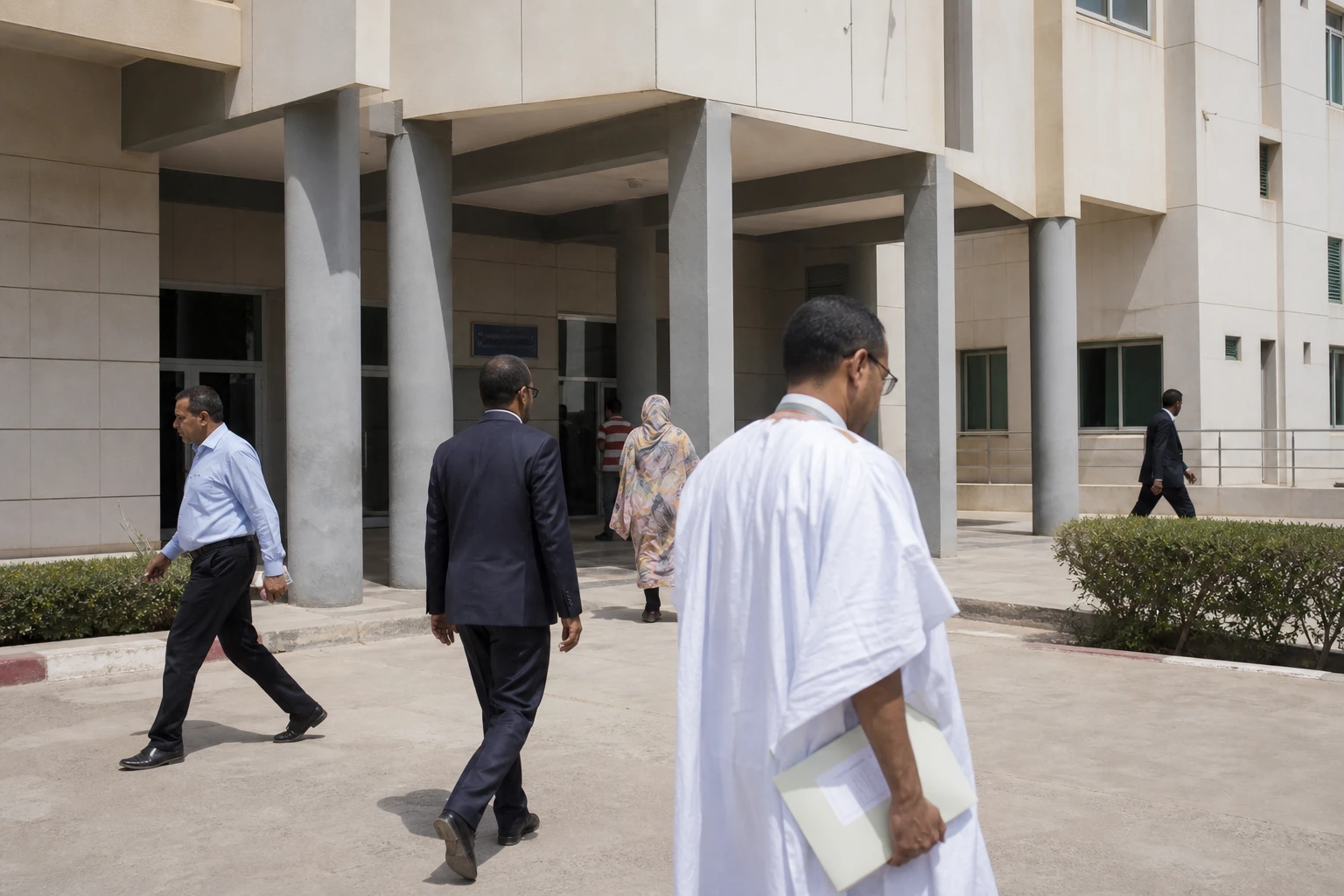
A demand that goes beyond the community alone
In Mauritania, the debate over the Haratines is no longer confined to the memory of slavery. It now touches the heart of the civic contract: who is recognised by the Constitution, and who is merely tolerated on the margins of the state. In Nouakchott, more than 240 public figures have called for the country’s basic law to name this national component explicitly and guarantee it a clearer place in public life.
The demand comes in a country where the Constitution already prohibits racial or ethnic discrimination, and where the authorities maintain in their reports to the United Nations that civil, political, economic, social and cultural rights are protected by the basic law. But on the ground, human rights organisations have for years described a persistent gap between the law on paper and social reality, particularly for the Haratines and, more broadly, for Mauritania’s black communities.
What the petition is calling for
The document, signed by political figures, academics, lawyers and activists, calls for a constitutional revision to recognise the Haratines as a national component. The signatories also want better representation in elected and appointed positions, as well as guarantees of political, economic and cultural rights. The text was made public in Nouakchott on 27 July 2026 and, according to the version consulted, bears 242 signatures.
Among the voices highlighted is Samory Ould Beye, an anti-slavery activist and president of the El Hor movement. In his argument, he links the constitutional demand to several forms of inequality: the continuing legacy of slavery, political exclusion, the scarcity of appointments and the economic vulnerability of many Haratines, who have long depended on agriculture and land. These statements remain political and activist accusations; they nevertheless fit within extensive human rights reporting on discrimination, insecure land tenure and unequal access to citizenship in Mauritania.
The most sensitive issue is representation. The petitioners are not seeking merely a symbolic mention. They are calling for better access to positions where power is distributed: in public administrations and institutions, through candidacies and appointments, and in positions of public responsibility. This is as much a political as a legal demand, because the absence of explicit recognition can, in practice, foster the idea that some groups exist socially without being fully visible in the state.
A long-standing issue that has never been settled
The Haratine question did not emerge in 2026. It has run through Mauritania’s political history for decades. Human Rights Watch notes that the Haratines, most of whom are descended from formerly enslaved people, occupy a central place in Mauritanian society while remaining exposed to structural discrimination. Amnesty International, for its part, has documented the repression of defenders who denounced slavery and discrimination, showing that the issue also affects civic space, not just social rights.
Legally, Mauritania has nevertheless strengthened its framework in recent years. A 2015 law increased penalties for slavery-related offences and established specialised courts, while a 2018 law criminalised discrimination. UN reports recognise these advances. But the same sources also highlight difficulties in enforcement, the low number of convictions and continuing barriers to access to justice, civil registration and social protection, particularly for Haratine women and rural populations.
In this context, the petition is a political test. It challenges Nouakchott to say whether recognition of a national component should remain implicit or become explicit. It also raises a question of method: can long-standing inequalities be corrected without changing the official representations that have long accompanied the social hierarchy?
Regional and African significance
Mauritania does not operate in isolation. The country is a member of the African Union and the Arab Maghreb Union, a regional organisation bringing together Algeria, Libya, Morocco, Tunisia and Mauritania. At the continental level, the issue therefore raises questions about how African states reconcile citizenship, social diversity and substantive equality. It also resonates with Mauritania’s commitments under UN and African frameworks against racial discrimination.
The political dimension is all the more important because Mauritanian society remains marked by longstanding fault lines between Arab-Berber communities, Haratines and Afro-Mauritanians. Disputes over representation, land, access to justice and civil liberties therefore concern more than one social group. They weigh on institutional stability, confidence in the administration and the credibility of reforms promised over several years.
The next challenge will be political before it is legal: whether this petition opens a serious institutional debate or joins the long list of warnings that have not led to concrete action. In a country where the Constitution already affirms equality, the real question is no longer just whether the principle is written down, but who actually benefits from it—in Nouakchott and the regions, in public administrations and villages, in appointments and at the ballot box.