Algeria
 Egypt
 Libya
 Morocco
 Sudan
 Tunisia
 Benin
 Burkina Faso
 Cabo Verde
 Côte d'Ivoire
 Ghana
 Guinea
 Guinea-Bissau
 Liberia
 Mali
 Mauritania
 Niger
 Nigeria
 Senegal
 Sierra Leone
 The Gambia
 Togo
 Cameroon
 Central African Republic
 Chad
 DR Congo
 Equatorial Guinea
 Gabon
 Republic of the Congo
 São Tomé and Príncipe
 Burundi
 Comoros
 Djibouti
 Eritrea
 Ethiopia
 Madagascar
 Malawi
 Mauritius
 Mozambique
 Rwanda
 Seychelles
 Somalia
 South Sudan
 Tanzania
 Uganda
 Angola
 Botswana
 Eswatini
 Lesotho
 Namibia
 South Africa
 Zambia
 Zimbabwe
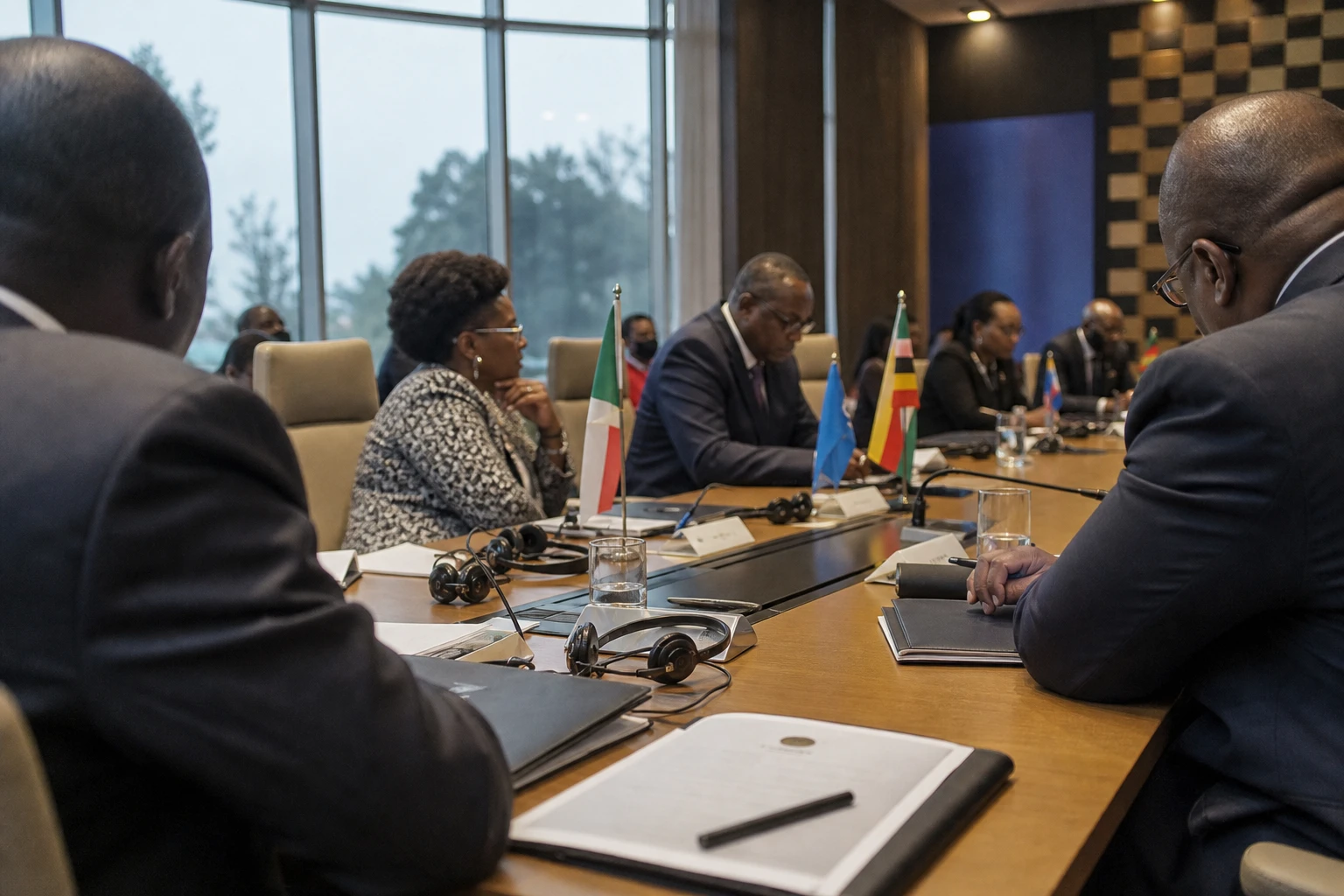
In north-eastern Kenya, a border that is never out of mind
In Mandera, security is measured not only by the number of patrols. It can also be seen in residents’ weariness, in schools reopening despite the fear, and in the roads that public forces must monitor almost constantly. In this part of Kenya, every incident quickly extends beyond the local area because it affects the Somali border, the movement of people and weapons, and the stability of a region where the state remains highly exposed.
Mandera County, in north-eastern Kenya, lies directly on the border with Somalia. It is one of the country’s most sensitive areas, alongside Garissa and Wajir. Attacks attributed to al-Shabaab, an al-Qaeda-linked jihadist group, occur in waves. They mainly target police, reservists, local administrators, teachers and, more broadly, civilians living near transport routes.
What happened in Lafey
On Tuesday 28 July 2026, five members of Kenya’s security forces were killed in Lafey sub-county, near the Somali border. A police report carried by local media said they were four police officers and a reservist from the Special Operations Group, an elite unit involved in patrols. Police later confirmed the attack, but did not publicly detail all its operational aspects.
The timing is significant. Just days earlier, Kenyan media had already reported increased pressure from armed groups in Lafey, following attacks on two nearby communities, Arabia and Fino, which forced residents to flee their homes temporarily. On 13 July, Kenyan forces had even announced that they had killed 11 al-Shabaab suspects in a pre-emptive operation in the same border area. The territory therefore remains contested, and the front line shifts quickly with raids, roadblocks and intelligence operations.
This latest episode comes amid an already difficult period for Kenya. In January 2026, a local administrative chief and a teacher were killed in Garissa County in an attack suspected of being linked to the same network. In May and June, several attempted assaults on police posts in Lafey had already been reported. In other words, the 28 July incident did not come out of nowhere. It adds to a series of probes, improvised bombings and targeted attacks testing the Kenyan state’s ability to respond.
Why the area remains vulnerable
North-eastern Kenya is vulnerable first and foremost because of the porous border. Attackers can move through sparsely populated areas where surveillance is costly and local contacts are essential. Armed groups also seek less to occupy territory permanently than to make it unpredictable. They strike, withdraw and then return elsewhere. This approach wears down security forces and disrupts daily life, particularly for families, teachers, small traders and transport operators.
Kenya deployed troops to Somalia in 2011, and its forces were later integrated into the African Union mission deployed against al-Shabaab. The decision shifted the centre of gravity of the threat without making it disappear. In Somalia, the group remains capable of surviving offensives by the government and its African partners. The African Union Support and Stabilization Mission in Somalia, or AUSSOM, took over in early 2025 from ATMIS, with a mandate focused on supporting Somalia’s stabilisation and security. The mission, however, depends on a fragile funding arrangement, relying largely on the UN and voluntary contributions.
This matters to Nairobi too. Kenya does not view the threat solely through the lens of its border. It sees it as a matter of strategic depth in the Horn of Africa. A more unstable Somalia fuels infiltrations, trafficking, forced displacement and cross-border attacks. A more contained Somalia, by contrast, reduces pressure on Mandera, Garissa and other exposed areas in the north-east. The link is direct, even if solutions take time.
What this says about security in the Horn of Africa
The significance of this event extends beyond Kenya. It is a reminder that stability in the Horn of Africa still depends on a highly fragile balance between military action, regional support and international funding. Recent discussions in Addis Ababa and at the United Nations show that AUSSOM’s future remains tied to the still-sensitive question of logistical and budgetary resources. Until that issue is resolved, every attack on Kenyan or Somali territory also becomes a political signal.
For Kenya, the challenge is twofold. It must protect border areas without establishing a permanent economy of alert. And it must prevent insecurity from further eroding trust between the state and the people of the north-east, who already face unequal access to public services, mobility and investment. For the region, the question is broader still: how can military gains in Somalia be consolidated without creating a security vacuum along the border? That is the equation Nairobi, Mogadishu, the African Union and international partners will have to keep addressing in the coming months.