Algeria
 Egypt
 Libya
 Morocco
 Sudan
 Tunisia
 Benin
 Burkina Faso
 Cabo Verde
 Côte d'Ivoire
 Ghana
 Guinea
 Guinea-Bissau
 Liberia
 Mali
 Mauritania
 Niger
 Nigeria
 Senegal
 Sierra Leone
 The Gambia
 Togo
 Cameroon
 Central African Republic
 Chad
 DR Congo
 Equatorial Guinea
 Gabon
 Republic of the Congo
 São Tomé and Príncipe
 Burundi
 Comoros
 Djibouti
 Eritrea
 Ethiopia
 Kenya
 Madagascar
 Malawi
 Mauritius
 Mozambique
 Rwanda
 Seychelles
 Somalia
 Tanzania
 Uganda
 Angola
 Botswana
 Eswatini
 Lesotho
 Namibia
 South Africa
 Zambia
 Zimbabwe
In Juba, an election campaign begins in a country where voting is also shaped by the market and the hospital
In South Sudan, the launch of a civic education campaign is no mere administrative milestone. It comes in a country where a large share of families must first find food, get around and survive, before even thinking about a ballot paper. In 2026, this tension is at the heart of the electoral process taking shape in the capital, Juba, with a very practical question at stake: whether the institutions can organise a credible vote in a still fragile state.
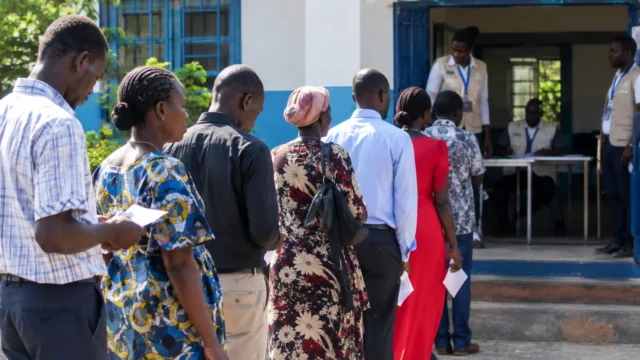
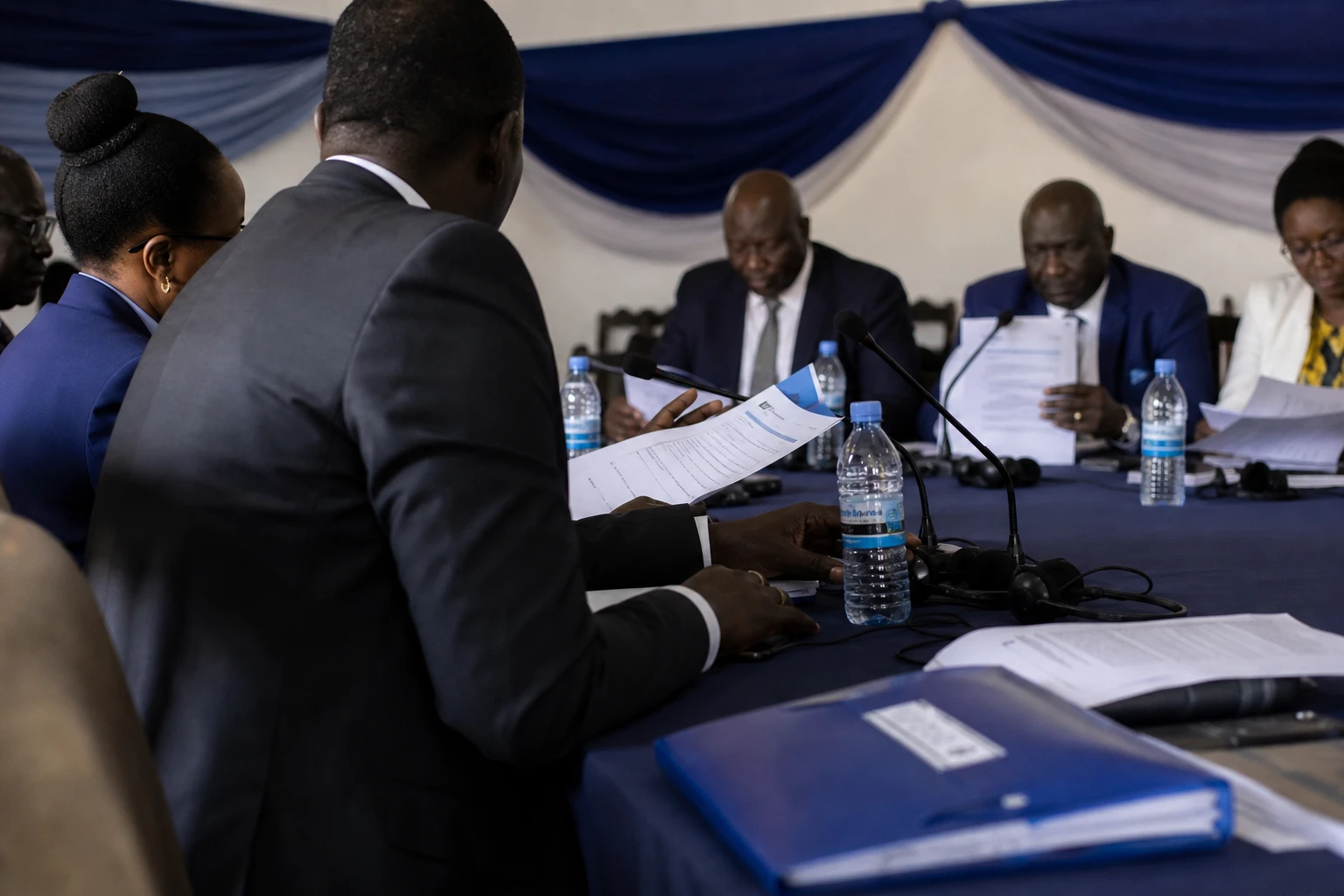
The National Elections Commission launched a civic and voter education campaign in Juba on 27 July to prepare for the election scheduled for 22 December 2026. It is set to be the first general election since independence in 2011. The commission plans to roll out the campaign with civil society, religious and customary authorities, political parties, the media, as well as women, young people, people with disabilities and displaced people.
An electoral timetable under political, financial and institutional pressure
South Sudan is approaching this moment without a fully consolidated state apparatus. The country is still implementing the 2018 Revitalised Peace Agreement, which was extended to allow for a political transition until February 2027 and elections in December 2026. IGAD, the East African regional organisation tasked with monitoring crises in the Horn of Africa, continues to support the process and is calling for “credible, inclusive and transparent” elections.
Legally, South Sudan’s parliament adopted amendments on 1 July intended to remove two obstacles long presented as major hurdles: the lack of a permanent constitution and the absence of a national census. President Salva Kiir signed the text into law on 22 July. These changes prevented preparations for the vote from being held up by institutional projects that remain unfinished.
The electoral machinery remains underfunded. The NEC estimates that it needs around $250 million to organise the vote, but only $21 million had been released by the end of June, according to information made public at the time. The commission also recalled that the law requires it to announce the election date at least six months in advance, which it has done.
Hunger, mobility and security matter as much as voter rolls
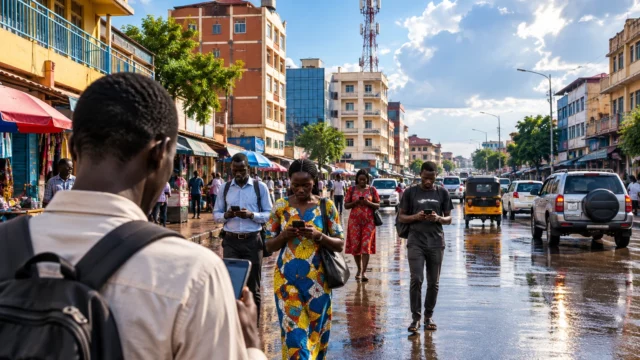
The social picture gives a sense of the challenge. Between April and July 2026, 7.8 million South Sudanese, just over half the population, are facing high levels of acute food insecurity, according to the IPC analysis published by the FAO, WFP and UNICEF. Of these, 2.5 million are in Phase 4, classified as emergency, and around 73,000 in Phase 5, classified as catastrophe. Children are bearing the heaviest cost, with 2.2 million children aged 6 to 59 months in need of treatment for acute malnutrition.
This reality is not abstract. In several parts of the country, access to roads, health centres and food distribution points still depends on local insecurity and the seasons. UN agencies have flagged particularly severe risks in some counties in Upper Nile and Jonglei, including Luakpiny/Nasir, Ulang, Nyirol and Akobo. For hundreds of thousands of displaced people, voting therefore first requires being able to travel, identify themselves and reach a polling station without facing major risks.
Electoral authorities have chosen to begin with civic education because some of the obstacles are political too. In a country where internal displacement remains widespread and local structures are uneven, announcing a date is not enough. People must also be convinced that voting will be possible, that it will count and that they will understand it.
Oil, the backbone of the state and a source of its fragility
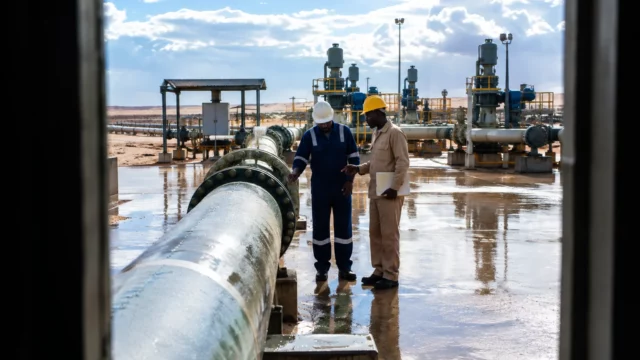
The sharpest contradiction lies in public finances. Since independence, South Sudan’s oil revenues have exceeded $23 billion, with billions more in loans backed by crude, according to the UN Commission on Human Rights in South Sudan and United Nations documents. Yet hospitals lack medicines, public sector salaries are delayed, and basic services often depend more on donors than on the state.
This vulnerability is compounded by dependence on an external corridor. South Sudanese oil must pass through neighbouring Sudan to reach Port Sudan on the Red Sea. The war in Sudan has disrupted these flows, causing interruptions and revenue losses. Exports resumed in spring 2026, but this has resolved neither the question of revenues nor how they are used.
A UN report published in 2025 also laid bare what appears to be the large-scale diversion of oil revenues. According to the investigation, around $2.2 billion passed through the “Oil for Roads” programme between 2021 and 2024, outside the ordinary budget channels, amid strong suspicions of enrichment benefiting companies linked to Benjamin Bol Mel. The government disputed the allegations, but the debate reinforced the view that oil money is still doing too little to support schools, healthcare and infrastructure that serves people’s everyday needs.
In practice, an unbuilt road has an immediate political impact. It closes a market. It delays a harvest. It isolates a health centre. It also increases families’ dependence on NGOs. This is where the budget crisis becomes a crisis of trust. And trust is essential to any election.
An election being watched beyond Juba
The December 2026 vote reaches beyond the national arena. It is being closely monitored by IGAD, the African Union and partners in the region, because South Sudan remains a fragile point of balance in East Africa. A poorly prepared election could reignite old fault lines, while a more inclusive process would offer a rare test of transition in a region marked by several political crises.
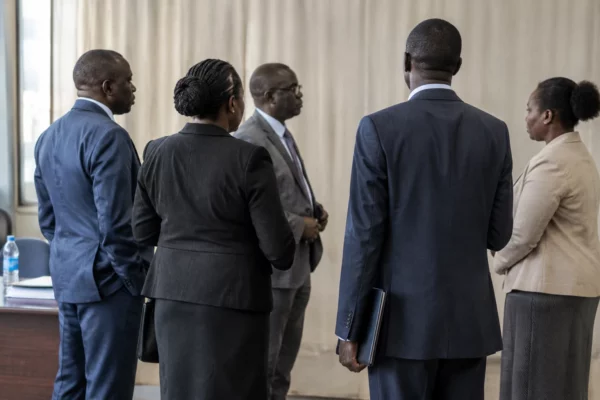
The political climate remains tense. Riek Machar, Salva Kiir’s long-time rival, was arrested in March 2025 and then removed from the executive positions he held in the transitional government. His trial, which is still under way in Juba, has fuelled accusations from his camp that it is politically motivated. At the same time, the president’s camp is seeking to project discipline and continuity around Salva Kiir’s candidacy, narrowing the space for genuinely open competition.
At the continental level, the South Sudanese case is a reminder of a simple lesson: an election is not just a date. It depends on public capacity, political compromises and minimum guarantees for citizens. In Juba, the real countdown is therefore not only to 22 December. It is also about the South Sudanese state’s ability to turn an extended transition into a clear, secure and genuinely competitive political process.