Algeria
 Egypt
 Libya
 Morocco
 Sudan
 Tunisia
 Benin
 Burkina Faso
 Cabo Verde
 Côte d'Ivoire
 Ghana
 Guinea
 Guinea-Bissau
 Liberia
 Mali
 Mauritania
 Niger
 Nigeria
 Senegal
 Sierra Leone
 The Gambia
 Togo
 Cameroon
 Central African Republic
 Chad
 DR Congo
 Equatorial Guinea
 Gabon
 Republic of the Congo
 São Tomé and Príncipe
 Burundi
 Comoros
 Djibouti
 Eritrea
 Ethiopia
 Kenya
 Madagascar
 Malawi
 Mauritius
 Mozambique
 Seychelles
 Somalia
 South Sudan
 Tanzania
 Uganda
 Angola
 Botswana
 Eswatini
 Lesotho
 Namibia
 South Africa
 Zambia
 Zimbabwe
A technical shift that also says something about Rwanda’s digital model
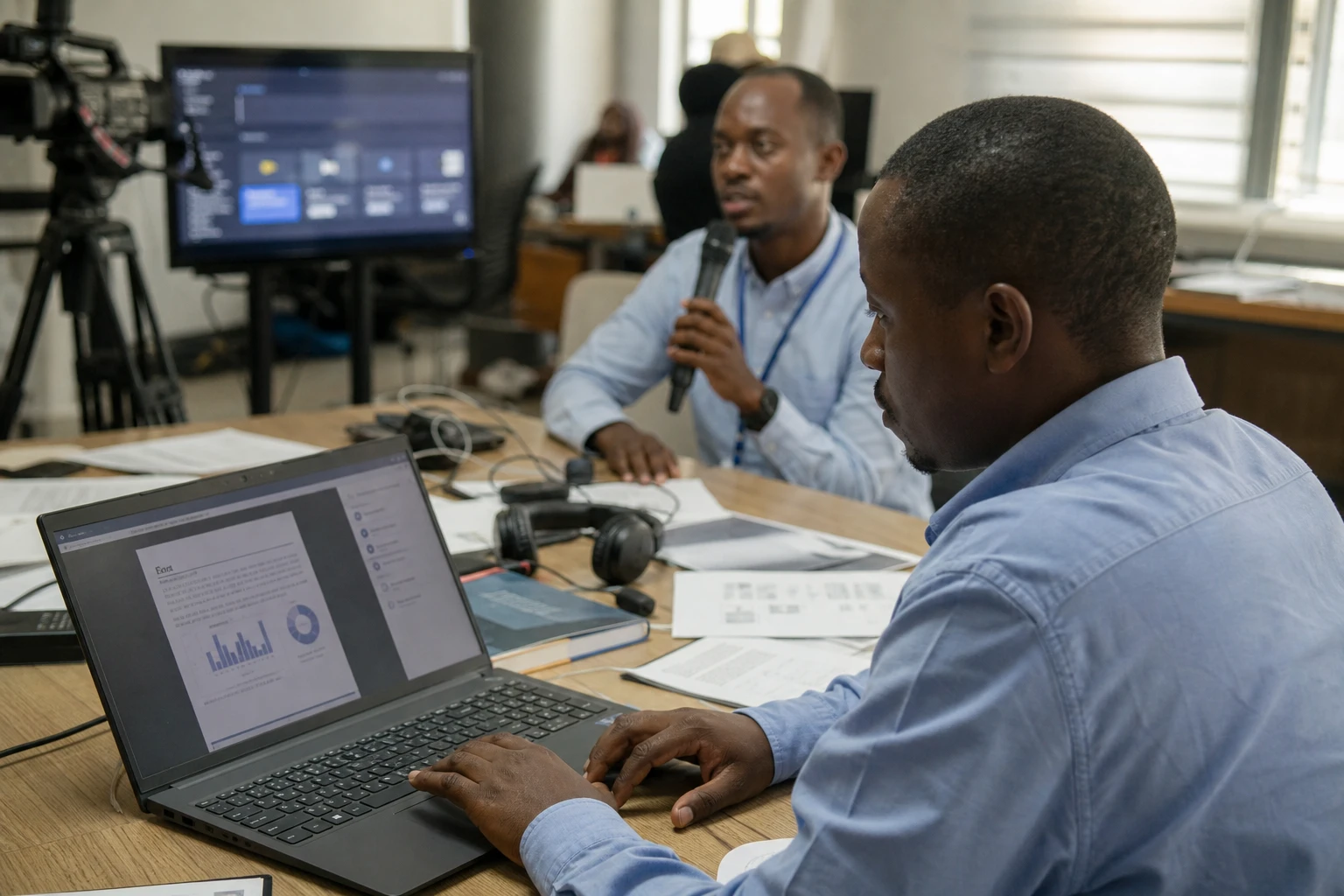
Rwanda is taking another step forward in its digital strategy. In Kigali, the issue is not simply to phase out networks deemed old. It is above all to reserve more capacity for the services that now underpin everyday economic life: mobile internet, payments, online administration and business use. Rwanda’s ministry responsible for ICT and innovation confirmed on 28 July 2026 a gradual phase-out of 2G and 3G, with the nationwide shutdown of 3G set for 30 June 2027.
This decision follows a path that has been visible for several years. The Rwandan government has made digital transformation a pillar of public policy, focusing on the spread of digital services, infrastructure modernisation and the expansion of 4G and then 5G. The announced timetable is therefore not an improvised break, but the culmination of a process prepared in advance by the authorities and operators.
What Kigali plans, and why 2G will not disappear immediately
The clearest part of the timetable concerns 3G. It will be switched off nationwide on 30 June 2027. The authorities have not yet set a date for 2G. They first want to assess the actual state of the market, the availability of reliable 4G coverage, the continuity of calls, SMS, mobile money and emergency communications, as well as users’ ability to access compatible phones at affordable prices.
The ministry also plans pilot 3G shutdowns during 2026. This trial phase is intended to test network resilience, service quality and user migration ahead of the complete shutdown. The message to businesses and public bodies is clear: they need to plan for the replacement or upgrade of equipment that still relies on 2G or 3G, particularly in payments, transport, healthcare, public services and security systems.
This caution is not cosmetic. Rwanda remains a country where coverage by older technologies is very extensive, making a transition without support difficult. In a document prepared for this transition, the authorities noted that 2G and 3G networks covered 98.8% of the population in 2024. This high level of coverage shows that the main issue is not access to a signal, but access to suitable devices and services that can operate on newer networks. ([]())
A plan prepared with operators and foreign partners
The transition was prepared in advance, including through cooperation with Germany. In November 2024, Kigali and Berlin launched an initiative to assess the technical and economic conditions for withdrawing 2G and 3G networks. The work was to examine the state of infrastructure, the effects of retaining older technologies, user migration and possible impacts on prices, coverage and competition.
Operators have also begun to reposition themselves. Airtel Rwanda said in December 2024 that it planned to phase out 3G and then 2G as part of its network modernisation. In its 2025 annual report, Airtel Africa also highlighted the expansion of 4G in the region, with 99.5% of sites in East Africa already equipped with 4G and 1,231 5G sites activated across four key markets. The message from the group is straightforward: operators are looking to shift their investment towards the technologies that are most profitable and most useful for data services.
This shift is in line with the Rwandan state’s approach. Kigali has long promoted the digitisation of public services, the use of digital identities, the migration of government platforms and the development of electronic payments. In this context, maintaining older networks for too long is costly. They continue to tie up frequencies, while household and business demand is increasingly focused on data use.
The real issues: inclusion, equipment costs and service continuity
The debate is therefore not simply a matter of engineering. For urban groups already equipped with smartphones, the transition promises faster speeds, fewer outages and a better user experience. For some households, however, the issue is first and foremost financial. A 4G-compatible phone costs more than a basic handset. If migration happens too quickly, it could create a new divide between those who can access digital services and those left with older devices.
Business uses are also exposed. Some lightweight ATMs, payment terminals, meters, transport systems, healthcare equipment and machine-to-machine communication solutions still operate on legacy networks. Upgrading them will take time, investment and regulatory oversight. In Kigali, the authorities are aware that a successful migration depends as much on network quality as on the readiness of economic actors.
There is also a public-service imperative. Maintaining calls, SMS, mobile money and emergency communications is among the conditions set for the withdrawal of 2G. This shows that the government does not merely want to optimise its radio spectrum. It wants to ensure that technological reform does not affect essential uses for households, small businesses and local administrations. In a country where digital services are gaining ground, system resilience is a matter of state continuity as much as browsing convenience.
A Rwandan decision with wider resonance across East Africa
Beyond Rwanda, the announcement is of interest across East Africa. The country is often used as a testing ground for digital policies, particularly within the East African Community, where connectivity, the interoperability of services and equipment costs remain major issues. If Kigali succeeds in gradually phasing out 2G and 3G without disrupting popular access to essential services, other capitals in the region will be watching closely.
The continental significance is similar. Across Africa, several governments are seeking to reallocate spectrum to higher-performing networks, but few have 4G coverage as advanced or a public administration as organised as Rwanda’s. This is precisely what makes the issue significant for the African Union and stakeholders in the continent’s digital agenda: it shows that network modernisation can succeed if it is prepared, gradual and accompanied by social support.
The next test is clear: 2026 will be a year of trials, and then 30 June 2027 will show whether 3G can really leave the stage without disruption. Until then, the authorities’ ability to coordinate the regulator, operators, businesses and users will be decisive. In Kigali, the question is no longer whether to move towards 4G and 5G. It is how quickly, and for whom, this technological shift should take place.