Algeria
 Egypt
 Libya
 Morocco
 Sudan
 Tunisia
 Benin
 Burkina Faso
 Cabo Verde
 Côte d'Ivoire
 Ghana
 Guinea
 Guinea-Bissau
 Liberia
 Mali
 Mauritania
 Niger
 Nigeria
 Senegal
 Sierra Leone
 The Gambia
 Togo
 Cameroon
 Central African Republic
 Chad
 DR Congo
 Equatorial Guinea
 Gabon
 Republic of the Congo
 São Tomé and Príncipe
 Burundi
 Comoros
 Djibouti
 Eritrea
 Ethiopia
 Kenya
 Madagascar
 Malawi
 Mauritius
 Mozambique
 Rwanda
 Seychelles
 Somalia
 Tanzania
 Uganda
 Angola
 Botswana
 Eswatini
 Lesotho
 Namibia
 South Africa
 Zambia
 Zimbabwe
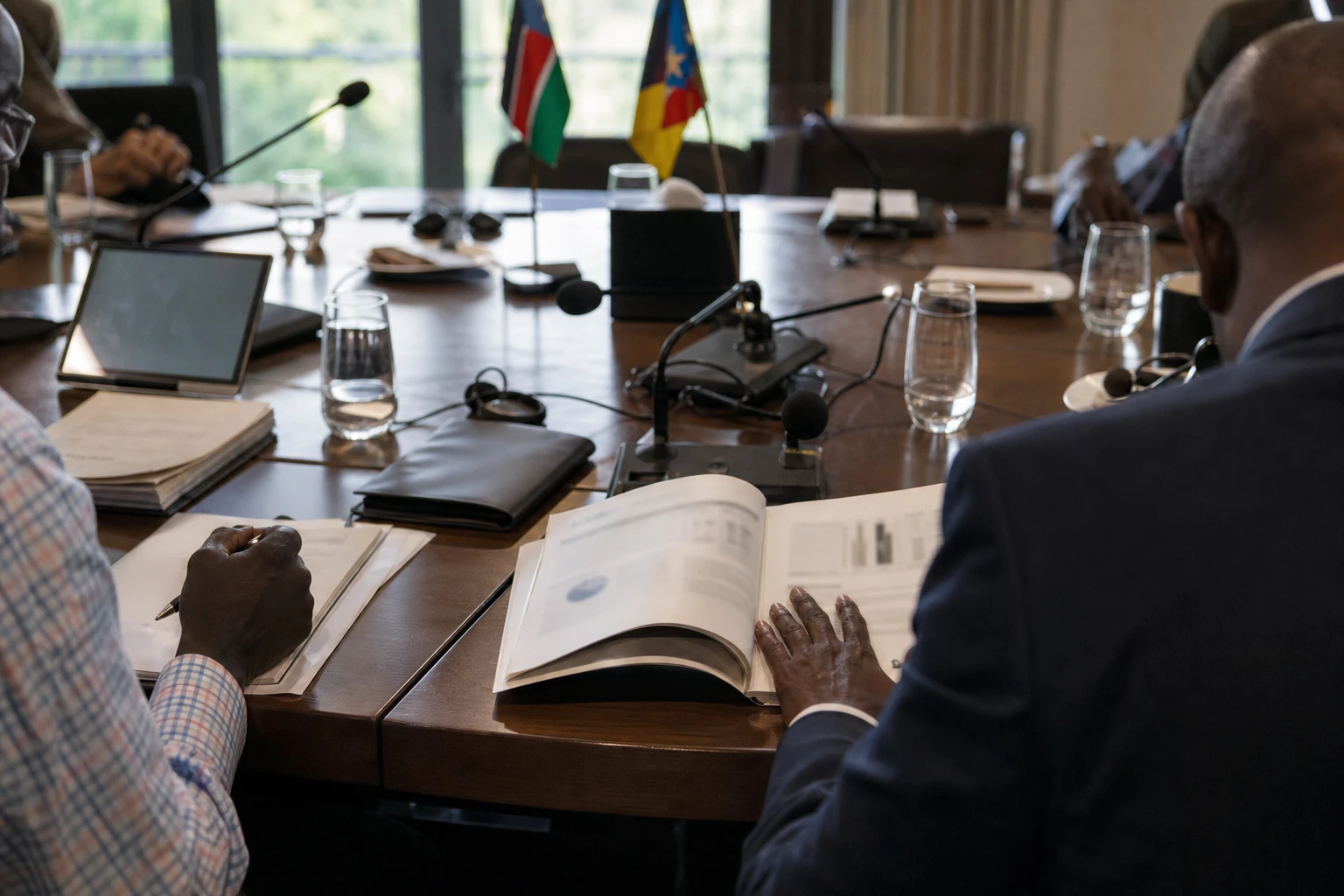
An ecological corridor whose importance goes far beyond its borders
In south-eastern South Sudan, the rainy season does more than redraw the tracks. It also governs the movement of millions of animals across an expanse that administrative maps do little to capture. There, biodiversity depends as much on water as on peace, and protecting a park cannot be considered without the surrounding territory.
That is what gives weight to the recognition granted to the Boma-Badingilo migratory landscape, as UNESCO’s World Heritage Committee decided in Busan to inscribe it both on the World Heritage List and on the List of World Heritage in Danger. The site covers 11,236,800 hectares, or more than 112,000 km², and includes Boma National Park, Badingilo National Park, floodplains and savannahs extending to the vicinity of the Ethiopian border.
Juba backs a symbol as UNESCO highlights urgent practical concerns
South Sudan, independent since 2011, is still seeking stable points of reference. Its economy remains fragile, its institutions are under pressure and the effects of conflict continue to affect access to services, roads and rural areas. In this context, conservation is not a luxury. It depends on security, monitoring resources and the state’s ability to work with the communities living around the site. The country is also a member of the Intergovernmental Authority on Development (IGAD) and the East African Community (EAC); ECOWAS is not relevant here, as South Sudan is part of East Africa.
UNESCO’s decision did not come out of nowhere. A few months earlier, in February 2026, South Sudanese authorities had already approved the site’s emergency nomination for World Heritage inscription. The Minister of Wildlife Conservation and Tourism, Denay Jock Chagor, and the Minister of Culture, Museums and National Heritage, Sarah Nyanath, had signed the necessary documents in Juba to submit the dossier. This preliminary step shows that the country chose to move ahead, despite the political and administrative cost of such a bid.
The central issue remains the landscape’s fragility. UNESCO describes an ecological complex that is home to one of the world’s largest terrestrial mammal migrations, with an estimated six million white-eared kob, tiang and Mongalla gazelle moving according to environmental conditions. The site is also home to elephants, lions, leopards, African wild dogs, hartebeest, giraffes and numerous bird species. It is this animal movement, visible on a large scale and dependent on natural corridors that remain relatively unfragmented, that makes the place unique.
Between conflict, climate and local livelihoods, protecting the site is a test of governance
Inscription on the danger list signals a diagnosis rather than an inevitability. UNESCO cites threats linked to armed conflict and climate change. In other words, the danger does not stem solely from tourism pressure or the gradual degradation of habitats. It also comes from an environment where human and animal movement can be obstructed by insecurity, resources are contested and rainfall patterns are becoming less predictable. In such circumstances, protecting wildlife means protecting the seasons, floodplains and local livelihoods that coexist with them.
For the authorities in Juba, the stakes are also economic. A World Heritage site can attract funding, help develop nature tourism and give the country a public profile less bound up with crisis narratives. But that impact is not automatic. Without safe roads, a lasting administrative presence and dialogue with pastoral and riverside communities, inscription remains a title, not public policy. The benefit is therefore twofold: international recognition of an exceptional heritage site, and pressure on institutions to ensure its actual protection.
This issue directly affects local populations. For them, the land is not a backdrop. It sustains livestock rearing, movement, seasonal fishing and longstanding forms of dependence on water and pasture. In urban centres, the inscription may be seen as a signal of international credibility. In outlying areas, it will be judged by tangible benefits: security, consultation, access to income and fewer conflicts over resource use. That is often where the real success of a conservation measure is determined.
Regional significance for East Africa and a signal to the African Union
The Boma-Badingilo dossier goes beyond South Sudan alone. It is a reminder that in East Africa, major ecosystems do not stop at political borders. Migratory corridors, watersheds and grazing areas follow a regional logic. That is precisely why coordination between Juba, IGAD, the EAC and the neighbouring countries concerned matters as much as the decision taken in Busan. In Africa, conserving vast landscapes is rarely achieved in isolation.
The continental significance is clear. Africa is increasingly entering a phase in which internationally recognised natural sites are not merely showcases, but territories that must be secured against climate change and conflict. The South Sudanese precedent also shows that a state marked by instability can put forward an ambitious heritage bid and see it through. For the African Union and regional organisations, the lesson is simple: natural heritage is not a secondary issue. It affects food security, tourism, environmental sovereignty and the role of communities in managing resources.
The administrative and operational work now remains. Inscription alone will not protect the plains, migration routes or wildlife. It opens a window. The real question for Juba and the region will be whether that window is used to strengthen monitoring, funding and cross-border co-operation, or whether the site will remain a recognised jewel that was identified too late to be preserved sustainably.